


The Silent Freeze: When an MVP Hope’s Power Play Goes Fallow Amidst the Team’s Roar
POLICY WIRE — Boston, USA — Fenway Park has finally shed its early-season gloom. The Boston Red Sox, after a stuttering start that had Bostonians reaching for their prescribed anxieties, are, dare we...

POLICY WIRE — Boston, USA — Fenway Park has finally shed its early-season gloom. The Boston Red Sox, after a stuttering start that had Bostonians reaching for their prescribed anxieties, are, dare we say, actually playing some decent baseball. The lineup? It’s humming, for the most part, stitching together hits and driving in runs with a verve that seemed lost to the Atlantic winds a month ago. You hear the chatter. There’s a pulse now, a beat that feels a whole lot closer to competitive.
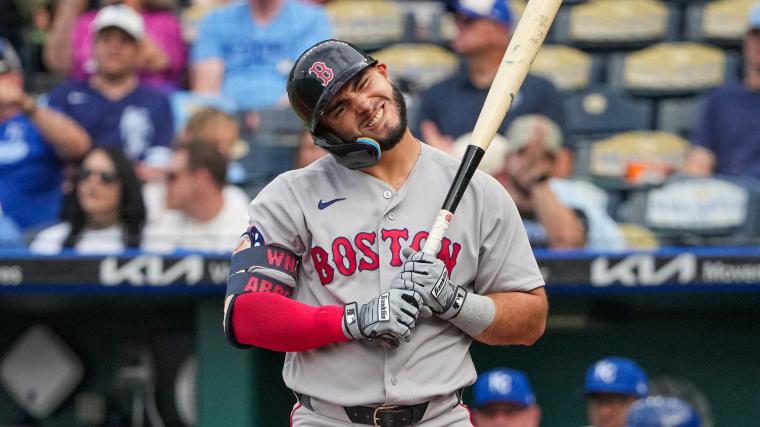
But amidst this modest revival, an odd silence has settled over one corner of the dugout, an almost inconvenient quietude where, just weeks ago, there was undeniable thunder. We’re talking about Wilyer Abreu, the outfielder who arrived like a jolt of caffeine, sparking talk of breakout seasons and cornerstone futures. And then, he just… stopped hitting bombs.
His performance through mid-May was something else entirely. Abreu was slashing a stellar .310/.385/.475, clubbing six home runs, — and collecting 19 RBIs. That’s a serious stat line, enough to make even the most cynical Beantown fan dream a little. Now? The power, his most tantalizing asset, seems to have packed up — and gone on an unscheduled holiday. He hasn’t homered since May 8th. Think about that: a month and change without sending one deep. In modern baseball, that’s practically an eternity, a lifetime in the unforgiving glare of professional sports.
And it’s not just the home runs. His overall production has cratered. Over his last 16 games, Abreu’s hitting a meager .209/.239/.299. Worse, he’s striking out more often than he’s collecting hits. But the most alarming decline, say the analytical types, lies in his plate discipline. His walk rate, a key indicator of patience and pitch recognition, has fallen off a cliff—from a respectable 12.2 percent in early May to a paltry 3.4 percent over his last 20 games. That kind of drop-off speaks volumes, or rather, it speaks to an unsettling void. (You don’t need a PhD in advanced analytics to know that isn’t ideal.)
Team Manager Alex Cora, usually a stoic presence, acknowledges the slide with a characteristic blend of frankness and guarded optimism. “Look, Wilyer’s a battler,” Cora told reporters recently, a slight pause preceding his words. “We know what he’s capable of. This game? It’s a series of adjustments. Sometimes, you just hit a wall. He’ll find his rhythm again. We’ve seen enough to believe that. It’s part of the grind.”
This isn’t just about a player hitting a rough patch, though. It’s about a team that desperately needs impact players, given their persistent struggle in key offensive categories. The Red Sox currently sit 29th in home runs, 26th in walks, and 26th in slugging percentage across Major League Baseball. Numbers like those don’t just speak; they shout about a lineup starved for potency.
For Policy Wire, this downturn in an athlete’s production carries wider implications. We’ve seen similar patterns in, say, the sudden underperformance of a highly touted energy asset in an emerging market, or a national team facing overwhelming public expectation. Consider the immense pressure on cricketers in South Asian nations like Pakistan. One bad series, one dip in form for a star batsman, and the national discourse can shift from adoration to condemnation with unnerving speed. That cultural intensity—that almost visceral connection between public identity and athletic performance—it makes Abreu’s statistical stumble, played out in the relative insularity of American professional sports, seem like a quiet internal audit in comparison. Even here, though, the economics are real. Player valuations, fan engagement, merchandise sales—they all ride on performance.
📄 POLICY WIRE WHITEPAPER PUBLISHED: PAKISTAN'S NATIONAL SECURITY POLICY PRIORITIES
👉 READ BY CLICKING HEREBecause every season has its ebbs — and flows, sure. But when a player, someone believed to be on the cusp of something big, suddenly hits this kind of wall—well, it sparks conversations beyond the usual baseball chatter. Are pitchers just figuring him out? Is there an underlying injury he’s trying to play through, as some have whispered? Or is it something more insidious, a creeping doubt, a loss of the competitive edge that fuelled his earlier fire? It’s hard to tell from the outside looking in, isn’t it?
But the team can’t wait forever for answers. General Manager Chaim Bloom, ever the numbers guy, frames it within the broader portfolio. “You invest in talent. You watch the market,” Bloom observed, speaking in a private off-the-record briefing earlier this week. “There are always cycles. The objective? Mitigate risk, maximize returns. We’re in it for the long haul with Wilyer, absolutely. But every asset has a performance curve. We’re certainly monitoring his closely.” Bloom’s assessment echoes broader trends, highlighting how even elite athletes become data points in an increasingly quantitative ecosystem. For more on this, you might consider reading The Enduring Commodity: Elite Athletes and the Calculus of Longevity.
What This Means
An individual athlete’s slump, particularly one initially pegged for stardom, functions as a surprisingly robust microcosm for broader economic and political dynamics. Think of it: an asset (the player) initially overperforming, attracting significant capital (attention, salary potential, fan expectation), then suddenly underperforming. This isn’t just about baseball; it’s about human capital management — and the often-unpredictable return on investment. The Red Sox are facing a strategic challenge not dissimilar to a corporation managing a declining product line that once promised robust growth. Do you hold? Do you retool? Or do you eventually divest?
The dip in Abreu’s ‘metrics’ – his walk rate, his power – impacts team ‘shareholder’ (fan) confidence, reduces the overall market value of the ‘enterprise’ (the Red Sox), and puts pressure on ‘management’ (Cora and Bloom) to deliver solutions. There’s a direct parallel to the scrutiny faced by political leaders whose early promises fade in the face of harsh realities or an unexpected shift in the political ‘market’. When expectations are high, any deviation creates outsized concern. It reminds us that even in arenas where raw talent seems king, the underlying currents of psychology, pressure, and strategic adjustments can be more determinative than any swing of a bat.