


Southwest’s Tragic Drizzle: How New Mexico’s ‘Beneficial’ Rain Becomes a Flood Warning for the World
POLICY WIRE — ALBUQUERQUE, N.M. — The desert offered a brief, violent shrug yesterday, spitting half-inch hail onto sun-baked earth. Just as the eastern swaths of New Mexico savored a few drops,...

POLICY WIRE — ALBUQUERQUE, N.M. — The desert offered a brief, violent shrug yesterday, spitting half-inch hail onto sun-baked earth. Just as the eastern swaths of New Mexico savored a few drops, albeit aggressively, the ‘beneficial’ rain brought a price: a swift reminder of how an increasingly volatile climate makes even water a weapon. But that’s how it’s now, isn’t it? One day you’re praying for a trickle, the next you’re dodging an inland tsunami.
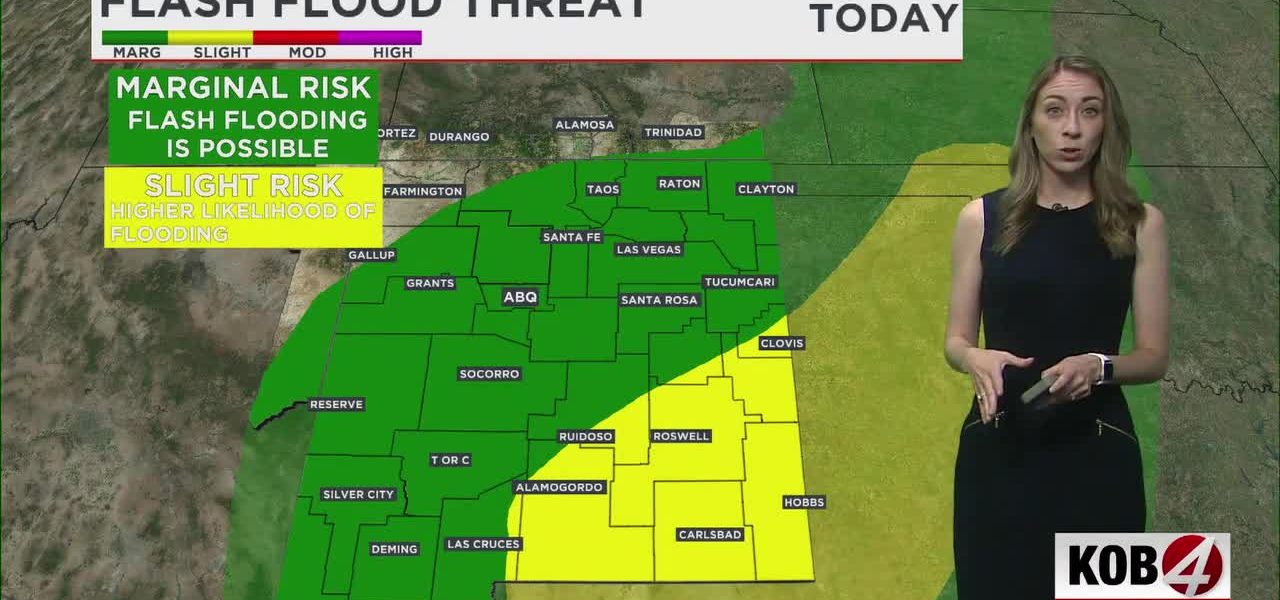
This isn’t some quaint regional anecdote. It’s a dress rehearsal for disaster, playing out with unsettling frequency across arid — and semi-arid regions globally. New Mexico’s modest meteorological tantrum, producing isolated downpours of up to two inches, transformed cracked topsoil into slick, unyielding surfaces. And today, Wednesday, brings more.
A weak circulation of low pressure—just a breath, really—creeps across the landscape, poised to unleash another round. Forget gentle showers. What locals will get are slow-moving storms, their deliberate crawl increasing the risk of flash flooding. A Level 2 ‘slight risk’ warns communities from Clovis to Hobbs — and points west. Because when parched earth meets sudden deluges, it doesn’t soak in; it merely surfs over. For anyone caught unawares, it’s perilous. For the land itself, it’s just plain destructive.
“We welcome every drop, sure,” said Representative Melanie Stansbury (D-NM), whose district includes parts of Albuquerque and covers significant rural territory. “But a sudden downpour on desiccated ground—that’s a different beast. It washes away topsoil, it overwhelms systems. We need steady, not sporadic. Our infrastructure isn’t built for these extremes, — and neither are our farmers.” She’s not wrong. It’s a balancing act few states, especially those reliant on ancient, predictable water cycles, are winning.
But the problem, folks, stretches far beyond New Mexico’s borders. These isn’t merely local weather, it’s planetary climate on a jittery cycle. “The patterns aren’t regional anymore; they’re planetary,” noted Dr. Arif al-Khan, a leading hydrologist specializing in arid region resilience. “What we’re seeing in New Mexico — flash flooding after prolonged drought — mirrors the catastrophes that have routinely struck communities from the American Southwest to the Indus Basin. It’s a hydrological warning, plain — and simple.”
He speaks of Pakistan, for instance, a nation that has grappled with devastating floods just two years prior, a cruel irony following prolonged periods of water scarcity. It’s that same destructive rhythm: long droughts creating hard, impermeable ground, then sudden, intense rainfall that causes immediate, violent runoff instead of replenishment. Globally, these cycles are only getting nastier.
It’s an insidious phenomenon where water—too much or too little—undermines stability. Consider the U.S. Geological Survey (USGS) finding that by 2050, several major basins across the U.S. Southwest could see up to a 20% reduction in average annual streamflow due to rising temperatures. The intermittent deluge doesn’t make up for that, does it? It compounds the damage.
📄 POLICY WIRE WHITEPAPER PUBLISHED: PAKISTAN'S NATIONAL SECURITY POLICY PRIORITIES
👉 READ BY CLICKING HEREAnd here we’re, watching Albuquerque’s skies today, wondering if that 40% chance of rain between 4 — and 7 p.m. will be a blessing or a localized cataclysm. It’s hardly just a weather forecast; it’s a policy conundrum wrapped in a storm cloud.
What This Means
This localized drama in New Mexico provides a harsh snapshot of a global challenge: climate volatility directly impacting governance and economic stability. Flash flooding on arid land, while seemingly minor, triggers a cascade of effects. It damages agricultural lands, straining state budgets that then divert resources from long-term development to emergency response. It complicates water management strategies, forcing policymakers into reactive, short-sighted decisions rather than proactive infrastructure upgrades.
Economically, unexpected downpours can devastate small-scale agriculture—crops, livestock, livelihoods. It costs states like New Mexico untold millions in direct flood damage, infrastructure repair, and disrupted supply chains. The subtle irony, as always, lies in the fact that drought-stricken communities become even more vulnerable to flood, amplifying recovery costs. These are not just local issues. The systemic challenges presented here have global analogues, nowhere more keenly felt than in vulnerable, populous regions like South Asia. Their experience with climate migration and humanitarian crises serves as a stark warning, particularly given how even seemingly innocuous weather events in places like New Mexico are starting to echo that reality. But what’s the plan for when this becomes the new normal? Or, perhaps, when the ‘normal’ just ceases to exist? That’s a question few seem keen to answer.
This escalating instability also raises tough questions about federal — and international aid distribution. If developed nations like the U.S. struggle with adapting to these ‘new’ weather patterns, how are developing economies—often at the front lines of climate change’s fiercest impacts—supposed to cope? It’s not just about managing water; it’s about managing an increasingly fragile socio-economic future. We’re all in this boat, bobbing on increasingly turbulent waters, and the forecast for much of it still looks pretty grim.