


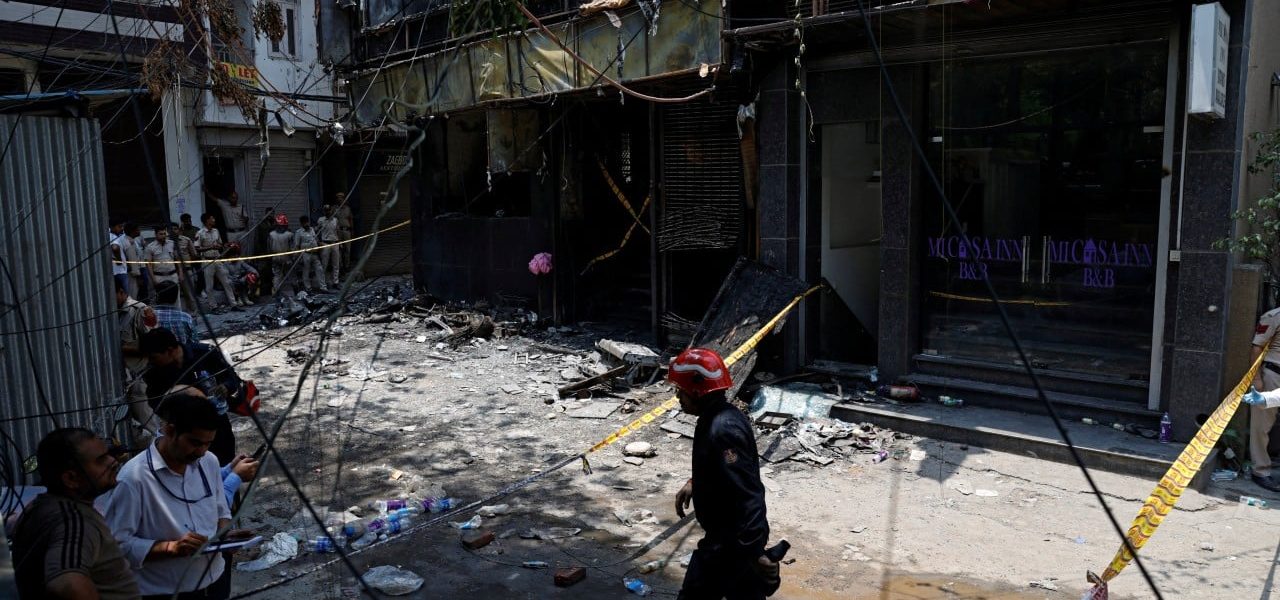
Blaze Consumes Lives in Delhi, Ignites Old Fears Over Neglected Regulations
POLICY WIRE — New Delhi, India — They don’t just count bodies here anymore; they weigh the collective failure. Another city morning, another charred husk of a building, — and the grim tally...

POLICY WIRE — New Delhi, India — They don’t just count bodies here anymore; they weigh the collective failure. Another city morning, another charred husk of a building, — and the grim tally just kept climbing. Twenty-one souls gone, consumed by an inferno that tore through a modest Delhi lodging this past Wednesday, leaving behind questions that, frankly, nobody in power seems truly keen to answer. It wasn’t an act of God—don’t be fooled. It was another consequence of a nation’s relentless growth often steamrolling basic safety standards, an old story unfolding with sickening regularity.
The fire began its furious ascent at Flourish Stay, a nondescript bed-and-breakfast wedged tight in one of the capital’s typically labyrinthine southern districts. For many, it was an affordable, if unglamorous, roof over their heads; for others, perhaps a stopover for economic migrants chasing a sliver of opportunity. But it wasn’t safe, not by a long shot. Because India’s cities, in their furious rush to expand and absorb millions, have a nasty habit of ignoring the quiet creep of lethal neglect.
And that’s the kicker, isn’t it? Building codes? Often treated more like suggestions than ironclad laws. Firefighting equipment? Sometimes there, sometimes just… absent. Emergency exits? Regularly blocked, because a little extra revenue from another room or storage space often outweighs the very real prospect of a tragedy like this. You’d think after a string of similar catastrophes—each with its own horrific body count—that things would change. You’d be wrong.
“We’re absolutely gutted by this loss of life,” stated Mr. Rakesh Kumar, the area’s local Municipal Corporation Councilor, his voice tight during a hastily arranged press briefing amidst the wreckage. “But we must also look inwards. How many more warnings do we need before serious, systemic changes are implemented? It’s not just a Delhi problem; it’s an Indian problem. It’s an administrative problem.” He’s not wrong, of course. Yet the cameras eventually leave, — and the status quo usually endures.
This fire—deadliest in recent memory, they’re saying—has ripped the plaster off deeper structural cracks, ones familiar across South Asia. From Dhaka’s textile factory fires to Karachi’s rickety apartment blocks, the race to provide affordable, if perilously unsafe, housing and workspaces is a shared affliction. These urban jungles grow fastest in the informal sectors, where millions find work and shelter, often with zero safety nets. They’re often home to vulnerable populations, including migrant workers and often, Muslim families who, due to socio-economic factors, tend to reside in the older, denser, and therefore most hazardous parts of these burgeoning metropolises.
“The enforcement simply isn’t there, or it’s profoundly inconsistent,” explained Deputy Fire Chief Aruna Sharma of the Delhi Fire Services, speaking with an air of weary resignation after hours at the scene. “We identify violations; we issue notices. But sometimes, well, permits are issued regardless. Or illegal alterations happen after the fact. It’s a battle, and frankly, we’re outmanned and often outmaneuvered by bureaucracy and, frankly, by avarice.” She’s describing a systemic breakdown—a dangerous dance between lax oversight, underfunded agencies, and powerful interests.
📄 POLICY WIRE WHITEPAPER PUBLISHED: PAKISTAN'S NATIONAL SECURITY POLICY PRIORITIES
👉 READ BY CLICKING HEREJust look at the data: A 2021 study published by the National Institute of Disaster Management (NIDM) highlighted that roughly 70% of buildings in India’s major metropolitan areas either don’t comply with building safety codes or operate with significant structural vulnerabilities. That’s not just a number; it’s a time bomb, ticking away in countless urban centers, just waiting for the right spark. The invisible ‘CarryMen’ of Delhi and beyond often bear the brunt of such regulatory indifference, their lives treated as cheap and disposable.
What This Means
This incident isn’t just a tragic local headline; it’s an uncomfortable flashpoint for India’s ambitious economic narrative. Every international business summit, every pronouncement on global competitiveness—they ring a bit hollow when set against images of a multi-story hotel gutted by flames, killing people in their sleep. It speaks to a persistent governance deficit: the inability or unwillingness of state machinery to prioritize citizen safety over commercial interests. Politically, the ruling establishment will likely issue strong statements, maybe even order an inquiry, but real, sweeping reform usually proves elusive.
Economically, these recurrent disasters deter foreign investment, making international partners think twice about the reliability and basic standards of doing business in certain sectors. But perhaps more damning is the internal cost: the ongoing drain on public trust, the psychological toll on communities that consistently witness avoidable carnage, and the constant threat hanging over the millions who work and live in these precarious structures. And this isn’t some niche problem; it’s a structural weakness, reverberating across the Indian subcontinent. A safe infrastructure isn’t a luxury—it’s a foundational pillar for any stable, rising power. Until Delhi — and its regional counterparts truly reckon with that, well, these tragedies will keep coming. The globe watches; maybe Islamabad also eyes Delhi’s struggles, considering its own similar development challenges. It’s a bitter truth, isn’t it?