


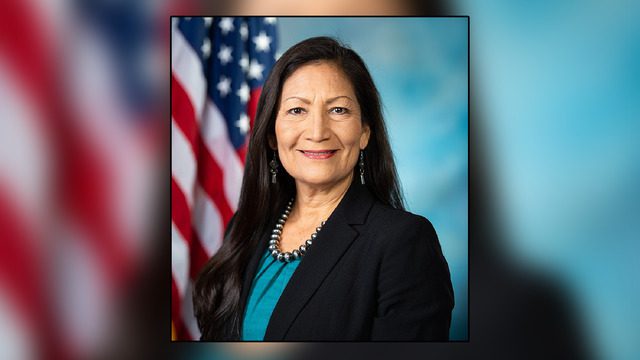
Haaland’s Landslide in Land of Enchantment Hints at Broader Shifts
POLICY WIRE — Albuquerque, N.M. — The high desert winds of New Mexico didn’t just carry dust yesterday; they brought the whisper of a landslide, quietly affirming what many political...

POLICY WIRE — Albuquerque, N.M. — The high desert winds of New Mexico didn’t just carry dust yesterday; they brought the whisper of a landslide, quietly affirming what many political strategists had long predicted. Forget the nail-biters. This was more of a fait accompli, a formal declaration that the state’s Democratic establishment, and perhaps its broader electorate, is increasingly comfortable with a specific shade of leadership. A familiar name, Deb Haaland, walked away with a nomination that, while entirely expected, nonetheless paints a stark picture of a political landscape evolving beneath the surface.
It wasn’t a contest designed for suspense, not by any stretch of the imagination. In a primary featuring two names, the results, as of the 7:30 p.m. count, showed a remarkably one-sided affair. Haaland, a figure of increasing national recognition, wasn’t merely ahead; she was dominant. This wasn’t some last-minute surge or a photo finish that demanded recount strategists to burn the midnight oil. It was a clear, unambiguous statement from the Democratic base. Bernalillo County District Attorney Sam Bregman found himself decisively outmaneuvered, a testament to the incumbent’s formidable political machinery, or perhaps, simply, a reflection of the zeitgeist. [QUOTE_PLACEHOLDER]
Because, let’s be frank, modern primaries often feel less like spirited democratic contests and more like bureaucratic formalities for established players. The real wrestling match, the one with actual dramatic tension, will unfurl itself in November. That’s when Haaland is expected to face a Republican contender, currently an unknown entity from the ongoing G.O.P. primary. Candidates Gregg Hull, Doug Turner, or Duke Rodriguez are vying for that particular role. But, whoever emerges from that internecine battle will quickly realize they’re staring down a political force that just secured the Democratic nomination with a staggering 78% of the vote.
This kind of overwhelming mandate—even in a primary—isn’t just about a name on a ballot; it’s a barometer for a party’s mood. It signals deep-seated confidence, perhaps a degree of complacency for the general election, or maybe just a clear, unwavering path forward. For Haaland, this means less internal friction and more time to sharpen her arguments against whichever Republican ultimately stands opposite her. And for the voters, it means the ideological battle lines for the fall are becoming, if not totally etched in stone, then at least firmly drawn in the sand.
It’s an election outcome that speaks to more than just local New Mexican politics. It reflects a national trend where, in some states, primary challenges to established or preferred candidates become increasingly difficult. They’re often seen as attempts to fracture the party base, an endeavor rarely rewarded by voters who, when push comes to shove, prefer unity—or at least, the appearance of it—over internal squabbling. And don’t underestimate the power of name recognition in such contests. Haaland has it in spades.
What This Means
The immediate implication for New Mexico is straightforward: the Democratic Party has signaled its preferred champion, an Indigenous woman whose ascent in state politics has been both steady and consequential. Her decisive victory cements her standing as a prominent figure not just within the state, but within the broader national conversation about representation. The politics of identity, particularly Indigenous representation, often take center stage in the Land of Enchantment, where American Indians and Alaska Natives constitute approximately 12.4% of the population, according to 2022 US Census Bureau estimates. This isn’t just an electoral win; it’s a socio-political statement.
But the reverberations aren’t confined by state lines. This phenomenon, where demographics dictate destiny, isn’t unique to New Mexico or even the United States. Consider the political dynamics across the Muslim world, from Pakistan’s tumultuous elections where dynastic politics often clash with burgeoning grassroots movements, to countries struggling with the equitable representation of minority sects or linguistic groups. In Pakistan, for example, the representation of Baloch, Pashtun, or Hazara communities in federal governance is a constant, often contentious, discussion. Though different in context, the underlying principle—the quest for diverse voices at the decision-making table—remains a powerful, unifying thread. Whether it’s Indigenous rights in New Mexico or the political aspirations of a specific ethnic group in Karachi, the struggle for a truly representative government is, at its heart, a universal human endeavor.
Economically, Haaland’s continued influence implies a steadier course for New Mexico’s state-level policies. Without a significant shift in leadership during the primary, businesses and industries can likely expect continuity in regulations, fiscal approaches, and infrastructure investment plans. And continuity, especially in uncertain global times, isn’t always exciting, but it’s often preferred. Stability at the state level can indirectly influence investor confidence, attracting or retaining industries that rely on predictable political environments. A government that looks and sounds more like its populace—that mirrors its diverse makeup—can also lead to policy-making that’s arguably more responsive to varied community needs. It’s a fundamental tenet of representative democracy that, despite its imperfections, continues to hold weight globally.
The general election in November will be where the rubber truly meets the road. Haaland, backed by her overwhelming primary showing, now pivots to consolidate her base and court undecided voters against a Republican challenge that’s yet to define itself. This is a developing story. It’s often said that all politics are local, but this particular local story, a decisive victory in a state grappling with its own complex identity, tells a broader tale—one that, if you squint a bit, you might just see reflected in the ongoing political conversations shaping societies worldwide, even in far-flung places contending with their own distinct versions of crises of representation. It’s a reminder that beneath the headlines of geopolitical struggles and global economic shifts, the foundational battles for governance are being fought and won in quiet primaries like this one.