

Oil Tankers Chart Course Through Persian Gulf, Iran Deal’s Tenuous Horizon; Lebanon Rocked by Israeli Strikes
POLICY WIRE — Dubai, UAE — Something feels different in the Persian Gulf today, doesn’t it? Beneath the sweltering heat, oil tankers, hulking and loaded, have begun their silent, steady journey...

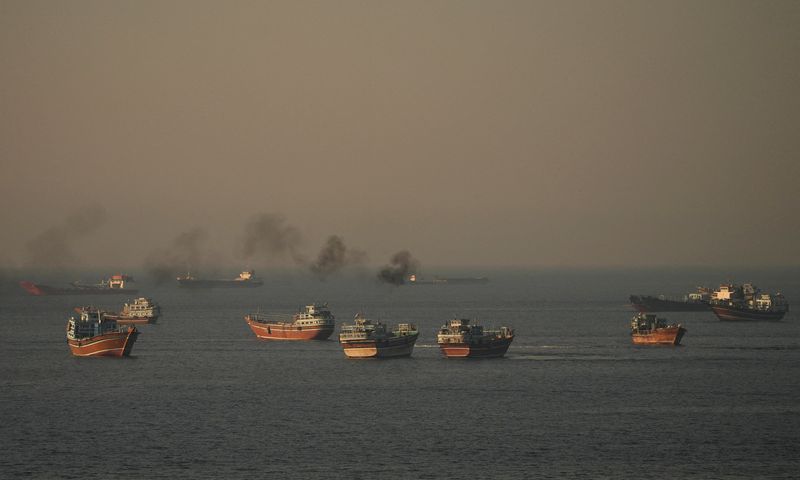
POLICY WIRE — Dubai, UAE — Something feels different in the Persian Gulf today, doesn’t it? Beneath the sweltering heat, oil tankers, hulking and loaded, have begun their silent, steady journey through the Strait of Hormuz. It’s an economic artery, sure, but also a choke point, and now, it’s ferrying the first tangible exports tied to this nascent Iran nuclear deal.
It’s a peculiar sight—a sliver of quiet diplomacy cutting through a region habitually on edge. While one hand (or several, if you count the deal signatories) cautiously extends an olive branch in the Gulf, another—Israeli—reportedly throws grenades into Lebanon, shattering any semblance of calm there. But that’s how it goes around these parts; one step forward, two steps sideways, a dash of high-stakes gambling. (Awaiting official quote)
These initial shipments of Iranian crude, now permissible thanks to the deal, they’re meant to symbolize a thaw. They’re supposed to signal a lessening of economic pressure on Tehran, an invitation back into the global marketplace after years in the geopolitical deep freeze. Imagine the sheer volume: about 20 percent of the world’s petroleum transits the Strait of Hormuz, according to the U.S. Energy Information Administration (EIA), making these initial, unhindered movements profoundly significant for global energy markets and Iran’s ailing treasury alike. For Tehran, it’s a breath. A much-needed breath.
But the breath isn’t held. Over in Lebanon, the echoes of Israeli air raids paint a starkly different canvas. Sources suggest these strikes were aimed at targets believed to be linked to Palestinian factions within Lebanon. It’s a familiar, grinding rhythm of accusation and reprisal, escalating regional tensions at precisely the moment some folks are hoping for de-escalation.
The juxtaposition couldn’t be sharper. On one flank, a delicate international agreement slowly inches forward, promising engagement over isolation. On the other, the brutal realities of decades-old conflicts continue to simmer and boil over, oblivious to diplomatic niceties. It makes you wonder: does anyone actually coordinate strategy in this chaotic chessboard, or are players simply moving their pieces with eyes fixed solely on their own immediate, often narrow, advantage?
This isn’t some abstract parlor game for the folks caught in the crossfire. No, it’s families ducking for cover, it’s homes destroyed, it’s the constant fear of what tomorrow brings. And Beirut, a city that’s known more than its fair share of agony, is once again watching the skies with a dread that’s probably written into its very DNA. The government, perpetually weak and beholden to various internal and external pressures, will likely issue its customary condemnations, while its citizens continue to bear the brunt. It’s a tragedy we’ve witnessed countless times, a script painfully re-written.
Because the thing is, these developments—one ostensibly positive, the other decidedly not—they aren’t operating in separate vacuums. They’re intertwined. The easing of sanctions on Iran, even in this limited capacity, shifts the regional balance of power. It empowers certain players, disquiets others. And what happens in Beirut today can absolutely reverberate through Riyadh tomorrow, or even down the road in Islamabad. This complex geopolitical chess match isn’t confined to a single board.
For Pakistan, a country with deep historical and religious ties to the broader Muslim world and particularly sensitive to developments in Iran and the Levant, these events present their own knotty challenges. Stability in the Gulf, fostered by the Iran deal, generally spells economic opportunity and eased oil prices—a good thing for a nation constantly grappling with energy needs. But the resurgence of violence in Lebanon, often viewed through sectarian lenses by various actors, creates unease and poses dilemmas for Pakistani foreign policy makers, who often find themselves balancing conflicting regional loyalties. They’re watching, closely, as the implications ripple outward.
And it’s this delicate balance, this perpetual state of calibration — and recalibration, that really defines the region. One side tries to build bridges; the other, often a different set of players entirely, is keen on demolishing them. You’d think by now they’d settle on a consensus, wouldn’t you? But history’s a harsh mistress—she keeps repeating the tough lessons, apparently.
What This Means
This split-screen moment offers a potent illustration of Middle Eastern geopolitics in miniature. The passage of tankers under the Iran deal represents a cautious triumph for diplomacy, albeit one that remains exceedingly fragile. Economically, it signifies a potential — potential, mind you — uptick in global energy supply, with Iran keen to ramp up crude production and exports. This could have a dampening effect on international oil prices, a welcome relief for many importing nations, including Pakistan, grappling with inflationary pressures. But the slow process of normalizing Iran’s economic ties also reshapes regional alliances — and antagonisms. For states like Saudi Arabia, Iran’s resurgent economic clout is rarely seen as benign.
The simultaneous Israeli strikes in Lebanon, however, rip at the fabric of that diplomatic optimism. They serve as a harsh reminder that fundamental security dilemmas, deeply rooted and bitterly contested, aren’t simply resolved by nuclear agreements or economic waivers. It indicates a sustained, active conflict between Israel and its perceived proxies, like Hezbollah in Lebanon or Palestinian groups. Such actions, often described as retaliatory by Israel, keep the entire region in a perpetual state of flux, always one miscalculation away from broader conflagration. It’s a stark contrast to the aspirations of the Iran deal, highlighting that peace and stability are multifaceted, requiring more than just one successful diplomatic maneuver. We’re essentially watching two vastly different chapters of the same turbulent novel unfold simultaneously—one hopeful, the other relentlessly grim. You couldn’t make it up. Or maybe, someone already did.