
Roster Roulette: Inside NC State Baseball’s Post-Avent Power Play
POLICY WIRE — Raleigh, USA — For seasoned observers, it wasn’t the fresh face at the helm of NC State baseball that truly caught the eye. Chris Hart has, after all, been on staff...

POLICY WIRE — Raleigh, USA — For seasoned observers, it wasn’t the fresh face at the helm of NC State baseball that truly caught the eye. Chris Hart has, after all, been on staff with the Wolfpack for the last 22 years, a bureaucratic eternity in college sports. But when the dust settled from the transition — the program’s first new head coach for the first time since the 1997 season — the real intrigue wasn’t about who was in charge, but the sheer logistical headache staring him down. It’s a dynamic that reflects not just athletic reshuffling but also the shifting tides of loyalty and opportunity in a globally interconnected world, a bit like managing disparate alliances in a fragile geopolitical arena (think Pakistan’s internal balancing acts).
Hart’s got his work cut out, doesn’t he? We’re talking about a comprehensive re-evaluation, starting with his immediate staff, then roster construction — always the fun part — and on into the nitty-gritty of in-game management. Because, let’s be real, a lot of folks have had some gripes with the playbook lately. And Hart knows it. He’s been there, in the dugout, living it. [QUOTE_PLACEHOLDER]
So, what about that coaching staff? Clint Chrysler, the pitching guru, just finished his 8th year. You’ve seen some high-end arms under Chrysler. But you’ve also seen a recurring problem: a lack of development — and a dependency on using too few arms. It’s unclear how much the latter was a Chrysler decision or an Elliott Avent call, but it definitely had a negative impact on the former. This is the tightrope new leadership walks: preserving what works, but ruthlessly pruning what doesn’t. It’s not just about winning; it’s about establishing a new operational philosophy.
The bullpen, or lack thereof, wasn’t the only concern. The in-game management of recent memory have been around excessive use of the bunt on offense and in waiting too long to pull pitchers. Mercifully, sacrifice bunts have been on the decline the last several years for the Wolfpack, a trend that coincides nicely with State developing some rather prolific offenses. The question isn’t just about strategy, it’s about courage — will Hart be quicker with the hook on pitchers? You’d hope so. Better to err on the side of an early hook than a late hook with that one, as well as not running pitch counts up high on starters in early season games.
And let’s talk about the talent pipeline — the lifeblood of any successful program, a commodity as hotly contested as rare earth minerals. In the frenzied college athletic market, where a promising youngster might relocate based on NIL deals or playing time like a skilled professional migrating for better opportunities abroad, the transfer portal action is a must in this day and age of college athletics. Hart and Avent, before him, shared a similar approach: adding smaller school D1 transfers with traits that would signal an ability to translate to the ACC, then supplementing those players with JUCO transfers. With Hart’s heavy hand in recruiting — a quiet force behind many a success — it’s fair to expect this philosophy won’t change drastically. But we’ll see if it’s adapted in any way; it always is, isn’t it?
Then there’s the roster for 2027. Four players are out of eligibility: first baseman/DH Dalton Bargo, outfielder Brayden Fraasman, infielder Wyatt Peifer, and right-handed pitcher Danny Heintz. They won’t be back, plain — and simple. What about the draft-eligible? There are 14 of them. Juniors Luke Nixon (second base), Chris McHugh (first base), Sherman Johnson (third base), and the pitchers Jacob Dudan, Ryan Marohn, and Cooper Consiglio are all likely to be selected and should sign professional contracts. Incoming freshman outfielder Gunnar Alm, a speedy center field prospect with a sweet lefty swing, set the NCHSAA record for both career runs and career stolen bases. Industry analysts suggest Alm could go as high as the 2nd round of the draft, a stark reminder of how quickly young talent gets siphoned off. These are the stakes Hart has to navigate.
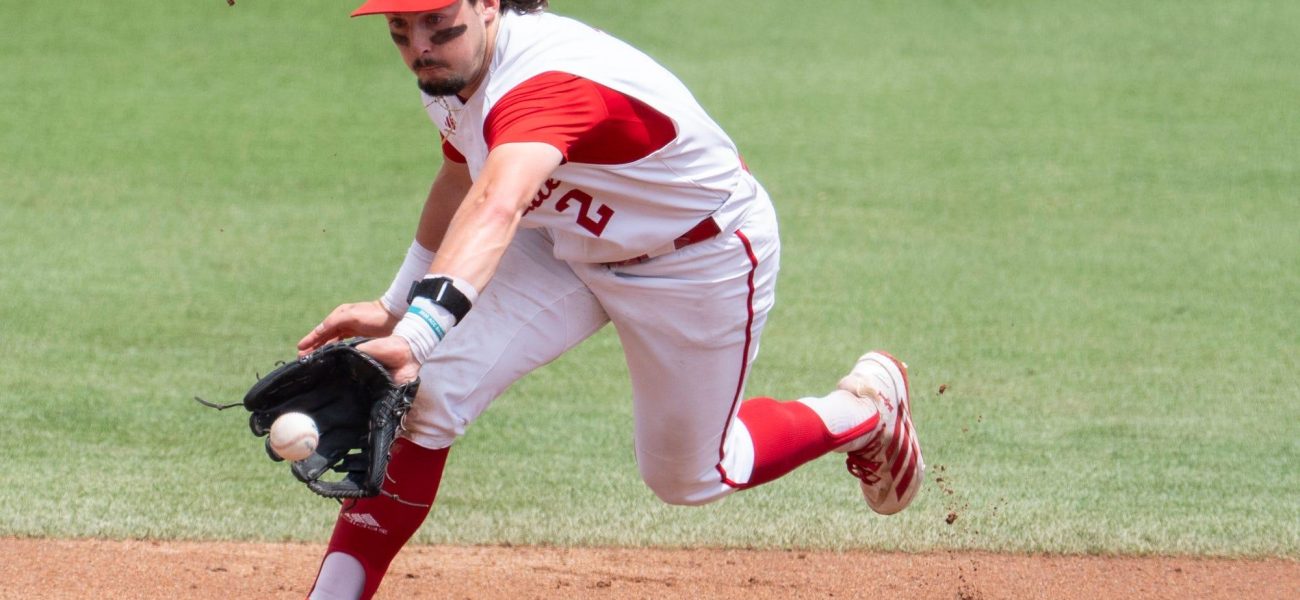
But the Wolfpack also needs to fend off losses via the transfer portal. It’s a full-time job. High-priority players to keep? Freshman left fielder Rett Johnson — and sophomore shortstop Mikey Ryan in the lineup, definitely. Junior right fielder Andrew Wiggins, freshman infielder Christian Serrano, and freshman catcher Vincent DeCarlo are also on the ‘must-keep’ list. For the pitching staff, it’s sophomore Anderson Nance, freshman Luke Hemric, freshman Sam Harris, sophomore Ryder Garino, freshman Aiden Kitchings, and freshman Mikey Ragusa. And if by some miracle Consiglio goes undrafted, he should be a high priority too. Those three — Consiglio, Nance, — and Hemric — could be a great start to a weekend rotation. And honestly, who isn’t high on redshirt freshman right-hander Truitt Manuel making some minor adjustments to get more movement on his fastball and turning into a stud reliever?
📄 POLICY WIRE WHITEPAPER PUBLISHED: PAKISTAN'S NATIONAL SECURITY POLICY PRIORITIES
👉 READ BY CLICKING HEREWhat This Means
This isn’t just about who gets to throw a baseball. It’s about governance, succession planning, and resource allocation in a highly competitive, multi-billion-dollar enterprise. Hart isn’t merely inheriting a team; he’s stepping into a hot seat that demands immediate, strategic recalibration. The political implications for NC State’s athletic department are tangible. A losing team means less revenue, less alumni engagement, and ultimately, less political capital for the athletic director and the university. Economically, retaining top talent directly impacts future revenue streams from ticket sales, merchandise, and even future NIL opportunities that draw from a program’s prestige. Losing a prospect like Alm to the draft, for example, represents a lost asset with immediate economic and competitive consequences for the current season. The pressure isn’t just to win games; it’s to manage expectations, innovate within existing structures, and navigate the volatile human element that defines collegiate athletics today. The delicate dance of recruiting against bigger-name schools, leveraging internal development, and — yes — preventing the unchecked exodus through the transfer portal mirrors the diplomatic challenges faced by many emerging economies trying to retain skilled workers in a globalized labor market. Policy Wire extensively explored these very challenges recently in The Gold Machine: America’s Youngest Ballers, highlighting how individual ambition frequently overrides institutional loyalty. For Hart, every decision — from catcher development (a noted weakness since Brett Austin left ahead of the 2024 season) to bullpen management — is a policy statement.
And because the future waits for no one, there’s also the new freshman class. Serrano — and RHP Jacob Smith reclassified, jumping onto this year’s roster. Smith, who moonlights as a quarterback for the football team, underwent Tommy John Surgery in March 2026. That wiped out his 2026 baseball season — and will cost him his 2026 football season too. But he should be returning around the start of the 2027 baseball season. It’s a cruel business, isn’t it?
The rest of the 2026-2027 freshman group is an 8-man class, headlined by Otto Knust, a stocky 6’5 righty who’s been seen hitting 97 this year. Big stuff, sure. But also erratic control, a familiar story. Logan Clark, Heath Craver, Maddox McRee, — and Mylo White round out the arms. They’re prospects. Unknowns. Which means Hart’s job is, perhaps more than ever, about making calculated gambles. It’s high-stakes poker, without the luxury of knowing the river card. For a deeper look at the pressures facing collegiate athletes and coaching staff in an increasingly demanding landscape, one might compare it to the insights offered in Sorsby’s Scramble, which tackled similar themes of career uncertainty and institutional demands.