


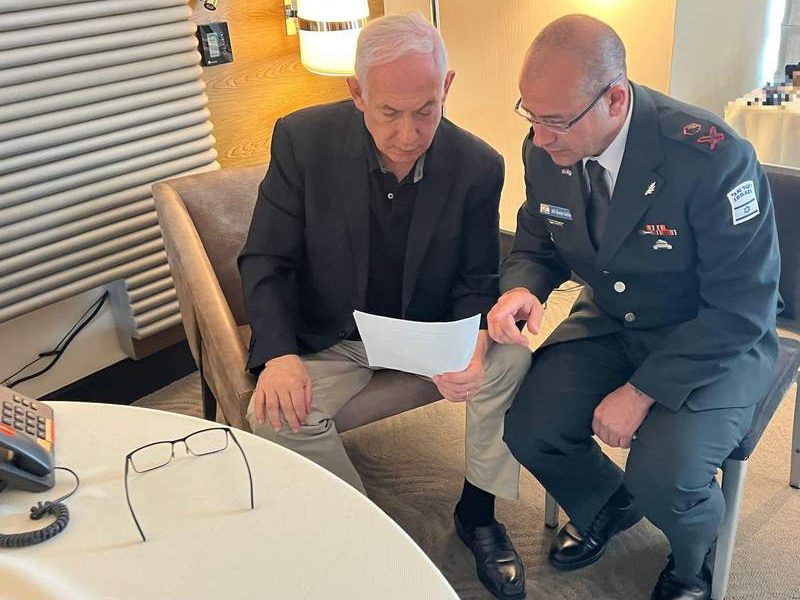
Jerusalem’s Shadow Command: New Spymaster Steps Into Maelstrom
POLICY WIRE — JERUSALEM — They say the real power in Jerusalem often isn’t found in the Knesset’s grand chambers, but in the hush of unnamed offices, where the nation’s clandestine operators...

POLICY WIRE — JERUSALEM — They say the real power in Jerusalem often isn’t found in the Knesset’s grand chambers, but in the hush of unnamed offices, where the nation’s clandestine operators scheme and maneuver. These are the places where threats are preempted, enemies countered, and occasionally, history subtly—or not so subtly—rerouted. That’s the world Roman Gofman now commands, stepping up as the fresh head of Mossad, Israel’s storied foreign intelligence service. It’s a role cloaked in myth, blood, and strategic calculation, less a job and more a permanent residence in the grey areas of global politics.
For those paying close attention to the machinations within Israel’s security establishment, the official nod wasn’t entirely a shock. But what this elevation signals, both internally and to an anxious neighborhood, is precisely what everyone’s now chewing over. Gofman isn’t just taking charge of an intelligence agency; he’s inheriting an empire of whispers, technological prowess, and a global network built to protect Israel’s borders by often operating far beyond them.
His predecessor, long lauded—and sometimes criticized—for a tenure marked by daring operations and assertive posture, has left immense shoes to fill. Gofman’s ascent comes at a moment when the Middle East is more volatile than it’s been in recent memory. You’ve got regional powers sparring in proxy wars, nuclear aspirations simmering, and asymmetric threats mutating faster than anyone can keep track. But Gofman, reportedly a veteran with a formidable operational track record, isn’t new to this kind of pressure cooke.
“Our enemies never sleep, and neither shall we,” asserted Prime Minister Benjamin Netanyahu in a rare public comment following the appointment. “Roman’s deep experience, his unyielding commitment to Israel’s security, sends a clear message: Our defenses are in capable, unwavering hands. This isn’t a time for hesitancy; it’s a time for absolute resolve.” A politician’s boilerplate, sure, but in this context, it carries a chilling undertone for those on Israel’s adversaries list. And that list? It’s extensive.
Because Mossad’s remit stretches to any perceived threat, from distant Iranian nuclear programs to terrorist cells operating across continents. Their shadow game frequently extends to regions like South Asia, where the confluence of geopolitical interests, sometimes unstable governments, and the persistent specter of extremism creates a highly combustible mixture. Countries like Pakistan, for example, aren’t immune to the anxieties stirred by high-profile intelligence shifts in Israel—their own intricate relationships with the broader Muslim world and their status as a nuclear power mean any perceived increase in regional intelligence activity sets off its own unique ripple effects.
And let’s be honest, intelligence isn’t cheap. Israel’s defense budget, much of it undoubtedly fueling operations like those run by Mossad, stood at approximately 4.5% of its GDP in 2023, according to figures from the Stockholm International Peace Research Institute (SIPRI). That’s a significant investment, reflecting the existential weight Israel places on agencies like this one.
📄 POLICY WIRE WHITEPAPER PUBLISHED: PAKISTAN'S NATIONAL SECURITY POLICY PRIORITIES
👉 READ BY CLICKING HEREBut beyond the numbers — and the posturing, what really shifts with a new hand at the wheel? “The agency’s challenges are undeniably multi-faceted now,” observed Dr. Amnon Barak, a senior analyst at the Institute for National Security Studies, offering a more nuanced perspective. “It’s not just about traditional adversaries or direct military threats. It’s about sophisticated cyber warfare, combating disinformation campaigns, navigating rapidly changing global alliances, and frankly, anticipating the wholly unexpected. It’s a job that demands extreme agility, often in the blind spots.”
Gofman’s known for his analytical acumen, alongside his operational daring. Many veterans whisper that he’s got a particular knack for understanding the intersection of technology and intelligence, a trait that’s increasingly valuable in modern espionage. His past roles within various departments of Mossad—from HUMINT (human intelligence) to the unit focused on technological intelligence—give him a holistic view of the beast he now commands. But even the best track record can’t fully prepare a person for the daily demands of a job that routinely asks for the impossible.
What This Means
Gofman’s appointment isn’t merely a changing of the guard; it represents a subtle recalibration of Israel’s long-term intelligence strategy, particularly given the present, festering conflicts. Politically, his rise signals a possible lean towards more technologically driven operations, complementing Mossad’s famed human intelligence networks. Economically, while intelligence budgets are always classified, you can bet there’s a renewed focus on securing resources and talent that can adapt to hybrid threats—things like financial espionage aimed at disrupting adversaries’ funding, or securing proprietary tech that gives Israel an edge.
It’s likely Gofman will prioritize hardening defenses against Iran’s escalating regional influence and its nuclear aspirations, as well as countering the growing threat of cyber-attacks emanating from state-sponsored and non-state actors alike. The intricate web of proxies that Tehran uses, stretching from Baghdad to Beirut, will be squarely in his sights. His tenure, observers predict, will likely be defined by a series of bold, often unseen, actions aimed at preventing future conflicts by dismantling threats long before they can materialize into overt warfare. It’s a delicate dance, performed in the dark, where mistakes are paid for in lives — and international stability. So yeah, no pressure, Roman.