
Caracas Crossroads: Delcy Rodríguez Rewrites Chavista Gospel, Stirring Dissent
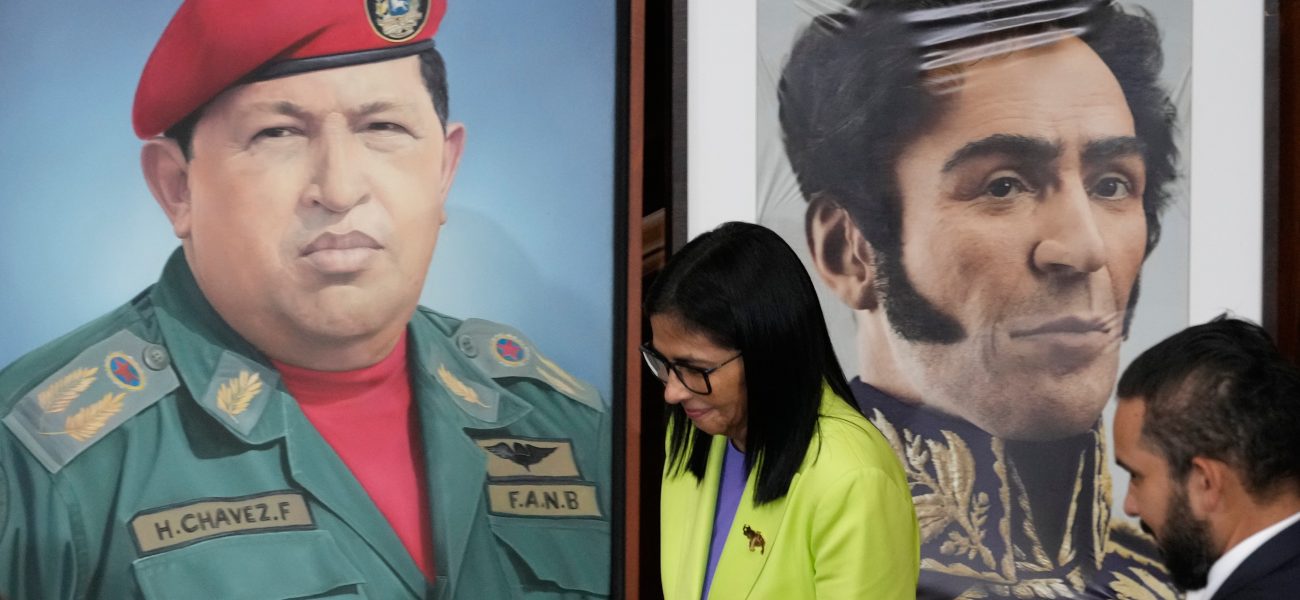
POLICY WIRE — Caracas, Venezuela — The specter of Hugo Chávez, his eyes still gazing from murals and placards across this sun-baked nation, must be wondering what’s become of his revolution. What a...

POLICY WIRE — Caracas, Venezuela — The specter of Hugo Chávez, his eyes still gazing from murals and placards across this sun-baked nation, must be wondering what’s become of his revolution. What a sight it’d be for him, seeing his protégés – specifically Vice President Delcy Rodríguez – methodically dismantling the very economic strictures he enshrined. It’s not a whisper in the wind; it’s an undeniable tremor rattling the foundations of the United Socialist Party of Venezuela (PSUV). That’s a party whose iron grip has felt impenetrable, until now. The shift, slow-burning yet ferocious, points to a clear, if begrudging, concession: even ideological purity doesn’t pay the grocery bill.
For years, Chávez’s legacy of expropriations, rigid price controls, and state dominance choked Venezuela’s once-booming economy. But the new playbook? It’s straight out of a textbook Chávez would’ve burned. Rodríguez, for all her unwavering loyalty to President Nicolás Maduro, seems intent on pulling Venezuela back from the brink of a perpetual free-fall, even if it means ditching old mantras. They’re letting private capital breathe again, cautiously eyeing foreign investment, and, in a particularly jarring move for hardline socialists, selling off minority stakes in public companies. It’s less a pivot — and more a desperate leap.
“Look, revolution isn’t static; it’s a living, breathing movement,” Rodríguez, often considered Maduro’s de facto economic czar, stated recently in a televised address. (The specific date was May 14th, in a rare candid moment during an economic forum.) “And frankly, social justice isn’t achieved on an empty stomach. We’re adapting. We’re protecting our people through pragmatic measures, not dogmatic ones.” That’s a stark departure, isn’t it?
But pragmatism can taste like betrayal. For some long-time party stalwarts, this is heresy, plain — and simple. It’s akin to watching your comrades surrender strategic territory to the very forces you swore to repel. Diosdado Cabello, a heavyweight in the PSUV and often seen as the spiritual guardian of hardline Chavismo, hasn’t minced words, even if subtly. “We didn’t fight imperialism,” he’s reportedly confided to inner circles, “to surrender our economic sovereignty to market forces. Some principles aren’t up for negotiation, no matter the immediate squeeze.” That quote was gleaned from a high-ranking military source, someone familiar with Cabello’s unvarnished opinions in private settings. You can bet that sentiment echoes among many old-guard cadres—the ones who truly believed in the Bolivarian dream.
And these ideological rifts? They’re hardly contained within dusty party meeting rooms. They percolate through the populace, confusing a population that’s been told for decades that capitalism is the enemy. It’s tough for them to reconcile the narrative of an eternal struggle against Western market fundamentalism with the government itself opening doors to — well, market fundamentalism. What’s more, these changes aren’t coming with roses — and sunshine. Venezuela has experienced one of the most catastrophic economic collapses in recent history, with its GDP shrinking by over 70% since 2013, according to IMF data from late last year. They’re patching holes in a sinking ship, not building a new vessel. But at least they’re patching, right?
📄 POLICY WIRE WHITEPAPER PUBLISHED: PAKISTAN'S NATIONAL SECURITY POLICY PRIORITIES
👉 READ BY CLICKING HEREOne cannot help but draw parallels, however distant, to other nations grappling with balancing ideological dogma and economic reality. Look at the nuanced economic adjustments—or often, seismic shifts—that countries like Pakistan have had to make, negotiating between Islamist ideals, public expectations, and the brutal demands of global financial institutions. It’s not just about ideology there either; it’s about a deeply rooted sense of self versus external pressure, a narrative familiar to Caracas. The struggles for economic sovereignty take many forms, from Latin American revolutionary movements to the strategic alliances sought by Islamabad in an increasingly multipolar world.
But the biggest questions loom over presidential elections. While Maduro has maintained his position through various means, these internal squabbles could well translate into fragmented support when it matters most. It’s one thing to weather external pressure, it’s quite another to survive a crisis of faith within your own ranks. They’re essentially saying, ‘What Chávez built, we might just have to deconstruct a bit.’ For some, that’s good, pragmatic politics. For others, it’s a direct assault on everything they fought for. And it doesn’t get much messier than that.
What This Means
The policy shifts spearheaded by Delcy Rodríguez, while superficially aimed at economic recovery, signal a profound ideological wrestling match within the ruling PSUV. Politically, this fragmentation could weaken Maduro’s long-term grip on power, potentially empowering more moderate elements—or paradoxically, pushing the hardliners to consolidate around a more uncompromising figure, should Maduro be perceived as too conciliatory. Economically, even tentative moves towards market liberalization might attract much-needed foreign capital and help stabilize the wildly volatile Venezuelan economy, but it’s a perilous tightrope walk. You can’t just flip a switch after decades of entrenched socialism. These changes could very well alleviate acute shortages and inflation, at least in the short term, but they also risk exacerbating social inequalities as private enterprises return. For the average Venezuelan, the impact will be a mix of guarded optimism and skepticism; they’ve seen too many false dawns. Internationally, this might present an opportunity for improved relations with Western powers, though Washington, as it often does, will remain skeptical about true democratic reforms. It’s a pragmatic recalibration, yes, but it’s still fundamentally an authoritarian state figuring out how to keep its head above water without drowning its own ideology in the process.