


The Golden Cage: One Athlete’s Crushing Blow Echoes in World Cup’s Shadow
POLICY WIRE — London, UK — The grand theatrical stage is set. Millions have bought tickets, billions more will glue themselves to screens across continents. The FIFA World Cup, a modern gladiatorial...

POLICY WIRE — London, UK — The grand theatrical stage is set. Millions have bought tickets, billions more will glue themselves to screens across continents. The FIFA World Cup, a modern gladiatorial spectacle, churns on. But amidst the clamor for glory and the promise of a global spectacle, sometimes it’s a single, fractured dream—a knee in an unfortunate twist—that truly exposes the brutal mechanics behind the velvet curtain.
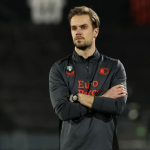
Billy Gilmour, Scotland’s dynamic 24-year-old midfielder, won’t be lacing up his boots when his nation makes its long-awaited return to the world stage. An injury sustained during a warm-up friendly against minnows Curaçao—an event almost forgotten in the build-up frenzy—has snatched his lifelong ambition right out from under him. He was able to walk off, but scans sealed his fate: out. He left the team hotel on crutches, his face likely a mask of what could’ve been.
It’s a tale as old as professional sport itself: the sheer, capricious unfairness of it all. Gilmour, fresh from a season of honing his craft abroad, had spoken before about the weight of expectation, about wanting to make good on that promise. And then, just like that, the promise becomes a ghost.
“It’s been a tough one to get my head around,” Gilmour relayed via his Instagram, the modern-day confessional for public figures. “Being so close to a childhood dream…and now it has been taken away from me with an injury.” His words are a raw, undiluted glimpse into the solitary torment of an athlete. It’s not just a missed tournament; it’s a rupture in a carefully constructed future, a stark reminder that even the fittest bodies can be cruelly fragile.
But the World Cup, famously, waits for no man. Not even a prodigy. Just a heartbeat after Gilmour’s diagnosis, Manchester United’s 19-year-old Tyler Fletcher was slotted into the squad. The machine demands continuity, a seamless replacement, an endless supply of fresh talent. It always does.
Steve Clarke, Scotland’s head coach, faced the press with the kind of practiced grimace reserved for such occasions. “Losing a player of Billy’s caliber so close to the tournament is, naturally, a blow,” he stated, his voice carefully calibrated to project both sympathy and resolve. “But we’re a team, — and the mission remains the same. Every player here understands the enormity of what’s ahead.” The rhetoric is always the same: next man up, national duty above all else. Because, really, what else can they say?
And so, while Gilmour starts his lonely journey of rehabilitation, Scotland heads to the United States. They’ll kick off their Group C campaign against Haiti, then face Morocco and, later, the colossus that’s Brazil. Fans back home, and across the globe where football stirs deep passions—from the dusty pitches of Karachi to the urban sprawl of Cairo—will tune in. Many dream of such an opportunity themselves, the golden ticket that success in football can represent for developing nations where the global scramble for football talent is fierce.
For nations like Pakistan, where cricket often dominates but football still holds significant sway, stories of players like Gilmour resonate. They understand the precarious journey from raw talent to global stage, the hopes pinned on a single individual, and the crushing disappointment when that path is abruptly cut short. It’s a mirrored reflection of their own often-fraught national sporting ambitions, albeit on a different scale of financial backing and infrastructure. The commercial juggernaut rolls on, leaving personal narratives to play out in its powerful wake.
What This Means
Gilmour’s injury, though specific to one player, provides a microcosm of the profound economic and psychological costs embedded within professional sports at its highest level. For one, it highlights the constant threat to a multi-billion dollar industry—an industry that, by FIFA’s own reports, generated $7.5 billion in revenue for the 2022 World Cup alone. Player injuries represent massive investments gone awry, affecting club valuations, sponsorship deals, and even national team morale, which in turn can influence viewership figures and associated tourism.
But it’s more than just money. There’s the political capital invested by governments and federations, leveraging major tournaments for national prestige and soft power. A strong performance can temporarily unite a fractured populace. A critical injury, conversely, can dent that collective psyche, however momentarily. Then there’s the deeply human element: the dreams of a working-class kid made good, shattered just as the pinnacle arrives. It exposes the harsh reality that even in an era of astronomical salaries and medical advancements, the human body remains a frail vessel, especially when pushed to its absolute limits. His absence isn’t just a loss for Scotland; it’s a sobering echo of the personal sacrifices demanded by a game that’s, simultaneously, both immensely rewarding and unbelievably cruel.