


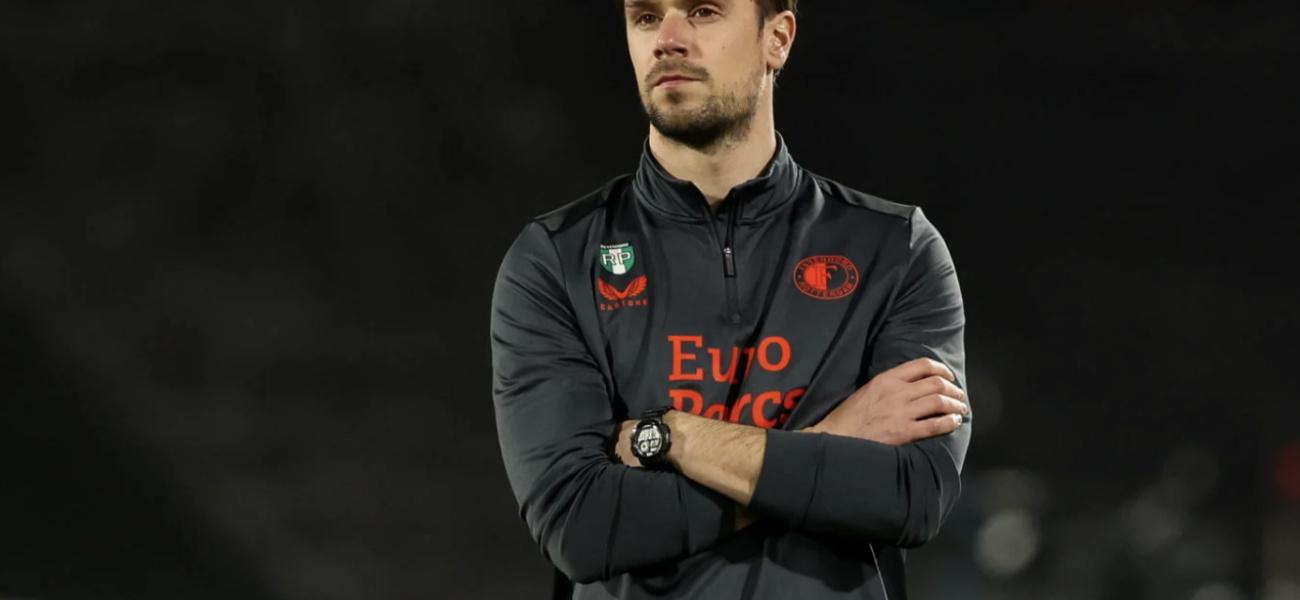
The Brutal Ballet of High-Stakes Football: Coaching Exodus Signals Deeper Corporate Churn at Liverpool
POLICY WIRE — Liverpool, England — Another name drops from the payroll, another chapter closes. You’d think the exit of a fitness coach — even a highly regarded one like Ruben...

POLICY WIRE — Liverpool, England — Another name drops from the payroll, another chapter closes. You’d think the exit of a fitness coach — even a highly regarded one like Ruben Peeters — would barely register amidst the cacophony of elite European football. But it’s rarely just about the individual, is it? Not when the stakes are this high, the television deals gargantuan, — and the corporate gears relentlessly grinding. Peeters’ departure isn’t a mere footnote; it’s a tiny ripple in a very large, very turbulent pond that’s Liverpool Football Club, signifying an end-of-an-era clarity that extends far beyond the dugout.
It’s a brutal ballet, really. One moment, Peeters is lauded for orchestrating a Premier League-winning season — a fitness guru helping the club remain relatively injury-free, a feat in itself. The next, after a year marred by an uncharacteristic rash of injuries and an underperforming team, he’s packing his bags. Call it collateral damage, a clean slate, or simply the cold, hard logic of modern sport — managers arrive, coaches depart, and often, it’s not because anyone explicitly failed, but because the market demands constant optimization. Fans, investors, and sponsors across the globe, from the cobbled streets of Anfield to the bustling markets of Karachi, demand nothing less than peak performance, every single time.
“This isn’t about individuals, it’s about optimizing performance for our stakeholders and, crucially, for our global fanbase,” a Liverpool F.C. spokesperson — who asked not to be named directly but was authorized to speak for the club — told Policy Wire this week, offering up the sort of corporate platitude that says everything and nothing at once. But you get the drift. Loyalty’s a luxury in this game; results are the currency.
Peeters joined up with Arne Slot in 2024, building a reputation during their shared tenure at Feyenoord. He was supposed to be part of the furniture, integral to a fresh start, someone to keep the finely tuned athletic machines humming. Yet, Slot’s reign at Liverpool proved tragically short. And when the main act’s pulled off the stage, it’s rarely a surprise that the supporting cast gets nudged toward the exit, too. His LinkedIn farewell — where he spoke of ‘unforgettable seasons’ and the ‘ultimate highlight’ of winning the Premier League — had the distinct flavor of someone cleaning out his desk, recalling past glories rather than looking forward.
That second season, you see, was rough. Injuries became a weekly headache, derailing momentum, limiting options, making everyone, including Peeters, look a little less shiny. Was it entirely his fault? Of course not. Football’s far too complex for that. But in the ruthless world of elite sport, someone’s always got to take the fall. It’s the cost of doing business when hundreds of millions are on the line — and expectations are perpetually sky-high. The average tenure for a Premier League manager, according to a 2023 study by the League Managers Association, now stands at a startling 1.7 years, a sharp decline from previous decades, reflecting this escalating pressure.
But the churn continues. New blood’s already being lined up, with whispers of Pablo De la Torre — a name that carries weight in fitness circles — as a potential replacement. He’s worked with the incoming management before, he knows the drill. And that’s what this is: a drill. A methodical, often emotionless reshaping designed to plug perceived weaknesses — and project an image of renewed vigor. Liverpool, like so many other footballing behemoths, has become a global enterprise, and such enterprises don’t tolerate stagnation, let alone backward steps.
📄 POLICY WIRE WHITEPAPER PUBLISHED: PAKISTAN'S NATIONAL SECURITY POLICY PRIORITIES
👉 READ BY CLICKING HEREThey’ve got legions of supporters in the Middle East — and South Asia, you know. Fans in Lahore and Dhaka wake up at ungodly hours to watch these matches, fueling massive broadcasting deals and shirt sales that pour back into the club. Their passion translates directly to the bottom line, amplifying the demand for silverware. This isn’t just about winning a local derby anymore; it’s about projecting strength on a geopolitical sporting stage, battling not just other clubs, but also other leagues — even the emergent talent powerhouses like the Saudi Pro League — for market share and bragging rights. The global scramble for talent and viewership redefines athlete allegiance and pressures club executives into swift, decisive action when results waver.
What This Means
The exodus at Liverpool, catalyzed by Peeters’ announced departure, tells us something profound about the commodification of elite sport. It’s no longer merely a game; it’s a volatile, multi-billion-dollar industry, where individual careers are traded and restructured with the clinical efficiency of a hedge fund optimizing its portfolio. What seems like a localized coaching change in Merseyside has economic implications reverberating across continents, influencing brand value, media rights, and crucially, player investment decisions.
But because these clubs operate with massive, often debt-fueled, investment from state funds or private equity — consider the deep pockets behind entities like Newcastle United, for instance — the pressure for immediate, tangible returns is intense. Coaches — and their staffs become highly paid, but ultimately disposable, assets. The romantic notions of club loyalty, of a long-term project, are increasingly quaint relics. Instead, what you get is a ruthless focus on KPIs — goals scored, clean sheets kept, — and player availability. When those numbers dip, heads roll. It’s not personal; it’s business, with a brutal efficiency that would make many a CEO nod approvingly. This kind of upheaval is becoming the norm, reflecting a wider trend seen in almost every corner of global capitalism, from tech startups to financial powerhouses like Chelsea F.C. The show, as they say, must go on — and usually, it’s with an entirely new cast.