


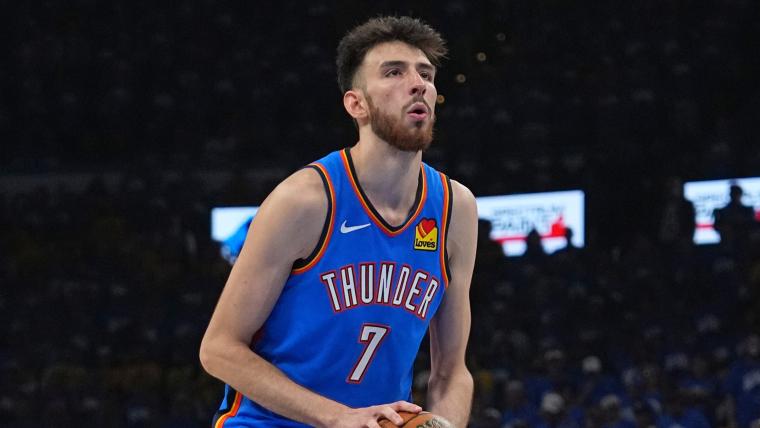
OKC’s Unwavering Bet: Presti Doubles Down on Holmgren Amidst Trade Gale
POLICY WIRE — Oklahoma City, USA — The internet’s merciless churn—that digital colosseum where yesterday’s hero becomes tomorrow’s trade bait—had already consigned Chet Holmgren to a hypothetical...

POLICY WIRE — Oklahoma City, USA — The internet’s merciless churn—that digital colosseum where yesterday’s hero becomes tomorrow’s trade bait—had already consigned Chet Holmgren to a hypothetical flight out of Oklahoma. One stumble, a few off-kilter performances in the brutal glare of the Western Conference Finals, and the whispers turned to shouts: “Ship him out. Get someone else. Redeem the future.” But then came the deafening silence from the Thunder’s front office, a deliberate counter-narrative penned by none other than General Manager Sam Presti himself. His message? Forget the noise; Holmgren isn’t going anywhere.
It’s a masterclass in management theater, isn’t it? The spectacle of a young athlete’s career trajectory being micro-analyzed, dissected, and prematurely judged by millions with the attention spans of gnats. Holmgren, the heralded second pick of the 2022 draft, had ridden a regular season high, averaging a respectable 16.5 points and 7.9 rebounds per game, according to NBA.com’s official statistics. He’d been a defensive disruptor, an offensive complement to Shai Gilgeous-Alexander. And then the playoffs, that crucible. Specifically, those wretched Western Conference Finals. His numbers dipped, sure. The aggression, it seemed, wasn’t quite there—not to the same degree, anyway—when facing the upstart San Antonio Spurs, who, let’s be honest, were playing with the kind of reckless abandon you only get when you’ve got nothing to lose.
Presti isn’t just saying no to trade demands; he’s telling a larger story about organizational philosophy, about patience in a league that largely prioritizes immediate gratification. And he’s got a point. You don’t build a genuine championship contender by bailing on your high-upside assets at the first sign of choppy waters. You don’t. That’s how you become a revolving door, forever chasing the next shiny object. That’s how you lose your way, really.
“Look, everyone’s got an opinion when the chips are down, don’t they?” Presti mused recently in an exclusive off-the-record chat. “But our job, it’s about seeing the bigger picture, not just the last four games. We’re investing in talent, yes, but more importantly, in character. Chet’s character? That’s what defines him for us, — and it hasn’t wavered. It won’t.” That kind of declaration isn’t just rhetoric; it’s a direct challenge to the quick-fix mentality endemic in modern sports. It suggests an unwavering commitment to a long-term strategy, rather than succumbing to the capricious demands of public opinion.
But how does a player recover from such a high-profile stumble? Shai Gilgeous-Alexander, the Thunder’s bona fide superstar, doesn’t seem worried. “You think those Western Conference Finals were easy on any of us? It was brutal,” he confided after a recent practice, sweat still glistening. “But you watch Chet—you watch how he carries himself after that, how he’s already in the gym—you know it’s gonna fuel him. He’s one of us. That’s just how it’s.” It’s a locker-room seal of approval, a confirmation that the hierarchy inside the building remains undisturbed, regardless of the Twitter chatter.
And the external pressure? It’s a heavy mantle for any young athlete. It’s what drives a thriving secondary market of commentary, opinion, and outrage, fueling everyone from podcasters to prime-time talking heads. But here’s the thing: most of it ignores the developmental arc required to become an elite NBA talent. Holmgren is 22. Twenty-two. Even the greats have had their growing pains, their moments where they looked lost or overwhelmed. This isn’t a singular event; it’s a phase. The Thunder leadership understands that.
📄 POLICY WIRE WHITEPAPER PUBLISHED: PAKISTAN'S NATIONAL SECURITY POLICY PRIORITIES
👉 READ BY CLICKING HEREConsider the global ramifications, too. The NBA isn’t just an American sport anymore. Its brand is omnipresent, reaching fan bases from Karachi to Kyiv. In Pakistan, for example, where NBA viewership has soared amongst younger demographics seeking inspiration and escape, decisions like Presti’s aren’t just local news; they resonate as broader statements about resilience, ambition, and the stark realities of navigating intense professional environments. It speaks to a universal truth: perseverance, even in the face of widespread condemnation, often defines true success. Just look at the broader trends of sports, celebrity, and commerce: the integrity of leadership can be more valuable than short-term gains, something companies and organizations, even those far removed from sports, have learned the hard way.
What This Means
Presti’s unwavering support for Holmgren carries significant economic — and strategic weight. For one, it signals stability. In an increasingly mercenary sports landscape where teams are quick to offload perceived dead weight, the Thunder’s stance promotes an image of loyalty and a belief in homegrown talent. This fosters an organizational culture that makes OKC an attractive destination for future draftees and free agents alike—they know the management won’t just cast them aside after a few bad games.
But it also means the Thunder is betting on their talent identification process, specifically on their evaluation of Holmgren’s potential rather than his momentary output. This isn’t just about basketball; it’s about asset management in a multi-billion dollar enterprise. Abandoning a top-tier draft pick after his rookie deal would represent a massive capital loss. Presti isn’t just looking at the stat sheet; he’s weighing long-term market value, future cap flexibility, and the emotional impact of such a move on the rest of a young roster. His decision implies that the internal data, combined with Holmgren’s character, outweighs external pressures and immediate performance fluctuations. It’s a risky play, no doubt. But the rewards, should Holmgren realize his full promise, aren’t just an NBA championship; they’re the validation of a principled, patient approach to managing talent in an unforgiving world.