


Beyond the Diamond: The Microcosm of Collegiate Grit and Global Aspiration
POLICY WIRE — Washington D.C. — For all the frenetic energy and calculated strategy unfolding on the diamond, the clash between the Milwaukee Panthers and the Auburn Tigers isn’t merely a game....

POLICY WIRE — Washington D.C. — For all the frenetic energy and calculated strategy unfolding on the diamond, the clash between the Milwaukee Panthers and the Auburn Tigers isn’t merely a game. It’s a stage. It’s a finely-tuned apparatus, delivering drama—sometimes engineered, sometimes pure—to millions. And it’s this machine, rather than the raw statistics of runs, hits, and errors, that often speaks volumes about a nation’s priorities, its dreams, and its rather peculiar obsessions.
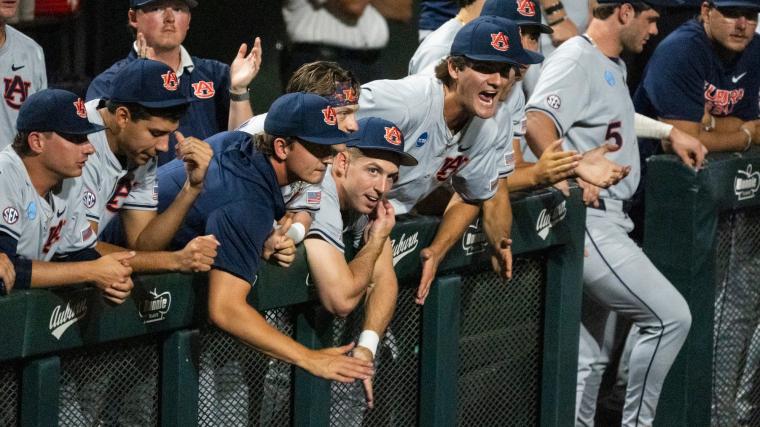
Down in the heart of SEC country, the Auburn Tigers, boasting a commendable 41-20 record heading into Monday’s elimination-game rematch, stand on the precipice. Their opponents, the Milwaukee Panthers, who arrived with a less sparkling but still respectable 27-32 tally, required two straight victories. It’s a binary equation: win or go home. And while sports tabloids revel in such straightforward narratives, Policy Wire sees a deeper architecture at play. The fervor around such matchups, the financial commitment, the talent pipelines—they tell a different story, one of national character and the soft power of culture, whether intended or not. [QUOTE_PLACEHOLDER]
It’s late on Monday. The earlier contest saw Auburn take care of business, yet a rematch looms—a fresh slate, a renewed pressure cooker for both sets of young men. But don’t mistake this for a simple athletic pursuit. Oh no, it’s far more intricate. Think of the sprawling infrastructure—the coaches, the recruiters, the medical staff, the legions of administrators—all dedicated to cultivating these fleeting moments of televised excellence. It’s a mini-economy, a meticulously curated spectacle, built on the shoulders of individuals who, for the most part, won’t ascend to professional superstardom.
And because America’s collegiate athletic system is a beast unto itself—unique in its scale and commercial integration—it offers fascinating parallels and stark contrasts globally. While the U.S. pours billions into university athletics, shaping young minds (and bodies) through competitive sport, what’s happening elsewhere? Take a nation like Pakistan. With its youth bulge — and burgeoning economy, one might observe a different calculus for nation-building. Their passion for cricket, almost a religious fervor, mirrors the American obsession with football or basketball. But the systemic investment in sports, from grassroots to collegiate levels, in Pakistan and many parts of South Asia, doesn’t quite replicate the American model of lavish facilities and professionalized amateurism. The priorities shift; national resources, quite reasonably, get allocated towards infrastructure, healthcare, or combating socio-economic disparities. While Delhi hosts high-stakes political maneuvers, American campuses host their own brand of high-stakes, regional finales, demanding disproportionate national attention.
But there’s an irony here. Despite the massive investment, the raw emotion on display on a small baseball field can be every bit as genuine, as visceral, as anything in larger geopolitical theaters. These young athletes, still students, aren’t paid professionals in the traditional sense (not yet, anyway). They’re chasing something else: glory, scholarship, the right to advance to the next, more glorious stage. It’s a primal human drive, repackaged for a television audience — and sold alongside commercial breaks.
📄 POLICY WIRE WHITEPAPER PUBLISHED: PAKISTAN'S NATIONAL SECURITY POLICY PRIORITIES
👉 READ BY CLICKING HEREThe 2026 NCAA Baseball Championship. It’s got that authoritative ring, doesn’t it? As if these early rounds weren’t just stepping stones but definitive statements. Every team listed, from Milwaukee to Auburn, contributes to an annual sporting leviathan. The statistical minutiae (AB, R, H, RBI, BB, SO, AVG, OBP)—those numbers aren’t just for statisticians; they’re the data points on which athletic careers, coaching legacies, and sometimes even university endowments, implicitly hang. It’s a ruthless, demanding environment. We can see it all laid out, clear as day. This brutal economic reality of collegiate sports offers a global mirror, too, reflecting differing national strategies for investing in human capital.
What This Means
The intense focus on single-elimination events in American collegiate athletics isn’t just about sports; it’s a policy decision in itself. It channels significant public and private investment into a cultural institution that, beyond entertainment, acts as a soft-power engine. These games, superficially about a ball and a bat, teach competitiveness, resilience, and teamwork—skills often lauded by corporate recruiters and military strategists alike. The success of a program, and by extension, a university’s brand, can attract research grants, top students, and donations, creating a self-sustaining ecosystem.
Economically, collegiate sports generate immense revenues for conferences and institutions, funding everything from non-revenue sports to academic scholarships, while simultaneously acting as regional economic drivers for host cities during tournaments. Politically, the narrative of underdog victories or dynasty building provides a national diversion, a unifying (or divisive) talking point that, intentionally or not, can distract from more contentious socio-political debates. But it’s also a system under constant scrutiny. Debates rage over amateurism, athlete compensation, — and equitable distribution of resources. For countries in the developing world, such as those across South Asia, while their national priorities might diverge, the inherent lessons of disciplined athletic development, from infrastructure investment to fostering a winning mentality, aren’t lost. They watch, they learn, they adapt aspects that fit their own socio-economic fabric, striving to forge national identities through sporting prowess, albeit on their own terms. It’s a reflection on global stages of aspiration—one where a collegiate baseball game, however local, carries a quiet, albeit often overlooked, geopolitical echo.