


115-Year Horizon Vanishes: Small Town Dreams Collide with Collegiate Juggernaut
POLICY WIRE — Gainesville, Florida — One hundred fifteen years is an awfully long time to wait for anything, let alone for a shot at glory in a ballgame. Yet, that was the grand, sprawling narrative...

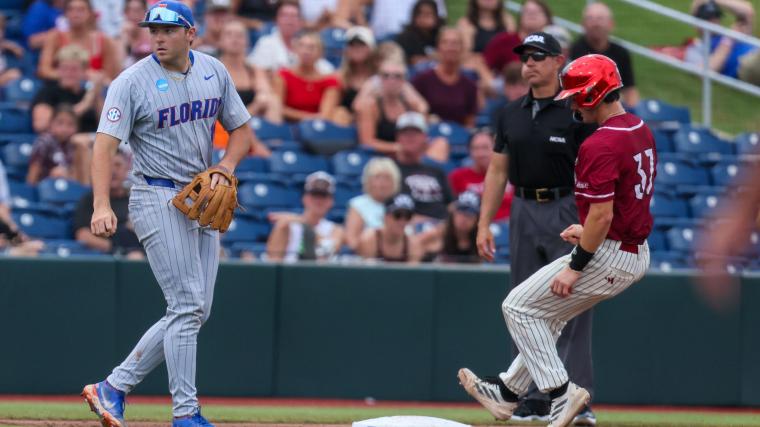
POLICY WIRE — Gainesville, Florida — One hundred fifteen years is an awfully long time to wait for anything, let alone for a shot at glory in a ballgame. Yet, that was the grand, sprawling narrative hanging heavy over the Troy Trojans as they took the diamond against the University of Florida Gators in what quickly turned into another brutal chapter in collegiate baseball. For over a century, a specific benchmark — making a Super Regional — had remained an elusive whisper in the wind for Troy, a distant dream that, for one brief, electric moment, felt utterly within grasp.
It was a showdown drenched in all the drama of classic sports tales, pitting a long-shot program against a perennial power. You know, the usual script. Except this wasn’t some feel-good movie where the plucky underdog inevitably triumphs. It’s real life, or as real as it gets in the gilded cage of big-time college athletics. This time, the goliath stood its ground. Florida clinched a hard-fought 10-9 victory, slamming the door shut on Troy’s improbable ambition. [QUOTE_PLACEHOLDER]
The stakes couldn’t have been higher, framed in stark terms by Florida’s head coach Kevin O’Sullivan. You could almost feel the weight of expectation when he said, “I mean, you win: you move on. You lose: the season is over.” He wasn’t wrong, was he? There’s no soft landing in these high-stakes contests; just a binary outcome that obliterates years of work for one side. He also mentioned, “We played a tough schedule. We have been through ups and downs. I definitely think they will be ready to play. What else do they’ve to lose? The alternative is that the season is over.” And boy, they were ready.
This single elimination format, for all its thrills, is ruthlessly efficient at snuffing out the flames of lesser-funded programs, however inspiring their journeys. For Troy, with their 35-30 record heading into this elimination game, the dream died in the ninth inning. Florida, standing at 41-20, demonstrated precisely why they carry a weightier pedigree, snatching the win with a decisive five-run surge in their half of the eighth inning that essentially rendered Troy’s subsequent four-run rally just a whisper of what could’ve been. It was close, sure, but close only counts in horseshoes — and hand grenades, not Super Regional berths. It isn’t always fair, is it?
Players like Hudson Brown, who tallied four RBIs for Troy, showcased the individual brilliance that makes these games so captivating, yet it wasn’t enough. On the Florida side, Armani Guzman — and Gavin Kelly led the charge, with Kelly notching an RBI and a double. Maxx Yehl, the Gators’ pitcher, went a solid 5.0 innings, conceding just three hits and one earned run while striking out six—a statistic illustrating the fine margins separating aspiration from reality in these fiercely contested events. But it’s rarely about just one player, or one pitch, when legacies stretch over a century.
Think about it. In Pakistan, where cricket is a national obsession and national pride often hinges on tournament outcomes, such a dramatic near-miss would ignite impassioned debates from Karachi to Lahore. The weight of generations of waiting, the fervor of an underdog’s potential triumph, the anguish of defeat—these emotions transcend national sports and culture. The yearning for a breakout moment, a recognition on a larger stage, resonates deeply wherever competition is viewed as a mirror of national or regional identity.
And because, frankly, the drama of one college baseball game—however epic—can only be understood through a broader lens of institutional pressures and financial imperatives. The whole thing plays out against a backdrop of increasing commercialization and expansion, a relentless drive for bigger tournaments, more TV money, and greater visibility. The question isn’t just about who won or lost, but what kind of infrastructure supports such contests. Take the fact that NCAA baseball saw over 12 million unique viewers across ESPN platforms during its 2023 tournament—a solid indication of the sport’s burgeoning economic footprint. This kind of audience is exactly why powerhouses thrive and smaller programs sometimes gasp for air, despite their fight.
What This Means
This outcome, tragic as it might be for Troy fans, underscores a persistent structural imbalance in collegiate athletics that goes far beyond a missed groundball or a stellar strikeout. It’s a microcosm of the entire ecosystem: money talks, facilities impress, and consistent recruitment creates dynasties. While the NCAA prides itself on providing equal opportunities, the playing field, in practice, is anything but level. Programs like Florida leverage extensive budgets, vast alumni networks, and top-tier training facilities, cultivating an environment where making Super Regionals isn’t a 115-year-long aspiration, but a regular expectation. And this financial disparity isn’t just felt on the field; it permeates the entire university structure.
Politically, the implications extend to how state legislatures prioritize funding for university athletics versus academics, and how these highly visible programs serve as both marketing engines and significant budget drains or boons. For smaller, less prominent state universities—much like the smaller, resource-strapped nations navigating complex geopolitical waters—it’s a constant struggle to punch above their weight. These contests aren’t just games; they’re brand exercises, student recruitment tools, and, occasionally, national distractions, especially in regions like South Asia where athletic success can be tied to government investment in public image. When does competitive balance become a policy goal, instead of just an ideal?
This loss for Troy also offers a glimpse into the raw human experience of collective effort culminating in bitter disappointment—a narrative that parallels struggles far beyond a baseball diamond. For the students, coaches, and small towns invested in these programs, the dream was palpable, concrete, then, just like that, gone. The brutal economics of collegiate athletics ensure that for every one team that moves on, another’s season is over. The machine churns ever forward. Collegiate sports has truly entered a new era of mercenaryism, where such losses often catalyze roster shifts and talent migrations. But there’s always next season, right? That’s what they always say.