


The High Stakes Game: Rams’ Blockbuster Garrett Play Ignites Economic and Geopolitical Echoes
POLICY WIRE — Los Angeles, CA — Forget the gridiron’s raw fury for a moment; what unfolded this week on the west coast, ostensibly a trade of athletic muscle, reads more like a distressed...

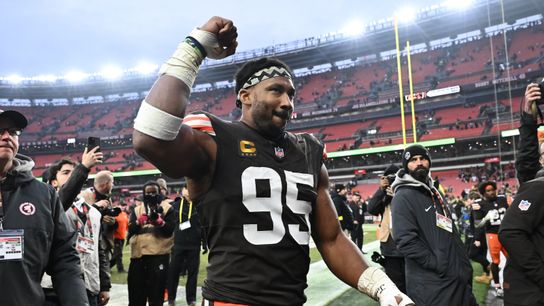
POLICY WIRE — Los Angeles, CA — Forget the gridiron’s raw fury for a moment; what unfolded this week on the west coast, ostensibly a trade of athletic muscle, reads more like a distressed nation’s desperate fiscal policy or a power bloc’s audacious geopolitical gamble. The Los Angeles Rams, never shy about tossing conventional prudence to the wind, just bought themselves an insurance policy on a championship, acquiring Myles Garrett, the league’s preeminent defensive terror, from the Cleveland Browns.
It wasn’t a mere transaction, you see. It was a declaration. A seismic tremor in the carefully balanced, often excruciatingly slow, strategic game of American professional football. In exchange for Garrett, a defensive end so dominant he’s considered a one-man wrecking crew, the Rams hemorrhaged a veritable trove of future capital: former Defensive Rookie of the Year Jared Verse, a 2027 first-round pick, a 2028 second-rounder, and a 2029 third-round selection. That’s mortgaging a chunk of tomorrow for the fierce urgency of now. It’s an approach many emerging economies know well—borrowing heavily against uncertain futures for immediate gains, sometimes to stabilize, sometimes to leapfrog. The Rams, they’re just on a different kind of economic clock.
And the markets, ever the canary in the coal mine, responded instantaneously. According to BetOnline.ag, the Rams’ Super Bowl odds sharpened from +750 (15/2) to +600 (6/1) in the immediate aftermath of the announcement—a financial seismic shift mirroring the footballing one. Meanwhile, the Browns, bereft of their cornerstone, saw their championship aspirations plummet from 250/1 to a wistful 300/1. The gambling public, often the sharpest, quickest assessors of value, understood the implications without needing a lengthy press release.
“We’re not building a library here, are we? This isn’t about collecting futures; it’s about claiming championships,” quipped Rams General Manager Les Snead, infamous for his audacious trading strategies. “Myles, he just happens to be a key chapter in that narrative, a foundational asset we simply couldn’t pass on. Every executive knows the price of immediate, definitive action. We paid it.” It’s a mentality that has delivered one Super Bowl to L.A., a clear vindication for the ‘damn the torpedoes’ strategy, at least in the short term.
But there’s always a downside. A sports economist, Dr. Fatima Zahra, noted from her Karachi university office, the glaring contrast. “While you have franchises liquidating massive capital for one star in the Western sphere, many nations, like my own Pakistan, struggle to simply retain basic infrastructure or develop nascent industries for sustained, generational growth. This kind of ‘all-in’ move by the Rams, it symbolizes a sort of unchecked affluence, a confidence in unending future returns, that just isn’t available to most of the world.” Indeed, the transfer of such high-value assets for a 30-year-old athlete—even a transcendent one like Garrett, who logged an NFL-record 23 sacks last season—begs questions about perceived scarcity and the valuation of elite talent in a global economy.
📄 POLICY WIRE WHITEPAPER PUBLISHED: PAKISTAN'S NATIONAL SECURITY POLICY PRIORITIES
👉 READ BY CLICKING HEREThis aggressive posture isn’t new for the Rams’ brain trust, GM Snead — and coach Sean McVay. They’ve built their careers on this precise philosophy: Matthew Stafford, Jalen Ramsey, Von Miller. They’ve consistently demonstrated a willingness to gut their draft reserves—the raw material for long-term roster building—for immediate, proven superiority. Because they don’t play the long game in the traditional sense; they redefine it. They play the now game, with an almost imperial conviction that their management will always find a way to restock the cupboards, come what may.
Garrett, a seven-time Pro Bowler, two-time Defensive Player of the Year, and career leader with 125.5 sacks since 2017, joins a Rams roster that last season fell just short of the NFC Championship Game. With MVP Stafford still slinging it, and a core of dynamic talent, adding a pass-rusher of Garrett’s caliber—a player who alters opponent strategy just by existing on the field—is like adding a tactical nuclear option to a conventional arsenal. But then again, one always worries about proliferation, don’t you? The uneasy intimacy of sports fandom in a gilded age highlights this obsession with instant gratification.
What This Means
The Rams’ acquisition of Myles Garrett isn’t just a headline for sports pages; it’s a policy blueprint writ large. In a geopolitical context, this ‘all-in’ strategy mirrors those governments that bet heavily on one defining, often risky, initiative—say, a colossal infrastructure project, a high-stakes diplomatic play, or even a sudden military mobilization—to secure an immediate, tangible victory, regardless of the potential for future austerity. It’s a calculated gamble against conventional wisdom, pushing past the conservative, long-term build for a sharp, decisive strike. For the Rams, it implies an unwavering belief in their current operational capacity to maximize this window, minimizing the repercussions of a diminished future asset pool. It suggests a view where elite, proven talent is a currency more valuable than future potential, a stark contrast to organizations or nations prioritizing grassroots development or diversified long-term investments. This trade signals that in certain high-stakes arenas—be they economic, political, or athletic—the present advantage is the only advantage that truly matters, consequences be damned. And often, these audacious plays set the market, creating ripple effects across entire sectors.