

The Brutal Calculus: Aging Slugger’s Value Imperils Angels’ Fading Playoff Hopes
POLICY WIRE — Anaheim, USA — October aspirations in sunny Southern California? That’s typically the stuff of daydreams for Los Angeles Angels fans, a fleeting thought extinguished long before the...

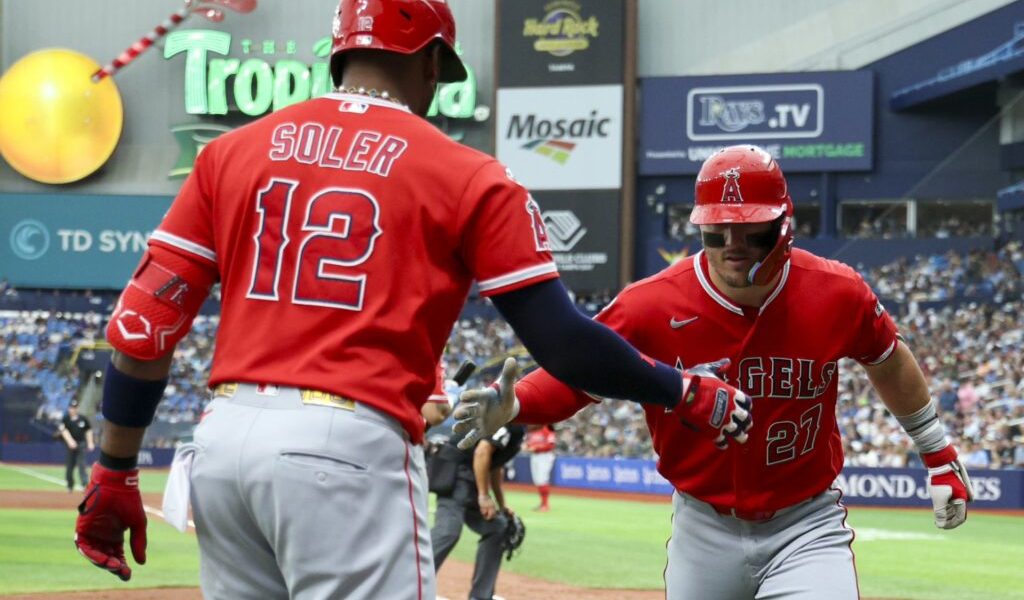
POLICY WIRE — Anaheim, USA — October aspirations in sunny Southern California? That’s typically the stuff of daydreams for Los Angeles Angels fans, a fleeting thought extinguished long before the autumn leaves turn. But this season, a quieter, more insidious drama unfolds not on the diamond, but in the sterile backrooms where spreadsheets dictate futures, where a thirty-four-year-old slugger named Jorge Soler finds himself caught in a uniquely brutal American corporate paradox: an investment that’s both critical and rapidly depreciating.
It’s not just about winning games, never really is, is it? It’s about asset management, about the bottom line, about squeezing every last cent of perceived value from a multi-million-dollar human resource. Soler, once the Cuban Missile of Miami, arrived with fanfare, a potent bat meant to electrify a lineup desperately needing a spark. He did just that, for a few glorious weeks in April 2026, launching bombs, pushing his On-base Plus Slugging (OPS) to an eye-popping .850. Then, the brawl, the suspension, — and the slow, agonizing descent back to earth. May was a statistical wasteland, an offensive black hole where he managed just two home runs in over a hundred plate appearances. His overall OPS, a cold, hard arbiter of production, now wallows in the mid-.600s.
And so, the quiet whispers have begun. Can he salvage his trade value? Can he, perhaps, offer a struggling contender a late-season jolt and return a prospect or two for the perpetually rebuilding Angels? It’s a high-stakes question, one that defines much of the mid-season machinations in professional sports.
“Look, everyone on this roster knows it’s a performance business. Jorge is a professional, but our mandate is to put the best possible team on the field, whatever that takes,” Angels General Manager Perry Minasian told Policy Wire, his tone a carefully measured blend of corporate speak and underlying tension. “No one’s untouchable when it comes to long-term strategy, especially when contracts are winding down.” It’s a polite dismissal, isn’t it? A soft nod to the executioner’s block, implying that if the bat doesn’t wake up, neither will the phone lines with attractive offers.
This isn’t merely about baseball; it’s about the universal language of markets and the transactional nature of high-end talent. Across continents, from the glitzy Premier League to burgeoning cricketing leagues in Lahore or Dubai, the same harsh realities apply. Elite athletes are commodities, their price points dictated by performance, age, — and potential return on investment. “Fans see heroes, but we see depreciating assets sometimes,” commented Marcus Thorne, a prominent agent with decades of navigating athlete contracts. “An athlete’s shelf life is brutal. For Soler, every swing is essentially an audit, deciding if he’s a capital gain or a sunk cost for some other franchise.”
His current OPS of .683 for the season remains starkly below the league average for designated hitters, which typically hovers around .750-.780, according to data compiled from MLB Advanced Stats. That’s not just a slump; it’s a red flag. A blinking, sirens-wailing red flag on the balance sheet. They’ll face the Colorado Rockies next, a team languishing at the bottom of their division, a supposed balm for a hurting offense. But a statistical reprieve against a weak opponent rarely washes away systemic issues.
📄 POLICY WIRE WHITEPAPER PUBLISHED: PAKISTAN'S NATIONAL SECURITY POLICY PRIORITIES
👉 READ BY CLICKING HEREWhat This Means
The situation in Anaheim with Soler encapsulates a broader economic dynamic in professional sports—a relentless pursuit of optimal asset utilization. For the Angels, it’s about maximizing any remaining trade value for a player in the final year of his deal, particularly one they’re playing through a groin injury (because that’s what professionals do, they grimace and play through it if it means potential millions). His performance in the coming weeks will directly impact their ability to restock a farm system perpetually craving top-tier prospects. But it also dictates the narrative of player mobility. Will Soler prove himself valuable enough for a contender to take a flier, offering him a chance at postseason glory before his inevitable walk into free agency? Or will he become another cautionary tale, a once-feared slugger whose body (and wallet) failed to keep pace with expectations?
And here’s where the international angle quietly interjects itself. While American baseball hasn’t fully penetrated the South Asian market with the same fervor as cricket or football, the underlying principles of talent acquisition and wealth consolidation are universally understood. Investment groups from the UAE and even other parts of the Muslim world, increasingly diversified and globally ambitious, observe such dynamics intently. They recognize the brutal elegance of a market that values performance above all else. This isn’t about just Soler, or the Angels. It’s about a worldwide sporting-industrial complex that mirrors geopolitical maneuvers—nations, like teams, constantly evaluating their human capital, their influence, and their strategic worth. It’s a never-ending chess match where every move has a price, and sometimes, players, whether on the field or in the global arena, just aren’t worth what they once were.
The coming weeks, therefore, aren’t just about whether Soler can hit a few more dingers. They’re a real-time audit of an aging athlete’s market viability, and a grim reminder of how cold the business of big-league sports can get. And, make no mistake, everybody’s watching what they’re calling this June offensive from the big man. Not just fans, but the entire, ruthless enterprise that’s professional sports. What will his market price truly be by the trade deadline?