


Tel Aviv’s Unsettling Exhibit: Mall Memorial Sparks Reflection, Divides
POLICY WIRE — Tel Aviv, Israel — The aroma of falafel and freshly brewed coffee usually dominates the air in Tel Aviv’s upscale shopping centers. But lately, amidst the fashion boutiques and...

POLICY WIRE — Tel Aviv, Israel — The aroma of falafel and freshly brewed coffee usually dominates the air in Tel Aviv’s upscale shopping centers. But lately, amidst the fashion boutiques and gadget stores, there’s been another, more somber presence: an inescapable echo of the past seven months, a stark reminder that even in havens of commerce, the nation’s raw wounds continue to bleed. It’s a tricky tightrope to walk, this blend of everyday routine — and pervasive trauma.
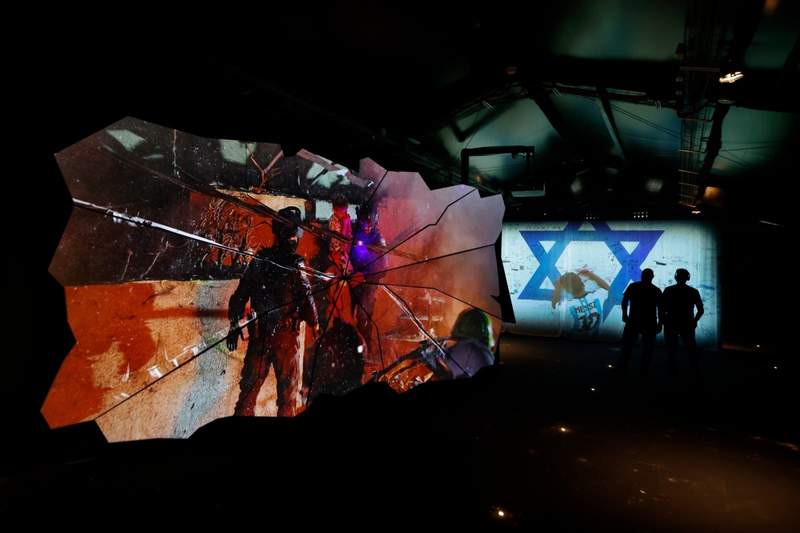
Down at the Dizengoff Center, shoppers don’t just glide past mannequins; they’re now confronted with ‘We Shall Rise,’ an art installation whose name alone is a defiant clap-back against despair. It isn’t some quiet, dimly lit gallery piece, mind you. No, it’s strategically positioned for maximum impact—a public statement, plain and simple, meant to capture the collective mood. You can’t miss it. It’s not supposed to be missed.
The exhibit is ostensibly a visual narrative of Israel’s ‘journey’ since the horrific October 7 attacks. There are artifacts, photographs, perhaps even a few too many stark images that pull you up short between browsing for new sneakers and grabbing a gelato. It’s meant to convey resilience, sure, but also the sheer, grinding reality of what happened, and what’s still happening. Because, let’s face it, trauma doesn’t just evaporate with a new season’s collection. But some folks wonder if a mall, any mall, is truly the right venue for this kind of intense, raw public reckoning.
Minister of Intelligence Eli Cohen, whose office often fields questions about national morale, was surprisingly candid. “This isn’t merely an art installation; it’s a defiant statement, a living memorial to our people’s indomitable will to endure and rebuild,” he remarked recently, a certain steel in his voice. “We won’t just remember; we’ll rise from this, publicly and unapologetically.” It’s the sort of statement that sells well domestically, articulating a deep-seated desire for strength.
But others aren’t so sure about the venue. Tamar Zandberg, former Minister of Environmental Protection and a sometimes vocal critic of the government’s approach to various social issues, offered a more cautious perspective. “While such public displays certainly capture a collective sentiment, we can’t let symbolism eclipse the deeper, unresolved questions about accountability and future security,” she mused in an interview, her words carrying a familiar, measured skepticism. “It’s important to heal, yes, but not to gloss over what got us here. Or what’s still very much here.” Her point, subtle as it was, cut to the quick for many who feel the public conversation is still too shallow.
And then there’s the broader narrative—how this particular brand of public healing, this very public demonstration of ‘rising,’ gets interpreted beyond Israel’s borders. For many in the Muslim world, from Cairo to Kuala Lumpur, and especially in places like Pakistan, narratives of resilience often come with a heavy dose of historical grievance and perceived injustices. The imagery presented in a Tel Aviv mall, however well-intentioned locally, can easily be misinterpreted or dismissed as triumphalist propaganda through different cultural lenses.
📄 POLICY WIRE WHITEPAPER PUBLISHED: PAKISTAN'S NATIONAL SECURITY POLICY PRIORITIES
👉 READ BY CLICKING HEREA significant majority, it seems, craves this sort of public acknowledgement. Recent polling suggests that approximately 78% of Israelis believe public displays of remembrance are essential for national healing, according to a recent independent survey conducted by the Israel Democracy Institute. That’s a powerful statistic, giving such mall exhibits a distinct societal imprimatur. But public sentiment can be a fickle beast; what heals one can irk another, even within the same society.
It’s not just about memorializing. It’s about what you choose to remember, how you frame it, — and where you put it. You’ve got to ask: who’s the intended audience? And what does ‘rising’ even mean when the rubble hasn’t yet been cleared, both physically — and emotionally?
What This Means
These mall installations, initially seeming like mere public art, are in fact a canny maneuver in the ongoing battle for national narrative. Politically, they serve as powerful, if subtle, instruments of state-building, reinforcing a sense of national unity and purpose in times of profound crisis. For a government often besieged by criticism—both domestic and international—showcasing resilience on such a public, everyday stage offers a digestible, accessible story for its populace. It’s a message that bypasses traditional media gatekeepers, hitting people where they’re already going: the mall.
Economically, there’s an unspoken aspect: normalizing some semblance of everyday life, encouraging people to venture out and spend. Because despite everything, the economy has to keep humming, doesn’t it? But this tactic carries risks. Blurring the lines between remembrance, nationalism, and consumerism can easily cheapen the message, leading to accusations of politicizing trauma for public relations. It can alienate those who feel the current displays don’t adequately represent the multifaceted — and often contradictory — experiences of suffering and survival. the lack of external context in such narratives exacerbates a feeling among observers, especially in countries grappling with their own complex humanitarian crises, that the suffering of one group is prioritized, or even weaponized, over another. But, then again, this isn’t exactly new. Governments do this. They’ve always done it. It’s called shaping public perception, and a shopping mall, in its own way, is just as much a public square as any historical landmark. It’s an interesting experiment, this blend of grief — and retail, and it certainly won’t be the last. Just as soft power operates through seemingly benign channels, so too can national narratives be spun amidst the racks of the and food courts.