


Beijing’s Media Tango: A Reporter’s Expulsion and the Fraying Edges of Diplomacy
POLICY WIRE — Washington D.C. — Imagine a global superpower, ostensibly focused on its own rise, getting so thoroughly unnerved by an interview in a distant capital that it kicks out the messenger....

POLICY WIRE — Washington D.C. — Imagine a global superpower, ostensibly focused on its own rise, getting so thoroughly unnerved by an interview in a distant capital that it kicks out the messenger. Not for what was said about *them*, mind you, but for what was said about a territory they desperately claim as their own. It’s a dance, really—a bizarre, increasingly aggressive tango that Beijing keeps trying to lead on the global stage, often tripping over its own heavy-handedness.
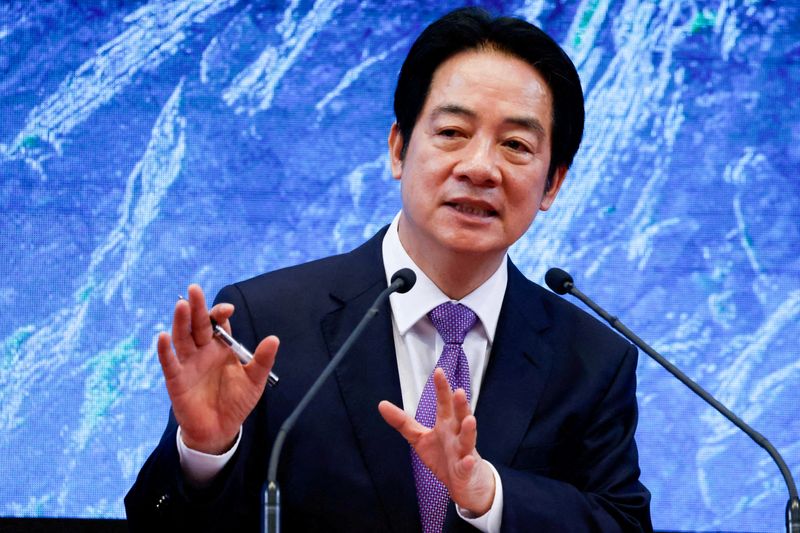
That’s what went down, or so it seems, when a New York Times correspondent, just finished chatting with Taiwan’s freshly elected leader, found himself persona non grata. Taiwan, no stranger to Beijing’s tantrums, immediately condemned the move. And why wouldn’t they? It’s not subtle; it’s a giant, flashing neon sign broadcasting precisely what China doesn’t want people talking about: a vibrant, self-governing democracy just across the Strait, openly discussing its future without Beijing’s permission. This reporter wasn’t some rogue provocateur; he was doing his job—reporting. It’s simple, really. Yet, for some, that’s precisely the problem.
“This isn’t just an affront to journalistic freedom; it’s a chilling message meant to silence anyone who dares report on realities Beijing wishes weren’t real. We won’t stand for it,” stated Joanne Ou, spokesperson for Taiwan’s Ministry of Foreign Affairs, in a public rebuke. She added, “Taiwan remains a free and open society, and we believe facts, not intimidation, should drive the global conversation.” You’ve gotta respect that kind of defiance in the face of such a behemoth. But defiance only gets you so far when you’re dealing with an entity that prefers narrative control to open dialogue.
Of course, Beijing spun it differently. “The New York Times has a long history of bias and distorting facts concerning China and our internal affairs, especially regarding the Taiwan question,” countered Wang Wenbin, spokesperson for China’s Foreign Ministry, during a press briefing, presumably without a trace of irony. “We expect foreign journalists to abide by our laws — and regulations. Interference won’t be tolerated.” It’s always about ‘interference,’ isn’t it? As if interviewing an elected head of state counts as some geopolitical act of aggression. It makes you wonder how exactly they define journalism, or democracy for that matter.
Because, honestly, this isn’t an isolated incident. It’s part of a growing pattern. China ranks a dismal 179th out of 180 countries in Reporters Without Borders’ 2024 World Press Freedom Index, putting it right down there with North Korea. When you’re virtually at the bottom, your claims of press impartiality and adherence to ‘laws’ become, well, less than convincing. They’ve systematically squeezed out foreign journalists for years, creating an information vacuum. And that vacuum? It gets filled with Beijing’s version of the truth, often unchecked.
This tactic doesn’t just play out in East Asia. It ripples across the globe, reaching even countries like Pakistan. Pakistan, deeply entwined with China through initiatives like the Belt and Road, often faces its own internal battles regarding media independence. The tacit — or sometimes not so tacit — acceptance of China’s heavy-handed tactics abroad can subtly legitimize similar restrictions at home. It becomes a quiet precedent, a chilling whisper about the consequences of displeasing a powerful patron. What Beijing does on its periphery, say with journalists covering Taiwan, invariably influences the playbook for managing narratives elsewhere, especially for nations already balancing on a tightrope of free expression.
📄 POLICY WIRE WHITEPAPER PUBLISHED: PAKISTAN'S NATIONAL SECURITY POLICY PRIORITIES
👉 READ BY CLICKING HEREIt’s not just a reporter’s livelihood that’s at stake here; it’s about whose story gets told, — and how. The global narrative on Taiwan, its sovereignty, its people’s wishes—it’s become a flashpoint for this kind of information warfare. You’d think a country as proud as China would let its actions speak for themselves, but clearly, they’re not content to leave that to chance. Not when the ‘facts’ might not align with the preferred story. They’d rather just remove the storyteller, thank you very much. And that’s a problem that should concern everyone, everywhere. Asia’s unseen shifts often manifest in these subtle, yet potent, attacks on truth.
What This Means
Beijing’s move is less about stopping one story — and more about broadcasting a warning. For Taiwan, it reinforces the need to proactively counter China’s information campaigns and strengthen its democratic allies. Economically, while this incident itself might not trigger sanctions, it contributes to a growing perception of China as an unpredictable, authoritarian actor, potentially chilling foreign investment and deepening existing trade frictions with Western powers. It’s not helping Beijing’s charm offensive, if they even have one anymore. For the international press corps, it’s another reminder of the perilous tightrope foreign journalists walk in countries under Beijing’s sway—a space that’s getting smaller, and ever more dangerous.
But the fallout extends beyond immediate geopolitical calculations. It establishes a problematic norm, particularly within the Global South, where nations might look to China’s model of information control as a viable—even attractive—strategy. It provides cover for local regimes inclined to suppress unfavorable reporting. We’ve seen similar patterns in the broader region; Gaza’s crucible, for instance, sees similar battles over information control. It signals that truth is secondary to narrative. And that, frankly, is a terrifying prospect for the future of journalism — and diplomacy alike.