


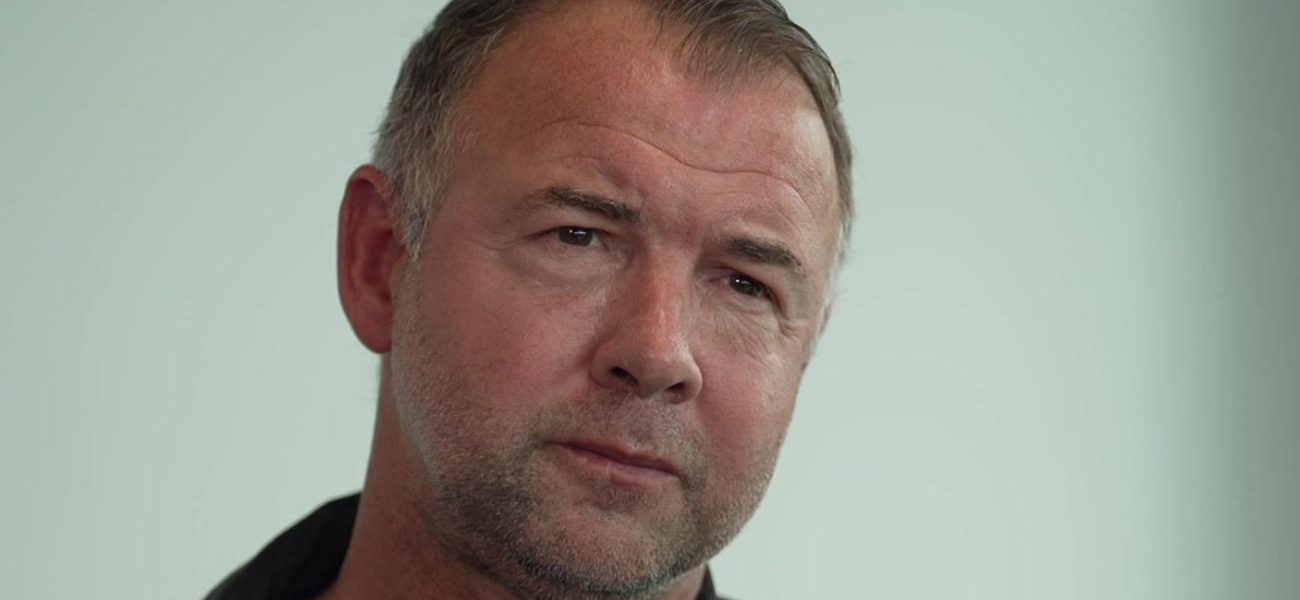
The Silent Battle: Stewart’s Unflinching Stance Against MND’s Relentless Advance
POLICY WIRE — London, UK — For a man whose physical prowess once defined his public persona, the latest bulletins arrive with an almost unsettling calm. One might imagine the roar of the...

POLICY WIRE — London, UK — For a man whose physical prowess once defined his public persona, the latest bulletins arrive with an almost unsettling calm. One might imagine the roar of the crowd, the intricate ballet of a striker finding his mark. Instead, we’re left contemplating the stark quietude of personal loss, rendered with dispassionate clarity. But here’s the kicker: for former Premier League stalwart Marcus Stewart, this isn’t a surrender; it’s another play, a different kind of tactical manoeuvre against an implacable foe.
It’s an unwritten rule, isn’t it? Those who live their lives on the field, powered by their bodies, often face the cruellest ironies. Stewart, the athlete who once graced pitches for Ipswich Town and Sunderland, found himself staring down a diagnosis of motor neurone disease (MND) back in September 2022. Fast forward a couple of years, — and the illness has, predictably, staked further claims. He has lost the use of his arms, a phrase delivered with the dry, matter-of-fact tone characteristic of those grappling with life-altering realities. [QUOTE_PLACEHOLDER]
This isn’t a cry for sympathy, mind you. It’s a pragmatic assessment from a man who, despite losing the most basic functions we take for granted—driving, showering, dressing himself—remains, in his words, hopeful of finding a cure. That’s a bold declaration from someone staring down the barrel of such a prognosis. And he’s not just hoping; he’s doing. You see him at the start of a third annual march starting in Liverpool at 09:00 BST, a testament to sheer, bloody-minded perseverance.
One listens to him describe his day-to-day—I can’t drive anymore, can’t shower myself, can’t put clothes on, can’t take them off. I can’t do anything that you would do with your arms, really—and you realize the scope of the invasion. It’s thorough, it’s unrelenting. Yet, what comes next isn’t despair, it’s strategy: but I find solutions and find ways around it, and if I can’t do that, then my wife’s here to help me. This isn’t merely positivity; it’s an active adaptation, a re-engineering of existence itself. His wife, Louise, backs this up, noting He’s more patient and definitely more positive than he might’ve been in his younger, less beleaguered years.
But the true marvel here might be the collective defiance, the sheer stubborn refusal to simply fade into medical footnotes. Stewart — and former Liverpool player Stephen Darby, who also battles MND, spearhead the March of the Day walk. Now in its third year, a dedicated cohort of walkers will clock 350 miles (563.27km) over the next six days, stretching from Liverpool’s waterfront to the Rob Burrow Centre for MND in Leeds. The centre itself is brilliant, Stewart notes, a new focal point of hope, tragically named for the late rugby star Rob Burrow, who succumbed to the disease earlier this year. High-profile names, too, are lending their muscle, with footballers Jill Scott, Emile Heskey, and Paul Scholes alongside rugby players Johnny Lawless, Leon Pryce, and Faye Gaskin lacing up their boots.
This kind of collective mobilization, especially when led by public figures, offers more than just fundraising; it crafts a narrative of solidarity against overwhelming odds. It’s not so different, frankly, from how communities coalesce in regions like Pakistan or other parts of the Muslim world when faced with endemic health challenges or catastrophic events. There, a concept deeply ingrained within cultural and religious frameworks often spurs communal aid and philanthropy, akin to the grassroots efforts that underpin charity drives. While the Western medical infrastructure offers a more formalized research pathway, the underlying human impetus—to care, to organize, to support—transcends borders and socio-economic constructs. And Stewart’s optimism isn’t some naive daydream. He watches other public figures fall to MND, Lewis Moody’s been diagnosed recently , in terms of sports people that we know, yet he insists: Who knows what’s going to happen in the next year? Something might come out soon. We don’t know, but I’m always hopeful. I believe I’ve got time on my side, — and I believe there will be a treatment or a cure soon. If I didn’t believe that, then there’s no point in carrying on. That, right there, is the bare-knuckled conviction that keeps things moving.
But the numbers are stark, too. According to the MND Association, approximately 5,000 adults in the UK are living with MND at any one time, painting a picture of an illness that, while not rare, often lurks outside mainstream public discourse until a celebrity or athlete steps into the spotlight. Their visibility acts as a megaphone.
📄 POLICY WIRE WHITEPAPER PUBLISHED: PAKISTAN'S NATIONAL SECURITY POLICY PRIORITIES
👉 READ BY CLICKING HEREWhat This Means
The plight of individuals like Marcus Stewart isn’t merely a human interest story; it possesses considerable policy and economic implications. For starters, such high-profile awareness campaigns often inject much-needed political capital into rare disease research funding. Historically, conditions affecting fewer people struggle for allocation against more prevalent illnesses. But when a national sporting hero lends his name, politicians tend to listen a little closer, — and purse strings loosen. Because let’s be clear, public sentiment can — and does — influence health budgets.
Economically, the impact of MND, particularly on working-age individuals, is catastrophic. It means not just loss of productivity but also exorbitant healthcare costs, specialized equipment, and extensive home care, often borne by families or stretched public health services. A prolonged, debilitating illness like MND creates a multi-faceted economic drain that transcends the individual. So, these walks and fundraising drives aren’t just about charity; they’re a tangible, if informal, stimulus package for medical research and an offloading of pressure on state-funded care. And it shows that when institutions, be they medical or political, lag, civil society—fueled by individual courage and collective will—often steps into the breach, demanding attention and resources. But this isn’t an optimal solution; it’s a testament to the gaps in systematic provision.
But we also need to consider the soft power of such figures. When Stewart and his ilk continue their fight, they don’t just inspire national action; their message resonates internationally. Their very public battle could—and should—prompt dialogue about how less affluent nations, say in South Asia, confront their own public health crises without the same access to high-profile advocacy or medical infrastructure. The idea that support out there can be manifest through community walks becomes a transferable concept, potentially sparking similar indigenous efforts, perhaps even inspiring cross-cultural medical research collaborations, as a common threat unites disparate entities.
Stewart’s refusal to yield, even as his body betrays him, isn’t just a personal saga. It’s a compelling, ongoing policy debate about investment in scientific unknowns, the architecture of disability support, and the sheer audacity of human hope. It’s a quiet but persistent reminder that some battles, against the grimmest of odds, are still fought with a certain defiant elegance.