

Pence’s Perilous Posture: Navigating a Fractured GOP After Paxton’s Triumph
POLICY WIRE — Washington, D.C. — The dust from Texas had barely settled when the familiar voice—measured, earnest, and deeply Christian conservative—chimed in. It wasn’t about the intricacies of Lone...

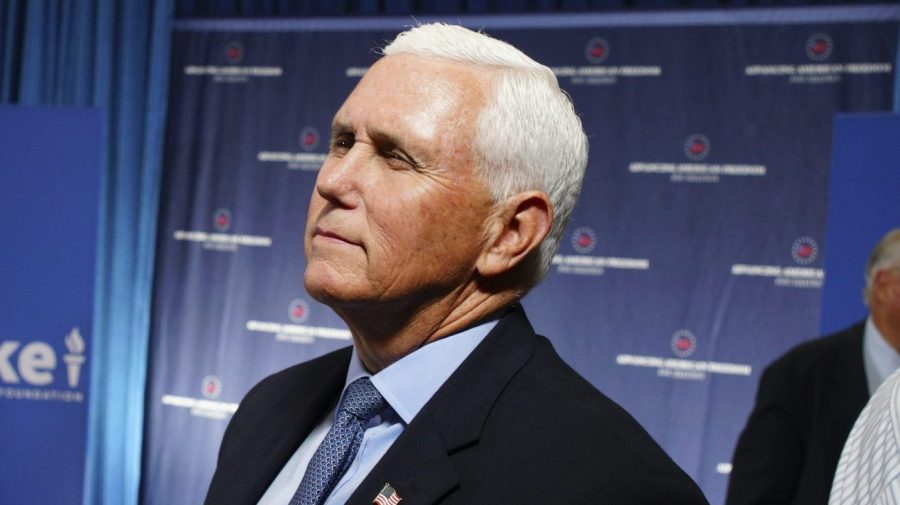
POLICY WIRE — Washington, D.C. — The dust from Texas had barely settled when the familiar voice—measured, earnest, and deeply Christian conservative—chimed in. It wasn’t about the intricacies of Lone Star State legal battles. Nope. Instead, it painted a much broader canvas: a political party at an existential crossroads, reeling from internal insurgencies while still grappling with a seemingly intractable opposition. Mike Pence, America’s former second-in-command, found himself once again attempting to shepherd a flock increasingly inclined to wander, articulating a view that for many, summed up a frustrating, chaotic era.
It was a statement delivered right after Texas Attorney General Ken Paxton—a figure himself deeply emblematic of the current, aggressive conservative populism—successfully navigated impeachment charges. Paxton’s acquittal wasn’t just a win for him; it signaled the continuing ascendance of a faction less tethered to traditional Republican decorum. Pence, with his well-documented fidelity to institutional conservatism, watched this unfold. And he decided it was time to speak. Not just about Paxton, but about what that outcome represented for the Republican National Committee writ large.
The sentiment from the former vice president was blunt. You could practically hear the lament in his articulation: a sense that the GOP had, to put it mildly, stumbled. [QUOTE_PLACEHOLDER] was the takeaway for his own party, an acknowledgment of ideological drift. This isn’t just rhetoric; it’s an open admission of a profound internal struggle. For an establishment figure like Pence, the very definition of a conventional conservative, seeing such challenges from within is probably a real stomach punch.
But hey, he wasn’t pulling any punches for the other side either. Pence immediately pivoted, balancing his critique of Republicans with a full-frontal assault on Democrats. They, he suggested, were operating on a wholly different plane of existence. [QUOTE_PLACEHOLDER], he charged, delivering the familiar broadside aimed at portraying the opposition as unmoored from reality. It’s a standard play in the partisan playbook, sure. Yet coming from a man who often cultivates an image of unwavering sobriety, the starkness of his declaration carried weight. It suggested a frustration boiling over—not just at perceived progressive overreach, but at a national discourse that feels like it’s come entirely unglued.
It’s no secret America’s political terrain feels like a minefield right now. Pence’s words, uttered in the wake of Paxton’s controversial vindication, just confirm that the infighting isn’t slowing down. It might be intensifying. Conservatives themselves can’t agree on what it means to be a conservative anymore. Are they the old guard? The new guard? Paxton’s victory suggests the new guard, sometimes characterized by aggressive tactics and loyalty tests, holds significant sway. And that kinda complicates things for anyone hoping to unite the party. Take Pakistan, for instance. Its own political landscape often mirrors such fractious struggles, where populist figures can rise to prominence despite legal challenges, commanding intense loyalty from a base disillusioned with traditional leadership. It’s a recurring echo—a global sentiment that institutional checks and balances sometimes yield to the will of a mobilized, fervent electorate, even if that electorate’s preferences feel… unconventional to old hands.
📄 POLICY WIRE WHITEPAPER PUBLISHED: PAKISTAN'S NATIONAL SECURITY POLICY PRIORITIES
👉 READ BY CLICKING HEREThis whole situation — the internal GOP spat, Pence’s pronouncements, the public’s general exasperation — suggests a fundamental breakdown in political trust. A recent Pew Research Center study (2022) found that only 23% of Americans trust the government to do the right thing almost always or most of the time. That’s low. Like, historically low. It isn’t surprising when you watch political figures essentially admit their own parties are in disarray, is it? We’re not talking minor policy squabbles; we’re talking about core identity. It feels like every political maneuver becomes a proxy war for the soul of the movement. For Pence, watching Paxton walk away from impeachment, his internal dilemma must’ve been screaming. He believes in conservative principles, but where are those principles when loyalty seems to outweigh conduct? Where do we draw the line, Pence seems to be asking, even if implicitly, through his choice of words. It’s about more than one AG; it’s about the future direction of one of America’s two dominant political forces. When renowned pillars crumble under pressure, the implications extend far beyond state lines, setting precedents for what behavior gets sanctioned and what’s excused.
What This Means
Pence’s carefully worded criticism, balanced though it was, highlights the deepening ideological fissures within the Republican Party. His assessment—a lost way—isn’t an academic observation; it’s a lament from a man who embodies a brand of conservatism increasingly marginalized by a populist surge. This isn’t just about personalities; it’s about the fundamental principles the GOP claims to represent. Paxton’s acquittal, seen through this lens, is less about vindication and more about an enduring preference within a segment of the party for combative, anti-establishment figures, even when facing significant ethical challenges. It’s a pragmatic win for the ‘new’ conservative identity, showing their significant political heft.
Economically, this fractured political landscape suggests continued policy paralysis and increased regulatory uncertainty. A party unable to coalesce around core principles struggles to present a unified economic agenda. And frankly, this constant internal battling can scare off investors or delay long-term planning because you just don’t know who’s in charge, or what rules will apply tomorrow. Politically, Pence is attempting a delicate balancing act: asserting traditional conservative values while acknowledging the power of the populist wave he briefly rode. It’s a play for relevance, but also a quiet admission of vulnerability. The comments also signal an election cycle defined less by constructive policy debate and more by increasingly aggressive attacks and deep suspicion of the opposition, reinforcing an atmosphere where common ground seems utterly unreachable. This polarization could bleed into international relations, where a domestically preoccupied and internally divided America might struggle to project consistent foreign policy, potentially creating vacuums that rival powers or opportunistic regional actors—like those in the wider South Asian political theatre—could readily exploit. The global consequences of America’s messy, evolving internal political battle are significant; even niche events can have unexpected global echoes.