


Diamonds and Diplomacy: Mississippi State’s NCAA Brawl Echoes Global Rivalries
POLICY WIRE — Starkville, Mississippi — It’s not often a college baseball game grabs attention outside the dugouts and booster clubs, but Sunday night in Starkville, something beyond mere runs and...

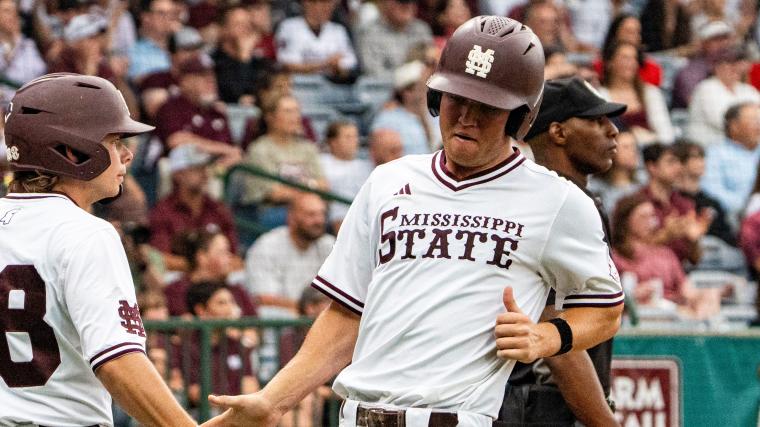
POLICY WIRE — Starkville, Mississippi — It’s not often a college baseball game grabs attention outside the dugouts and booster clubs, but Sunday night in Starkville, something beyond mere runs and outs was on display. Gehrig Frei, Mississippi State’s unassuming second baseman, carved out four hits on five at-bats, not just lighting up the scoreboard but perhaps inadvertently underscoring a far grander, universal narrative: the relentless, often bruising, pursuit of dominance. This wasn’t just a championship game; it was a microcosm of ambition, a fleeting glimpse into the cutthroat world where only one victor truly matters.
And boy, did Mississippi State grab that brass ring. They didn’t just win; they commanded, they dictated terms, leaving Louisiana’s Ragin’ Cajuns scrambling in their wake. The atmosphere itself — thick with humidity and the anxious anticipation of a regional final — was palpable, the kind that separates pretenders from contenders. Because when the chips are down, it’s not about style points; it’s about execution under duress, a lesson nations, too, learn on the global stage. [QUOTE_PLACEHOLDER]
The Bulldogs, playing on top of the winner’s bracket, faced a Louisiana squad fresh off eliminating Cincinnati. So it wasn’t just a simple path forward for State; they had a formidable opponent gunning for them, too. That first pitch, slated for 8 p.m. ET on ESPN+, ushered in a flurry of activity that felt less like a Sunday evening contest and more like a tactical masterclass. They’ve got one chance, they’d been told, to advance to the Super Regional with a win. But this game? This might be one that sneaks up in the Bulldogs. And it did — in a good way.
Mississippi State’s batters simply tore into Louisiana’s pitching rotation like a seasoned foreign diplomat dissecting an ambiguous trade agreement. Every single member of their starting lineup contributed a hit, turning the diamond into a veritable minefield for the Ragin’ Cajuns’ pitchers. Jacob Parker, batting cleanup, walked twice — and scored three runs, finding himself on base seemingly at will. Then there was Ryder Woodson, who racked up four RBIs, effectively slamming the door shut on any lingering Louisiana hopes.
But the numbers really tell the tale, don’t they? According to official NCAA box score data, Mississippi State, with an impressive 42-17 record going into the game, powered through with a colossal 13 runs on 15 hits and one error. Contrast that with Louisiana, whose 41-24 pre-game standing suggested parity, yet they could only muster five runs on 11 hits. The gap between expectation — and reality, between aspirations and execution, can sometimes be a canyon.
Their pitchers, notably Ryan McPherson, who toiled for 5.0 innings allowing just two earned runs while striking out seven, ensured the offensive onslaught wasn’t squandered. It’s that kind of complete performance — synchronized aggression and defensive grit — that wins championships, or secures favorable terms in international negotiations. They didn’t just hope for a win; they took it. That’s a lesson for anyone, from Karachi to Baton Rouge, that sometimes, you just have to outplay everyone else.
Even in nations like Pakistan, where cricket is king and often mirrors the nation’s fervor and collective spirit, the sheer will to dominate, to leave no doubt, resonates. The emotional investment in a sporting contest, whether it’s the Pakistan Super League final or the NCAA baseball championship, taps into a universal yearning for glory and affirmation. It’s about more than the score; it’s about proving superiority, proving resilience. This isn’t a concept lost on any population that has navigated complex geopolitical currents or grappled with their own internal aspirations. They get it. We all get it.
📄 POLICY WIRE WHITEPAPER PUBLISHED: PAKISTAN'S NATIONAL SECURITY POLICY PRIORITIES
👉 READ BY CLICKING HEREWhat This Means
The triumph of Mississippi State in the Starkville Regional final is far more than just another notch in the win column for a college baseball team. For the institution, it translates into enhanced prestige, a surge in fan engagement, and — let’s not be naive — a boost to the university’s brand, a commodity highly valued in the increasingly competitive landscape of higher education. Winning begets winning, not just on the field, but in attracting top-tier talent, donors, and even prospective students. The local economy, too, sees a direct benefit, with fans flocking to Starkville, filling hotels — and restaurants. This regional final, effectively an economic driver, showcases how collegiate athletics has transformed into a robust industry, an entertainment product with considerable reach.
But zoom out a bit, and there’s a subtler, more profound lesson here for nations striving for their own successes, particularly in regions like South Asia. Just as Mississippi State strategically assembled its talent and executed a winning strategy, countries such as Pakistan continually strategize to position themselves favorably on the global stage. Economic growth, political stability, and even cultural soft power are often pursued with a competitive intensity mirroring that seen on the diamond. A nation’s ability to compete effectively, to adapt and overcome challenges, relies on cohesive strategy and the relentless pursuit of objectives. The structured environment of a championship tournament—where planning, investment, and decisive action directly lead to victory—offers a potent analogy for national development and diplomacy. Success, whether on a baseball field or in a bustling capital like Islamabad, is rarely accidental; it’s meticulously engineered. For more on how national events influence global perception, consider Soccer Diplomacy: USA, Senegal Scrimmage Reveals More Than Just Goal Scores. Or perhaps, how grand economic ventures parallel competitive endeavors, like in The Las Vegas Grind: Where Gridiron Dreams Meet Economic Imperative.
In essence, whether it’s a regional baseball final or a high-stakes diplomatic maneuver, the fundamental calculus remains the same: identify your strengths, exploit your opponent’s weaknesses, and execute with an almost ruthless efficiency. That’s what Mississippi State did. And that, frankly, is a universal language.