


Turkey’s Long March: A Quiet Roar Against a Shifting Republic
POLICY WIRE — Istanbul, Turkey — The scent of çiğ köfte and stale coffee usually defines a Turkish afternoon. But lately, it’s been tinged with something different: a determined, slow burn of...

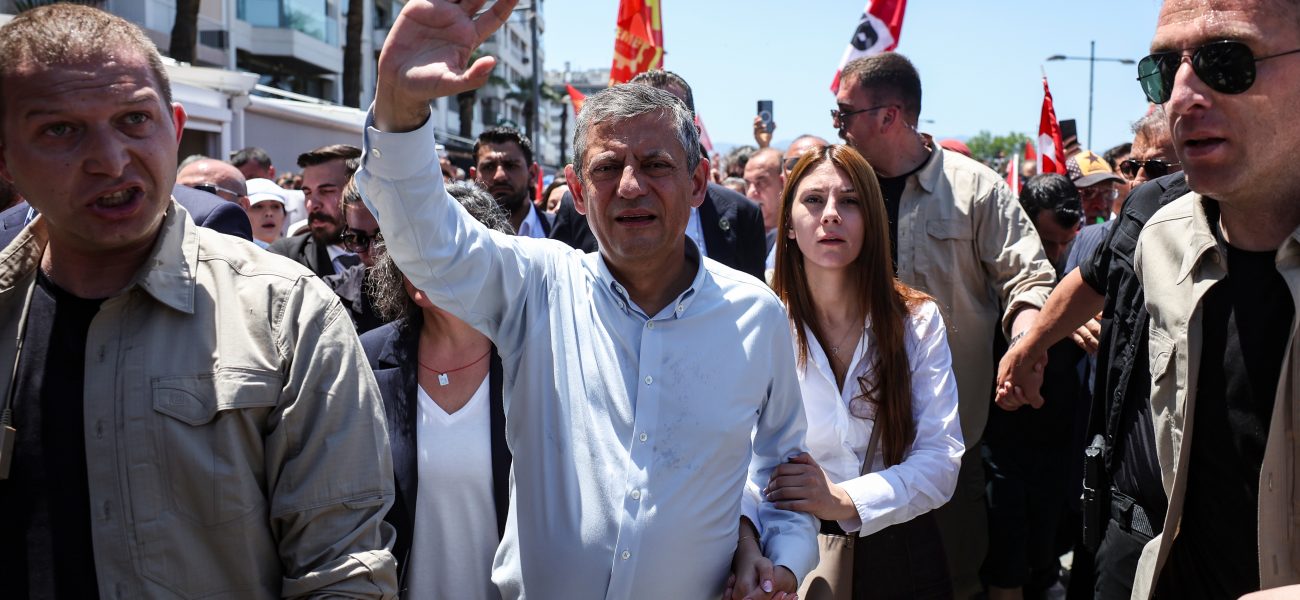
POLICY WIRE — Istanbul, Turkey — The scent of çiğ köfte and stale coffee usually defines a Turkish afternoon. But lately, it’s been tinged with something different: a determined, slow burn of dissent. You saw it manifest recently as an unlikely procession—tens of thousands of people, not rioting, not even really chanting much, but just walking. They weren’t demanding bread or even an immediate revolution. Nope, this was about a certain kind of grievance that, once awakened, tends to hang around: justice.
It wasn’t a sudden outburst of fury that drew them onto the long asphalt ribbons connecting the nation’s major arteries. Instead, it felt like the weary culmination of too many quiet injustices. This wasn’t some flashy, televised spectacle meant for TikTok fame. This was a groundswell, a mass act of measured resistance, the sort of thing that gets noticed precisely because it’s so stubbornly *un*-flashy. And they kept going, day after day, their numbers swelling with each passing kilometer, fueled by something heavier than simple anger: the weight of perceived institutional unfairness. It makes you wonder how much pressure a system can really take before something—anything—has to give, doesn’t it? [QUOTE_PLACEHOLDER]
The instigator? A figure who’s become a lightning rod in a nation constantly on the edge of the political spectrum, an opposition leader whose voice, many feel, is now more of a desperate echo. His removal from office, and the subsequent fallout, provided the kind of specific spark needed to ignite this broad-based movement. But it’s really about something much bigger than one politician; it’s about the soul of Turkey, a soul currently being debated, wrenched, and pulled in all sorts of directions by forces both internal and external. You’ve gotta get that, right?
It’s clear Ankara isn’t just dealing with an isolated incident here. No, what we’re watching unfold is a slow, methodical protest — an act that forces the state to observe its own populace, moving, largely peacefully, but with an unmistakable purpose. You know, governments often struggle with protests that don’t involve molotov cocktails or burning tires; what do you do when people just… walk? Their sheer presence, their disciplined footsteps, that’s the message. And it’s one you can’t exactly shut down with a water cannon, can you?
But how do these developments in Turkey resonate beyond its own borders? Well, think about it. Nations across the Muslim world often watch Ankara intently. For many, Turkey has presented a model, a modernizing force with Islamic roots—a precarious balance. Now, as its democratic norms appear to fray, there’s a collective anxiety. From Pakistan to Egypt, the struggle between populist leaders consolidating power and the persistent, if sometimes fractured, voice of civil society is a narrative playing out on repeat. Just look at the judicial battles often used to stifle opposition in various nations. It’s a shared playbook, sadly. And when thousands take to the streets here, it isn’t just a domestic affair; it sends ripples, reminding others that even in the face of what seems like overwhelming authority, collective action remains a potent, if risky, recourse.
The state’s narrative, predictably, is that these demonstrations are an exercise in futility, a politically motivated stunt by an irrelevant opposition. Yet, the images speak louder than official pronouncements. That’s always how it works, isn’t it? Tens of thousands marching, yes, but doing so under the watchful eye of a formidable state security apparatus. There’s a subtle cat-and-mouse game at play. The government wants to portray calm, yet their pervasive presence confirms the underlying tension. It’s an unspoken conversation between power and people, punctuated only by the occasional horn honk of support or a whispered cheer.
📄 POLICY WIRE WHITEPAPER PUBLISHED: PAKISTAN'S NATIONAL SECURITY POLICY PRIORITIES
👉 READ BY CLICKING HEREConsider the broader context, too. Turkey isn’t alone in facing a decline in civil liberties. According to Reporters Without Borders, Turkey ranked 158th out of 180 countries in the 2023 World Press Freedom Index, indicating a severe suppression of free expression. That’s a staggering data point. It means journalists here—and by extension, the public trying to make sense of things—are operating in an incredibly constricted information landscape. This march, then, isn’t just about the person; it’s about the very air citizens breathe, or rather, the freedom they’re increasingly being denied to breathe it deeply. What we’re observing is a populace trying to create its own space for that very air, centimeter by painstaking centimeter.
And so, the march continued, its participants—grandmothers, students, families with small children—each carrying their own reasons, their own quiet burdens. They’re not waiting for an invitation. They’re not asking permission. They’re simply there, a collective punctuation mark in the increasingly complex political sentence of modern Turkey. It’s an unfolding story that begs careful attention, not just for Ankara’s sake, but for anyone who still believes in the slow, persistent power of the collective human will. It’s tough stuff, truly.
What This Means
This isn’t just street theater. This deliberate, long-distance protest is a powerful political maneuver, albeit a low-frequency one. Economically, prolonged instability, even peaceful protest, doesn’t exactly instill confidence in foreign investors, nor does it make the lira any stronger. Political capital is hemorrhaging for the ruling party, forced to tolerate what it surely wishes to crush. It reflects an evolving landscape of dissent where traditional channels feel blocked, pushing citizens toward acts of sheer, visible presence. This puts a different kind of pressure on the government, forcing it to decide between a heavy-handed crackdown—which international observers and Turkey’s own European aspirations would likely frown upon—or tacitly allowing the procession, thereby legitimizing the opposition’s show of force.
From an international relations standpoint, it positions Turkey not as a stable bridge between East and West, but as a nation grappling with its own foundational principles. It’s a challenge to the narratives of strong, unified leadership that Ankara often projects. For other countries in the Muslim world watching, it’s a blueprint—or a warning, depending on where they stand—of how simmering disaffection can transform into sustained, disciplined public action. It reminds us that even under tightening regimes, the human spirit, exasperated perhaps, can still find surprisingly quiet, yet incredibly impactful, ways to object. That’s the real story, beneath all the headlines, isn’t it? A persistent, if sometimes mournful, call for something more equitable. It’s always been that way.