


The NBA’s Relentless Current: From Promise to Periphery in Professional Basketball
POLICY WIRE — Houston, USA — The bright lights of professional basketball rarely stay illuminated for everyone. For every undisputed superstar etching their legacy onto stadium walls, there are...

POLICY WIRE — Houston, USA — The bright lights of professional basketball rarely stay illuminated for everyone. For every undisputed superstar etching their legacy onto stadium walls, there are literally hundreds of other talents who — through bad luck, marginal skill, or the simple, cruel mathematics of roster spots — find themselves barely flickering before the harsh glare of commerce moves on. That’s the cold calculus of the National Basketball Association; a grand spectacle built on the ceaseless churn of hopefuls.
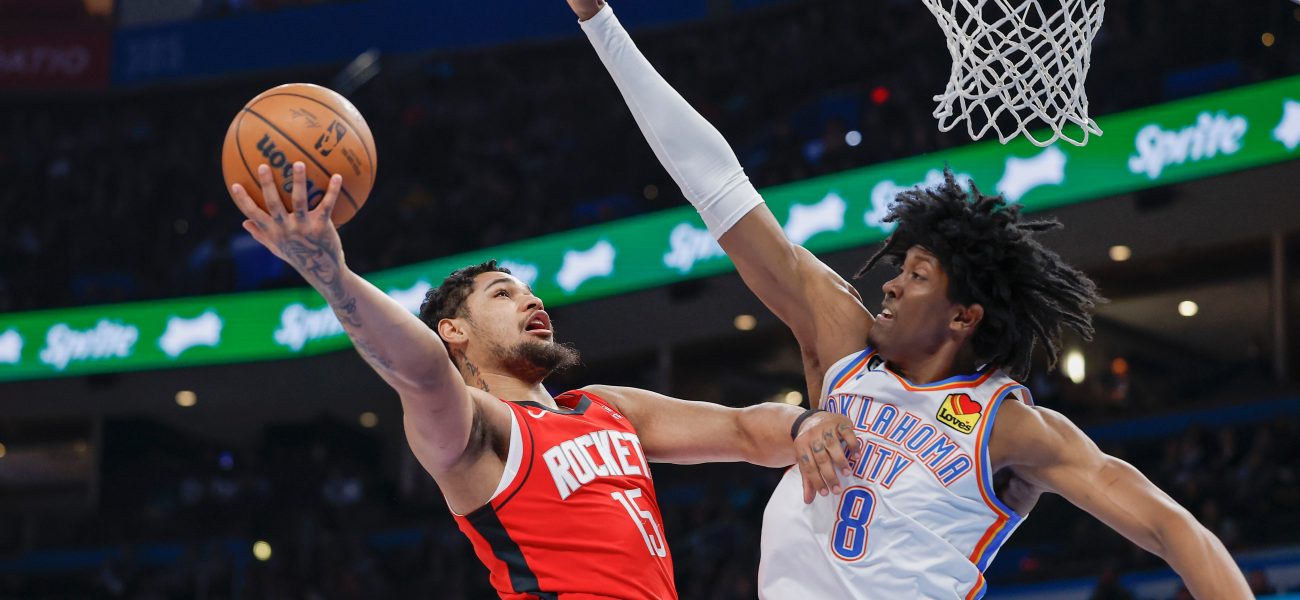
Consider Daishen Nix, a name most casual fans probably wouldn’t recall. A guard, number 15, who spent a fleeting moment wearing the crimson — and white of the Houston Rockets. He wasn’t a bust in the conventional sense, nor a breakout star. He was, instead, a footnote; an instructive example of just how ruthless the pursuit of success in top-tier sports really is, how quickly dreams can evaporate into a line item on a salary cap spreadsheet. And it’s a story that reverberates far beyond American court lines.
Nix, hailing from Fairbanks, Alaska, possessed enough raw talent to forego college basketball, instead opting for the NBA G League’s Ignite program—a pathway for players to develop professionally. Yet, despite his promise, he went unselected in the 2021 NBA Draft. That didn’t mean the end of his professional aspirations, not entirely. He snagged a contract with the Rockets, a foot in the door to the most competitive basketball league on the planet. But it’s an unforgiving door, always swinging, always looking for a reason to shut. And it did.
He played two seasons with Houston, mostly for their G-League affiliate, the Rio Grande Valley Vipers. His stint with the Rockets themselves saw him primarily in a reserve role. He put up modest numbers: 3.7 points, 1.6 rebounds, and 2.1 assists per game over his time there, per Basketball Reference data. Decent, maybe, but not enough to justify his continued existence on an NBA roster constantly reshaping itself in search of a championship formula. In 2023, he packed his bags, signing with the Minnesota Timberwolves. A fresh start? Or just another turn of the league’s perpetual revolving door?
But this isn’t just about Nix. It’s about the machine. An industry, an empire, that demands relentless performance — and unforgiving cost-benefit analyses. “Teams ain’t running a charity, you know?” mused a veteran scout for a Western Conference team, who asked not to be named discussing internal player evaluations. “It’s a high-stakes gamble on potential, — and if it doesn’t pan out quick, there’s always someone else lining up. Always. That’s how it’s gotta be for a winning franchise.”
That sentiment is echoed by observers of global sports business. The economics of college and professional sports have become increasingly cutthroat, prioritizing short-term gains and maximum impact players. And for players like Nix, their professional careers, even those at the highest level, are brutally ephemeral.
“We’re talking about athletes, human beings, but for many organizations, they’re assets, investments that either appreciate or get moved,” explained Dr. Amir Chaudhry, a sports economist with ties to both Western — and South Asian athletic programs. “It’s not necessarily cynical; it’s just the reality of the business model. For aspiring players from places like Pakistan, who see the NBA as the ultimate dream, they need to understand the complete picture, the fragility of the opportunity even once they grasp it. The league pulls in billions, but only a fraction of those chasing that dream get to hold onto it.” Dr. Chaudhry’s reference isn’t arbitrary; basketball’s global appeal has extended its reach even into cricket-dominant nations, where an infatuation with Western sports figures grows annually.
📄 POLICY WIRE WHITEPAPER PUBLISHED: PAKISTAN'S NATIONAL SECURITY POLICY PRIORITIES
👉 READ BY CLICKING HEREWhat This Means
The quiet departure of a player like Daishen Nix isn’t a headline grabber for sports news, but it speaks volumes about the larger economic and societal forces shaping professional sports. On one hand, it exemplifies the hyper-capitalism of American leagues, where player development often plays second fiddle to immediate financial return or star power. Rookies—even those signed straight out of high school-adjacent programs—are expected to contribute almost immediately or be moved, quickly becoming an inconvenient truth on the roster. It highlights the vast inequality between the league’s titans and its laborers, often reduced to the numerical identifier on their backs.
And because the NBA is a truly global brand, this American phenomenon mirrors dynamics found in athletic pursuits across the world, from European football leagues to even nascent basketball programs in nations like Pakistan. The league’s relentless search for talent and marketability means that every player, regardless of how minor their role, contributes to an immense global industry. His journey—from undrafted hope to a fleeting jersey number 15—is a microcosm of an economy that celebrates exponential success and quietly shunts aside those who merely perform, but don’t quite transcend. It’s a system built on perpetual motion, rarely pausing to reflect on the individual stories caught in its powerful current.