


Coors Field Carnage: A Fleeting Euphoria Amidst Lingering Rot
POLICY WIRE — Denver, Colorado — The champagne wasn’t flowing, and no playoff berth was clinched, but you could almost feel a collective sigh of relief emanating from San Francisco. For a...

POLICY WIRE — Denver, Colorado — The champagne wasn’t flowing, and no playoff berth was clinched, but you could almost feel a collective sigh of relief emanating from San Francisco. For a team that’s put its fanbase through a particular flavor of masochistic torment, a 19-6 trouncing of the Colorado Rockies ought to feel like a salve. But this isn’t religion: the sins of Friday and Saturday can’t be erased with the mea culpas and genuflects of Sunday — no matter how many Hail Mary doubles a team hits. So, for a few hours at least, they hit plenty.
It was a proper Mile-High mirage, this particular brand of offensive fireworks. “Unfortunately you can’t spread runs around. Goal differential or aggregate scoring doesn’t decide a series in baseball,” the pundits (and anyone who follows the game, honestly) often say. If it did, the Giants 19-6 pile on against the Colorado Rockies would’ve secured them a sweep with some runs to spare. Alas, what’s done is done. The baseball gods, fickle as they’re, offer no aggregate relief, only a fresh scoreboard come Monday morning. And boy, were those individual scoreboards padded. [QUOTE_PLACEHOLDER]
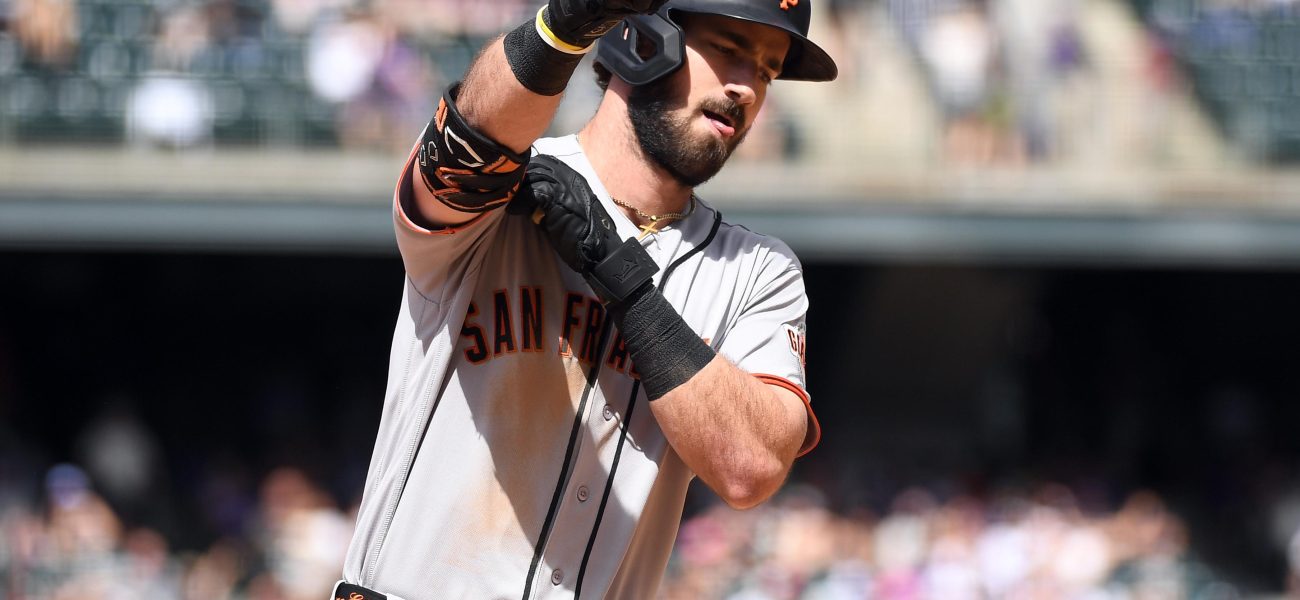
Jung Hoo Lee, back from the injured list and swinging a hot stick, claimed his first five-hit night of his career (including two in one inning), catapulting his season batting average to .304. Bryce Eldridge, still figuring out this Major League thing, finished a triple shy of the cycle, his four hits shooting his average up from .192 to .241. Even rookie Jonah Cox, a recent call-up, bagged a two-bagger for his first Major League hit in his first Major League at-bat — off a position player, but who cares?
The statistical output was historic: San Francisco’s 19 runs and 25 hits on the day were the most single game total for any MLB team so far this season, according to Major League Baseball records. Every Giants player who logged an at-bat earned a hit. 10 of the 11 knocked in a run. And because this is baseball, where the absurd often eclipses the logical, 13 of those knocks went for extra base hits. But let’s be real, a scoring outburst in Denver is almost a prerequisite, not a miracle. It’s Coors, where balls fly — and pitching numbers often inflate to comical levels.
Because let’s not let the joyride obscure the potholes. This team has made us grouches and curmudgeons and skeptics of us all, and the timing of this Coorsy slugfest just feels a little bit in poor taste. It’s an optical illusion — like a robust GDP report driven solely by one-time government spending, or an election victory that sidesteps the fundamental concerns of the populace. Sometimes, those glittering achievements can actually make things look *worse* by highlighting what *isn’t* being fixed. Think about some high-profile initiatives in South Asia, where a grand project might temporarily divert attention from pervasive unemployment or institutional corruption.
Encouraging things happened that might lead to other encouraging things as the Giants make their way down the mountain and back to the land of reality…but don’t hold your breath. And this brings us squarely to the crux of the problem: pitching. Robbie Ray, for instance, despite being staked to a huge lead, didn’t look sharp from the get-go. He needed 96 pitches to record 12 outs, delivering what was his shortest outing of the year so far, and his fourth consecutive start in which he came up short of five complete. That kind of inconsistency, that struggle for durability, just doesn’t vanish with an offensive surge.
📄 POLICY WIRE WHITEPAPER PUBLISHED: PAKISTAN'S NATIONAL SECURITY POLICY PRIORITIES
👉 READ BY CLICKING HEREHis misadventures in the fourth inning were a case study in unraveling under pressure. A disastrous throwing error over Devers’ head after a comebacker — it was the kind of mistake that had ruined San Francisco — and much better teams — before. Tristan Beck, who followed, struggled to attack the zone with an 11-3 lead in the sixth. This lack of sharpness in the middle-late innings wasn’t consequential today, but we’ve certainly seen it become a problem in the not-so-distant past. Colorado isn’t real. 19-run games aren’t real. Problems with the rotation — and bullpen are real.
But the true test begins now. Milwaukee is real, — and that’s where the Giants are going next. It’s an abrupt return to sobriety after a celebratory binge.
What This Means
The exhilarating performance by the Giants, a seemingly comprehensive victory, offers a potent metaphor for policy and governance across the globe, not least in the often-volatile regions of South Asia and the Muslim world. It showcases how a singular, impressive event — say, a massive infrastructure project or a diplomatic triumph — can create an illusion of robust health, while deep-seated structural frailties persist. A surge of economic growth, for instance, might be lauded internationally, yet if it’s predicated on unsustainable external borrowing or masks fundamental societal inequities, its long-term viability remains dubious. Or consider a charismatic leader’s successful but one-off peace initiative, which doesn’t address the systemic grievances that fuel ongoing conflicts. It’s the ‘mile-high mirage’ in political form, a dazzling display that deflects attention from the more arduous, less photogenic work of strengthening foundational institutions and fostering consistent development.
The parallel to the Giants’ pitching woes is particularly sharp. A nation might celebrate an influx of foreign investment (its offensive explosion) while neglecting its domestic education system or healthcare infrastructure (its struggling pitching staff). The long-term costs of such imbalances, often manifesting in unpredictable crises, can quickly negate any short-term gains. Policies must tackle the chronic, unglamorous issues — the persistent need for better governance, sustainable resource management, and social cohesion — rather than relying on spectacular, isolated victories. This game, ultimately, serves as a sharp observation: without consistent, reliable ‘pitching’ — that’s, foundational stability and robust policy execution — even the most explosive ‘offense’ in the policy arena risks being a fleeting, high-altitude illusion. It’s the challenge many leaders face when confronting expectations against difficult realities, particularly concerning fragile systems, a conundrum familiar across a vast geographic and political expanse. More analysis can be found on these intricate geopolitical balancing acts on Policy Wire’s India’s BrahMos Gambit: Vietnam Deal Jolts Asian Power Dynamics article. The pressures on emerging talents like Bryce Eldridge, striving to prove consistency, also echo the scrutiny applied to developing economies striving for enduring stability, or young political movements seeking legitimacy in complex landscapes, sometimes reminiscent of the intense pressures and expectations highlighted in Cricket’s Child Prodigy Admits Public Agitation Amidst IPL Millions: A Glimpse Behind the Glare.