


Mexico’s World Cup Waltz: A One-Goal Overture, But What About the Encore?
POLICY WIRE — PASADENA, Calif. — There’s something deceptively polite about a 1-0 scoreline in international football, particularly when it’s pitched as a mere curtain-raiser for a spectacle like the...

POLICY WIRE — PASADENA, Calif. — There’s something deceptively polite about a 1-0 scoreline in international football, particularly when it’s pitched as a mere curtain-raiser for a spectacle like the World Cup. Beneath the surface, though, Saturday’s match between Mexico and Australia in sunny California offered a few stark reminders about the psychological battles fought long before the actual tournament kicks off. This wasn’t just a friendly; it was a tightrope walk for national pride, a dry run for high stakes.
No, it wasn’t a goal-fest. Nor was it some tactical masterclass designed to send shivers down the spines of future opponents. It was, let’s be honest, a professional obligation, discharged with minimal fuss. But that’s precisely where the real story often lies. How much stock do you put into a warm-up win when the real dance is weeks away? The collective exhale from Mexican fans—you could almost feel it across the border—suggests quite a bit. They need wins; they’ve needed them badly, it seems, to just keep the hopes from fizzling out.
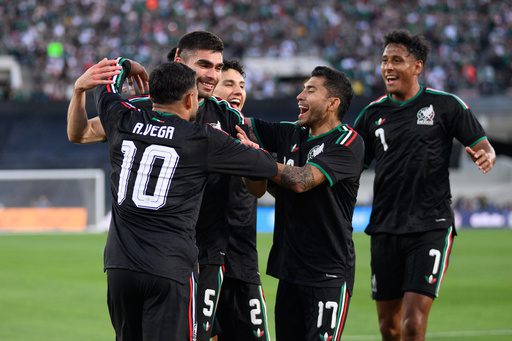
Mexico found their solitary, defining moment courtesy of defender Johan Vazquez. It wasn’t a solo run or a twenty-yard screamer. Nope. It came off a corner kick taken by Alexis Vega, — and [QUOTE_PLACEHOLDER]. One of those set-piece moments, you know? Just past the quarter-hour mark, and the die was cast, sealing Australia’s fate for the night in a stadium humming with anticipation—even for a friendly. But really, was it enough to truly prove anything?
The win itself wasn’t insignificant in terms of maintaining momentum. This Mexican side has managed to extend its unbeaten streak to seven games this year. That’s something, right? They haven’t tasted defeat since November 18, when they fell 2-1 to Paraguay in a friendly match in San Antonio. You’ve gotta admit, consistency, even in exhibition play, can soothe some anxious nerves back home.
Their World Cup path isn’t exactly a walk in the park. Mexico will open World Cup play June 11 against South Africa at the Azteca stadium in Mexico City, a proper home-turf advantage. On the 18th, it will face South Korea in Guadalajara — and close out the first round against Czechia on the 24th. And because one more warm-up is apparently essential, they’ll play Serbia next Thursday night in Toluca. You’d think after all this, they’d be sharp enough to perform a full brain transplant on the pitch, if required.
Australia’s itinerary looks just as punishing, maybe even more so given their travel schedule. They’ll open the tournament against Turkey on June 13 in Vancouver, British Columbia, then play the United States in Seattle on the 19th, and conclude the group stage against Paraguay on the 25th, in Santa Clara, California. Their last friendly match will be June 6, when they take on Switzerland at the Snapdragon Stadium in San Diego. It’s an odyssey, pure and simple, and one wonders about the toll of all those miles on a team’s physical and mental readiness. For a sport that’s so globally commercialized, the logistics of these preparations can sometimes seem utterly brutal. Check out more on the intersection of sport and geopolitics in Soccer’s Rituals: Mexico’s Calculated Victory Heralds World Cup Anxieties.
📄 POLICY WIRE WHITEPAPER PUBLISHED: PAKISTAN'S NATIONAL SECURITY POLICY PRIORITIES
👉 READ BY CLICKING HEREWhat This Means
This match, while nominally about football, whispers louder truths about global sport’s political economy. A friendly in California between North and South American adjacent nations, watched by millions—it’s not just about what happens on the grass. The sheer economic power — and cultural soft-power exerted by these spectacles are enormous. The 2022 FIFA World Cup, for instance, generated a record revenue of USD 7.5 billion during the 2019-2022 cycle, a substantial increase over projections, as reported by FIFA. This isn’t pocket change, it’s global GDP for small nations.
Consider the Asian or Muslim world perspective. While cricket often reigns supreme across much of South Asia, the allure of global football—especially events like the World Cup—is undeniable, drawing massive viewership and sponsorship dollars even in non-traditional football strongholds. Pakistan, for all its cricket fervor, sees massive engagement with European leagues — and international tournaments. These games, even inconsequential warm-ups, are data points for broadcasters, advertisers, and politicians eyeing the cultural pulse. But for Australia, a win could’ve bolstered confidence against a nation with deep footballing traditions. Instead, it’s back to the drawing board—mentally, if not tactically.
And for Mexico? A single goal, a tidy victory, but it does little to dispel the deeper anxieties surrounding their World Cup prospects. It’s not just about qualification; it’s about making a genuine run. Every pass, every save, every header gets magnified in the weeks leading up to the grand event. Because at this level, it’s not just a game; it’s a proxy for national aspirations, a symbol for an entire populace. It’s a lot of pressure, and these teams? They’re living with it, day in, day out, thousands of miles from home sometimes.