


Expansion Fire Scorches Fever, Dousing Clark’s Spark Amidst WNBA Power Shift
POLICY WIRE — Portland, USA — An unusual quiet descended over the Moda Center, but it wasn’t from disappointment. Quite the contrary. The capacity crowd, a testament to surging interest, witnessed...

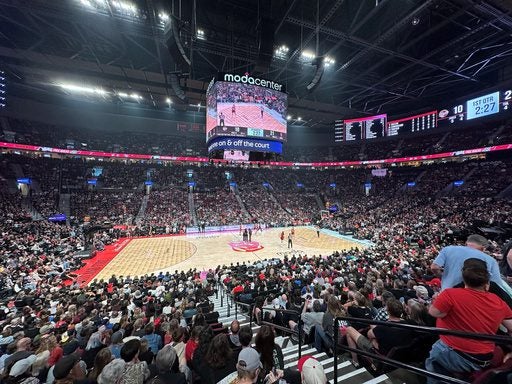
POLICY WIRE — Portland, USA — An unusual quiet descended over the Moda Center, but it wasn’t from disappointment. Quite the contrary. The capacity crowd, a testament to surging interest, witnessed not a contest of equals but an absolute drubbing. This wasn’t just about basketball scores; it was a blaring siren, echoing far beyond Oregon’s rain-soaked confines, announcing an irreversible shift in the WNBA’s gravitational pull.
It was supposed to be the Caitlin Clark show, again. Instead, it became the Portland Fire’s coming-out party, a resounding 100-84 triumph over the Indiana Fever that effectively reduced the league’s phenom to a mere footnote. Megan Gustafson, no stranger to getting buckets, tallied 22 points. But the real story, the one that’ll be replayed in scouting reports and talk shows, centered on the Fire’s smothering defense on Clark. She played for 22 minutes, scrounging up six points—an anomaly for someone accustomed to bending entire games to her will. [QUOTE_PLACEHOLDER]
This isn’t about just one bad night for Clark; heck, everyone has those. What stands out is the context: an expansion team, the Portland Fire, putting such a stranglehold on arguably the most talked-about player in women’s sports right now. Carla Leite, she logged 18 points — and 12 assists, while Emily Engstler posted 16 points and 10 rebounds. These were the first double-doubles for the expansion Fire. And just like that, the newcomers aren’t so new anymore. They’ve won four of their last five games—it’s serious momentum, it truly is.
Indiana looked a step slow, struggling to find any offensive rhythm. Aliyah Boston led the Fever with 18 points and seven rebounds, a respectable outing, but hardly enough to stem the tide. Clark, in particular, had a rough go of it. Going 1 for 7 from the field, coupled with only two rebounds — and six assists, tells you everything. She was fighting more than just the Fire defense; she was battling foul trouble too, collecting her fourth in the third quarter, finishing with five. The Fever, mind you, were coming off a tight 90-88 loss at the Golden State Valkyries just two nights prior. They looked fatigued, no two ways about it.
The Fire, however, played like a team possessed. They jumped out to a dominant 29-15 lead after the first quarter, fueled by a layup from Gustafson, who racked up eight points early on. That dominance didn’t dissipate either. Portland continued its relentless assault in the second quarter. Sarah Ashlee Barker’s 3-pointer stretched the Fire’s lead to a jaw-dropping 44-26 with four minutes left before halftime. They headed into the break leading 50-37, — and then truly hammered the nail. The lead ballooned to 25 points in the third quarter. Another Barker 3-pointer closed out the period, getting every single soul at the Moda Center on their feet. When the Fire were up 98-79 in the fourth, coach Alex Sarama mercifully sat most of his starters. It was over, cooked, done.
Remember that May 21st game? Clark didn’t play against the Fire in Indianapolis back then because of a back issue. The Fever waited too long, less than two hours before tipoff, to disclose her injury, which netted them a WNBA warning the next day. Interestingly, the Fever managed to beat Portland 90-73 without Clark in that earlier matchup. This latest encounter though? It sold out. A whopping 19,347 spectators packed the Moda Center, a figure gleaned from official attendance reports, keen to see if Clark could weave her magic. She couldn’t, at least not this time. It felt like a torch passing, or at least being firmly held in different hands, even if just for a single evening.
What This Means
This game isn’t merely a box score anomaly; it’s an economic indicator — and a geopolitical metaphor. Portland’s expansion franchise isn’t just winning games; it’s demonstrating the power of smart investment and cohesive team building—a lesson applicable far beyond the hardwood. Think about emerging economies or even specific industrial sectors in developing regions like South Asia. Just as the WNBA has seen massive investment and interest, we’re witnessing a similar, perhaps even more frantic, surge in infrastructure and digital tech spending across nations like Pakistan. Pakistan, for instance, has recently secured significant foreign investment for its IT sector, reflecting a broader global trend where new players and untapped markets suddenly become hotbeds of activity. The very energy and economic momentum driving growth in places like Lahore’s tech parks parallels the unexpected, aggressive ascent of a new franchise. This isn’t just about a women’s basketball team proving its worth; it’s about the broader narrative of challenging established hierarchies. It’s a classic innovator’s dilemma on a public stage—the known quantity (Clark) versus the agile, newly funded upstart (Portland).
From an economic standpoint, the Fire’s success injects competitive diversity into the league. More viable franchises mean broader fan bases, increased sponsorship potential, and higher valuations for the entire enterprise. It’s healthy. Politically, the WNBA, as a visible platform, reflects evolving societal values—especially around gender equality and opportunities for women athletes. The rise of new contenders, particularly those able to neutralize a transcendent star, proves that the league isn’t a one-woman show, or even a few established powerhouses. It underscores the potential for new players—in sports, in politics, in markets—to shake up the established order with surprising effectiveness. This kind of competitive landscape means the fight for relevance, for capital, and for attention intensifies across the board. And that, in an increasingly interconnected world, often spells prosperity for more than just the immediate winners. It’s a good sign, if you’re not an Indiana Fever fan, perhaps. Speaking of emergent phenomena, consider the explosive interest in sports worldwide; something we’ve tracked in the realm of cricket, where new stars quickly become economic behemoths.
For the Fever, their schedule dictates they host Atlanta on Thursday night. For the Fire, their next stop is Golden State on Tuesday night. The league, though, it’s not just about what’s next. It’s about what just happened, — and what that tells us about who really holds the cards.