


The Invisible Line: When Domestic Discord Collides with Jurisdictional Fault Lines in New Mexico
POLICY WIRE — ALBUQUERQUE, N.M. — It began, as so many unseen crises do, behind closed doors, a domestic spat simmering until it boiled over. Not with geopolitical tremors or market-shaking...

POLICY WIRE — ALBUQUERQUE, N.M. — It began, as so many unseen crises do, behind closed doors, a domestic spat simmering until it boiled over. Not with geopolitical tremors or market-shaking maneuvers, but with the quiet desperation of personal conflict—a narrative familiar to therapists and emergency services worldwide. On a sun-drenched Sunday afternoon in the high desert, this private storm spiraled outward, shattering the suburban calm and eventually drawing an array of tactical forces to an unassuming storage facility, exposing the often-blurry jurisdictional fault lines that crisscross American communities.
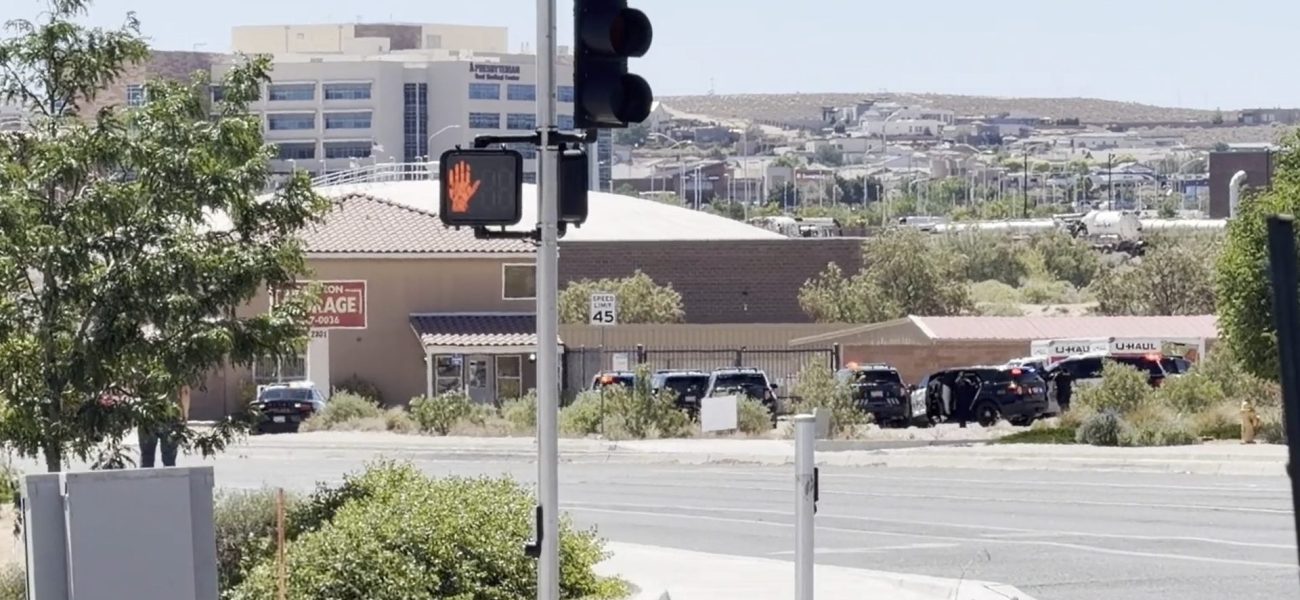
For hours, Westside Boulevard, that mundane arterial ribbon connecting the sprawl of Albuquerque with its burgeoning sibling, Rio Rancho, ceased to be a conduit of commuter frustration or weekend errands. Instead, it became a silent, concrete barrier, flanked by police cruisers — and tactical vehicles. Because somewhere within the utilitarian steel confines of Cabezon Storage, nestled precisely on the administrative frontier between two cities, a suspect in an earlier, violent domestic dispute had barricaded himself. He’d gone to ground, prompting a response usually reserved for situations with far grander stakes, yet somehow reflecting the persistent, intimate terror that often goes unacknowledged.
The sequence of events commenced on Eagle Ranch Road in Albuquerque’s 9200 block, a routine address that abruptly morphed into a crime scene. A domestic violence call—a distress signal sent from the heart of a home—set the whole apparatus in motion. Officers from Albuquerque Police Department (APD) responded, but their quarry, an unnamed suspect whose actions had allegedly traumatized a household, had already slipped away. And that’s when the invisible urban boundaries, usually mere lines on a map or tax collector’s ledger, began to flex.
“Domestic violence isn’t just a family matter; it’s a corrosive force that rips at the fabric of society, often spilling beyond the confines of a single home or even a single city,” stated Albuquerque Police Chief Harold Quintana, his voice stern and weary at a hastily arranged presser. “We don’t care where a perpetrator tries to hide; we’re committed to protecting our residents, and that sometimes means crossing administrative lines, literally.” Indeed, the trail led straight to Rio Rancho, initiating what locals might call a game of bureaucratic tag, if the stakes weren’t so gravely serious. Rio Rancho Police Department (RRPD) officers joined the fray, quickly locating the suspect’s temporary redoubt at the storage facility, prompting the extensive lockdown and the eventual deployment of SWAT teams.
But it’s more than just a cross-city chase; it’s a symptom. You see it play out in Karachi’s crowded districts, where economic strain amplifies household tensions, or in the sprawling, semi-urban areas of many Muslim-majority nations—the raw, human reactions to stress often don’t respect borders or cultural nuances. Family dysfunction, exacerbated by countless pressures, frequently morphs into violence, a universal language of despair. Here, it triggered a full-scale police operation, snarling traffic and temporarily seizing a piece of suburbia, only to end, hours later, with the suspect “taken into custody,” as the official police bulletin euphemistically put it. He was collared, eventually.
📄 POLICY WIRE WHITEPAPER PUBLISHED: PAKISTAN'S NATIONAL SECURITY POLICY PRIORITIES
👉 READ BY CLICKING HERECommander Isabella Vance of the Rio Rancho Police Department later reflected on the multi-agency effort. “Our mandate is clear: safety for Rio Rancho residents,” she asserted, her expression betraying the tension of the preceding hours. “When a threat crosses into our jurisdiction, we don’t hesitate. Seamless coordination with APD ensures that no perpetrator can leverage an artificial border to escape accountability. It’s what our taxpayers expect.” These inter-agency efforts, while seamless in this instance, don’t always come without friction, or without a price. Consider the U.S. Bureau of Justice Statistics, which reported in 2020 that an estimated 657,640 domestic violence incidents were handled by law enforcement nationally. Each one, a resource sink—money, manpower, attention diverted from other community needs.
What This Means
This localized drama, culminating in a SWAT team securing a storage locker, isn’t merely a quaint New Mexico tale; it’s a micro-snapshot of larger political and economic realities. For one, it exposes the ever-present tension between hyper-local jurisdiction — and the borderless nature of crime. Criminals don’t carry maps delineating city limits; law enforcement agencies, however, are often bound by them, necessitating complex—and sometimes costly—mutual aid agreements. This specific incident required the rapid alignment of two separate municipal police departments, a tactical dance rehearsed endlessly in training, yet often tested under unforeseen pressure.
Economically, such high-resource deployments for an individual domestic dispute speak volumes about the indirect costs of societal instability. When public safety agencies commit SWAT teams, negotiators, and hours of officer time to one individual, it’s not just a budget line item; it’s manpower diverted from routine patrols, investigations, and community outreach. The economic burden trickles down, whether through increased taxes or through a subtle diminishment of services elsewhere. this incident serves as a potent, if understated, reminder of the persistent, pernicious issue of domestic violence, often considered a private woe until its manifestations—like a dramatic, high-profile standoff—force it into the public square. It highlights an ongoing challenge for policymakers: how to fund, train, and integrate law enforcement agencies across fragmented political landscapes, ensuring justice isn’t lost in translation across a city line, or an international boundary, for that matter.