


Red Haze: Arsenal’s Triumph, London’s Release, and the Geopolitics of Shared Fervor
POLICY WIRE — LONDON — It wasn’t the Champions League trophy; that elusive prize slipped from their grasp just a day prior in a Budapest shootout. But on Sunday, a sea of red washed over North...

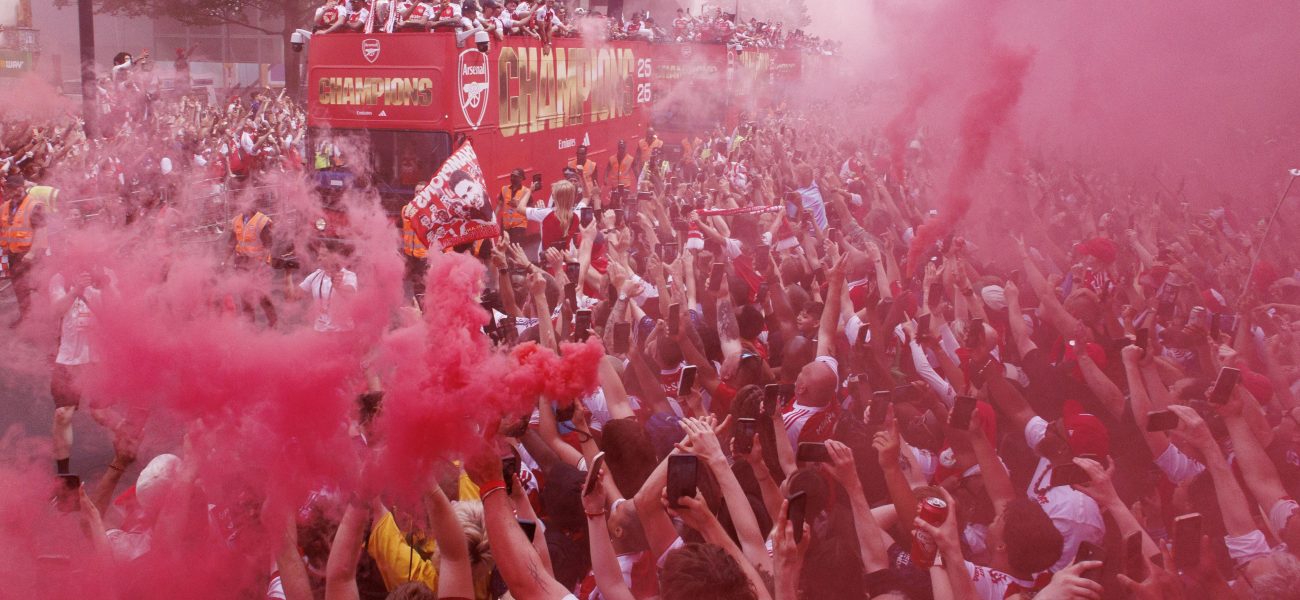
POLICY WIRE — LONDON — It wasn’t the Champions League trophy; that elusive prize slipped from their grasp just a day prior in a Budapest shootout. But on Sunday, a sea of red washed over North London anyway, not for what Arsenal lost, but for what they unequivocally conquered: the English Premier League. This wasn’t just about a football club’s triumph; it was about a city’s complex release, a collective exhale nearly a quarter-century in the making, painting a stark, if temporary, contrast to the capital’s usual, harder realities.
Hundreds of thousands poured onto the streets of Islington, a tide of pure, unadulterated passion. Fans – from toddlers on shoulders to septuagenarians draped in scarves – screamed until their throats gave out. They hadn’t seen this particular glory in 22 years, an eternity in modern sport. And you know what? That wait, that gut-wrenching anticipation, it only magnified the moment, didn’t it? The air thrummed, not just with cheers, but with a palpable sense of communal ownership. Four open-top buses, carrying the men’s team (and, tellingly, the women’s team, who’d snagged the first-ever FIFA Women’s Champions Cup earlier in the season), crawled a five-mile circuit, a crimson procession past iconic landmarks and faces wet with tears. It was an explosion of identity, a stark reminder that even in an increasingly fragmented world, certain tribal allegiances endure.
From East London’s bustling enclaves, home to countless families with ties to Pakistan, to expatriate communities glued to screens from Lahore to Kuala Lumpur, this wasn’t just a local affair. English football, and its behemoth clubs, possess a truly global footprint, transcending borders with an almost unsettling ease. Fans across the South Asian subcontinent, many of whom haven’t set foot in North London, live and breathe these results. Their joy, their despair—it’s just as raw, just as genuine. It’s a testament to soft power, perhaps, if you want to look at it through a policy lens.
Flares bathed the route in scarlet smoke. Vuvuzelas, those infernal horns, made their presence felt, a cacophony against the rhythm of jubilation. But through the noise, you could see the faces, a mix of pure glee — and profound relief. It’s not often you witness such unfettered emotion, is it? You can’t put a price on that kind of catharsis. Well, actually, you probably can. Local businesses along the parade route reported a revenue surge of an estimated 350% during the event hours, according to data from the Greater London Authority.
“You can’t really quantify the sheer, raw joy you see on these streets,” Councillor Anya Sharma, representing Islington North, observed, her voice barely audible above the din. “It’s more than just a football win; it’s a palpable sigh of collective relief, a shared identity reaffirmed in chaotic times. It brings people together like little else, especially after what we’ve all been through recently.”
But the numbers tell their own story, too. This red surge in London wasn’t just spontaneous combustion. It’s a deeply ingrained cultural phenomenon, meticulously organized chaos, really. Because football isn’t just a game; it’s an industry. A culture. An identity. It’s big business, too, with tickets, merchandise, and broadcasting rights feeding an ecosystem that’s probably more influential than many realize.
📄 POLICY WIRE WHITEPAPER PUBLISHED: PAKISTAN'S NATIONAL SECURITY POLICY PRIORITIES
👉 READ BY CLICKING HERE“A single football parade in London? It injects millions into the local economy, sure. But look broader,” mused Dr. Tariq Bashir, an independent sports economist and former advisor to the Ministry of Culture, over a surprisingly quiet espresso. “These moments reinforce brand loyalty, drawing global eyeballs. It’s nation-branding by proxy, whether Whitehall likes to admit it or not. It’s why countries across the Muslim world, from Egypt to Indonesia, pour resources into developing their own leagues, seeking that same visceral connection and global recognition. It’s political currency.” He makes a decent point.
What This Means
The jubilation on North London’s streets, a day after the sting of European defeat, represents a potent psychological reset for a significant portion of the capital’s populace. Politically, such mass celebrations are rarely neutral. They offer a moment of communal solidarity that cuts across demographic lines, a momentary truce in the daily grind and broader socio-economic pressures. Local authorities, typically wary of mass gatherings due to security and logistical headaches, often welcome the positive headlines and the brief surge in local commerce. It’s an easy win, PR-wise.
Economically, while the direct spend during a parade is significant for small businesses, the long-term impact comes from heightened brand visibility for both the club and the city itself. Arsenal, like its peers, is a global entity, its success reverberating far beyond the UK. This sort of high-profile event generates international media coverage (it’s how Policy Wire finds itself covering it, after all) and cements fan allegiances, driving merchandise sales and tourism over the coming year. It also distracts, doesn’t it? Offers a momentary diversion from inflation worries, public service cuts, or persistent geopolitical instability. For a few hours, the world shrinks to a five-mile loop of triumph, allowing Londoners, and indeed a global community of supporters, to simply… feel good. That’s a powerful tool, consciously deployed or not.