


Berlin’s Berry Bonanza: The Drive-Thru Strawberry Craze and Europe’s Unseen Economic Currents
POLICY WIRE — Berlin, Germany — You wouldn’t expect a queue of idling combustion engines, typically symbols of urban gridlock and carbon footprint anxieties, to be a harbinger of fresh-picked...

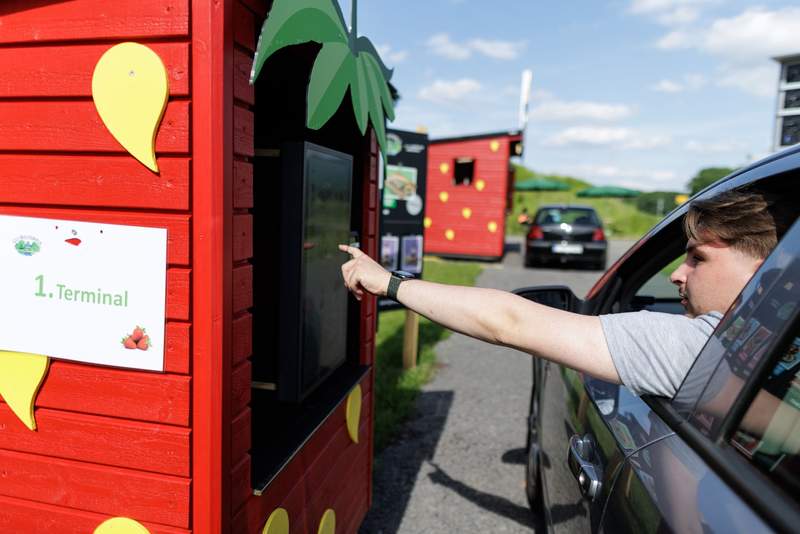
POLICY WIRE — Berlin, Germany — You wouldn’t expect a queue of idling combustion engines, typically symbols of urban gridlock and carbon footprint anxieties, to be a harbinger of fresh-picked German pastoral charm. But there they’re, drivers lining up not for a hasty caffeine fix or processed meal, but for plump, ruby-red strawberries straight from the field. It’s an unlikely spectacle, a simple drive-thru operation on the outskirts of Berlin that’s managed to capture the collective imagination—and wallets—of a populace ostensibly keen on climate action yet unwilling to forgo convenience. And frankly, it’s pretty savvy.
This isn’t about some flashy new tech. Nope. This is about adapting. It’s about leveraging established habits—the quick, in-and-out experience—to sell a product that feels decidedly analogue. Call it neo-agrarian opportunism, or simply smart business in a post-pandemic landscape that’s remade our interaction with everything, including produce. Germans, bless their efficient hearts, have embraced the concept with an almost disarming enthusiasm, turning the mundane act of grocery shopping into something almost… theatrical.
“We’ve seen an unmistakable surge in demand for direct-to-consumer agricultural products, especially after the disruptions of recent years,” remarked Annette Hofmann, Director of the Federal Ministry of Food and Agriculture’s Marketing Department, speaking to Policy Wire from her office. “Consumers are seeking both transparency — and ease. This isn’t just about fruit; it’s about reconnecting, however briefly, with local producers — and quality they can trust. It’s a pragmatic evolution of the traditional farm stand model, isn’t it?”
But this berry boom isn’t just a quirky local trend; it signals a wider re-evaluation of food supply chains across Europe. The German appetite for domestic, fresh produce—particularly berries—has become robust. According to data from the Federal Statistical Office, direct farm sales in Germany have actually risen by nearly 15% in the last three years, a trend reflecting not just shifting preferences, but an underlying economic strategy to bolster regional agricultural resilience. And that’s not small potatoes, or small strawberries, for that matter.
For nations grappling with their own food security issues, the quiet efficiency of Germany’s approach isn’t going unnoticed. In countries like Pakistan, where agricultural infrastructure and market access remain complex hurdles for many smallholders, this European ingenuity might seem a distant dream. But it isn’t beyond consideration. Agricultural entrepreneurs in the Punjab, for example, have watched closely as European consumer behavior oscillates between globalized convenience and local sourcing. The idea of optimized, direct routes to market, tailored for speed and freshness—think mangoes or dates bypassing several middlemen—could hold significant lessons, offering a blueprint for enhancing rural incomes and reducing waste in a fragmented system. It’s a reminder that even the humblest transaction has geopolitical ripples, shaping perceptions of economic efficiency.
“We’re navigating a changed commercial landscape. People want local, yes, but they also expect efficiency—they’re used to Amazon Prime delivery for everything,” observed Dr. Stefan Keller, a Berlin-based economist specializing in consumer behavior. “A drive-thru strawberry stand might sound quaint, but it represents an intelligent integration of traditional values with contemporary consumer expectations. It’s a very German solution to a very modern problem. You can’t argue with results, can you?”
📄 POLICY WIRE WHITEPAPER PUBLISHED: PAKISTAN'S NATIONAL SECURITY POLICY PRIORITIES
👉 READ BY CLICKING HEREIndeed, one cannot. The seemingly unassuming fruit stand offers more than just a quick snack; it provides a stark illustration of how adaptable local economies can be, pivoting to meet new demands without abandoning core principles. It’s about bridging the gap between farm — and table in a way that respects both the clock and the palate.
What This Means
This strawberry sensation, while perhaps appearing frivolous on the surface, is actually a sharp lens into deeper political and economic undercurrents. First, it highlights the continuing — and accelerating — shift in consumer priorities toward convenience and localized sourcing. Global supply chain fragility exposed during the pandemic means shoppers increasingly prioritize immediate availability and perceived freshness over purely bottom-line price points on some goods. This isn’t a return to a pre-industrial utopia, but rather a hybrid model where speed meets origin transparency. And that’s something policymakers globally are struggling to define, let alone address.
Secondly, it reflects a subtle, yet powerful re-alignment of agricultural strategies. European nations, traditionally reliant on extensive agricultural subsidies, are now also incentivizing innovative direct-sales channels. It’s an unspoken recognition that smaller, agile, and directly consumer-facing operations can sometimes weather economic fluctuations better than behemoth corporate farms tied to complex export markets. For governments, fostering such entrepreneurial ventures within agriculture can shore up rural economies and even mitigate social unrest caused by economic displacement.
Finally, the popularity of such straightforward, accessible business models suggests an interesting humanization of commerce. In an age of algorithm-driven consumption, the simple act of driving up to a farm gate, however modernized, injects a degree of humanity back into the exchange. This isn’t just an economic transaction; it’s a cultural touchpoint. It hints at a future where localized micro-economies, often dismissed as niche, could gain significant traction, challenging the very notion of how our essential goods reach us. It’s a sweet, albeit telling, disruption.