
Iron Hand, Empty Robes: China’s Crusade Against Corrupt Clerics Rattles Sanctuaries
POLICY WIRE — Beijing, China — For years, the legend of ancient Shaolin — home to kung fu masters and deep spiritual contemplation — projected an image of asceticism and unwavering discipline. But it...

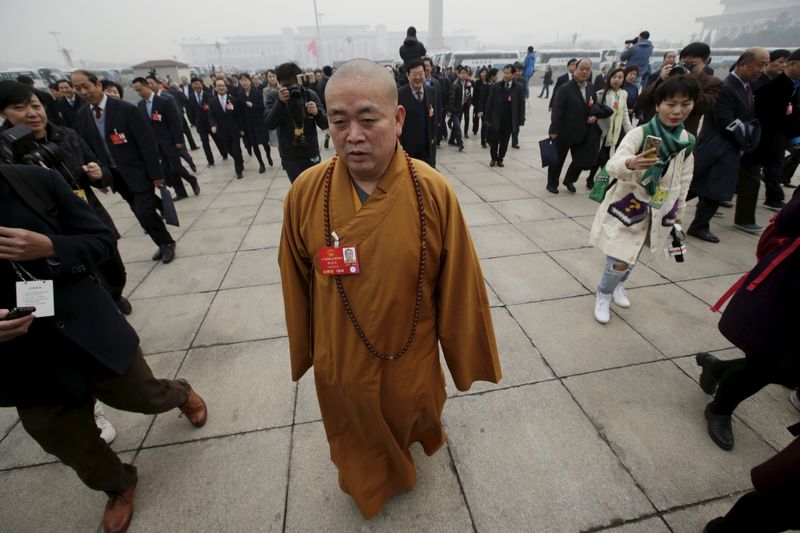
POLICY WIRE — Beijing, China — For years, the legend of ancient Shaolin — home to kung fu masters and deep spiritual contemplation — projected an image of asceticism and unwavering discipline. But it seems even stone walls can’t keep out the grim realities of modern Chinese politics. State media recently confirmed a former abbot, revered (and feared, depending on who you asked) for his temporal and spiritual power, just got handed a rather hefty 24-year prison sentence. And just like that, the quiet hum of monastic life across China just got a lot louder—with questions.
It’s not often you hear about a leading spiritual figure — a monk, for heaven’s sake — doing hard time for things like embezzlement and abuse of power. Most people assumed the state’s long arm reached everywhere else, but maybe not into the heart of temples, especially not one so intrinsically linked to China’s cultural mystique. But they were wrong, weren’t they?
This isn’t merely about one man’s spectacular downfall. It’s a blunt message from Beijing: nobody, not even those cloaked in religious authority, stands above the Communist Party’s omnipresent anti-corruption campaign. That campaign, which started under President Xi Jinping, has reportedly disciplined over 5 million officials since 2012, according to statistics from the Party’s own Central Commission for Discipline Inspection. You can’t argue with those numbers. It’s a dragnet that spares almost no one, irrespective of their formal title or spiritual sway.
The convicted abbot, whose name state media conveniently omits in recent reports (perhaps a nod to maintaining some ‘face’ for the institution itself, or maybe just pragmatic information control), presided over a temple that had, under his stewardship, morphed into a commercial powerhouse. From tourist attractions to cultural exports, it was a brand, a profitable enterprise. Critics had long muttered about lavish lifestyles — and opaque financial dealings. Now, those whispers are public proclamations. It’s almost ironic, isn’t it? A place dedicated to renunciation — and detachment becoming ensnared in material greed.
But how do you even quantify corruption in such a setting? We’re talking about donations, merchandising, land deals—a veritable empire built atop ancient spiritual bedrock. This saga, unfolding as it’s, forces us to consider the uncomfortable nexus of faith, finance, — and state control. It certainly highlights the unique challenges faced by religious institutions trying to navigate—or, rather, survive—under an authoritarian government.
“The Party’s resolve against corruption remains unwavering, irrespective of the sector or the individual’s perceived standing,” stated Comrade Li Jianping, a senior commentator for a state-run newspaper, reflecting the official line. “This judgment serves as a potent reminder that transparency and accountability apply to all, safeguarding both national assets and public trust, even within spiritual domains.” Li’s comments, boilerplate as they’re, signal clearly enough that the crackdown won’t be slowing down just because a cassock is involved.
Across the Muslim world and parts of South Asia, where religious endowments and charismatic leaders wield immense influence and often considerable financial power, China’s move will likely be viewed with a mix of intrigue and unease. Governments there grapple with their own questions of religious governance, particularly regarding transparency and accountability within massive religious charities or powerful spiritual trusts. It’s not just a Chinese problem; it’s a global dynamic about who controls the pulpit—and its purse strings. Countries like Pakistan, with its complex array of madrassas and religious charitable organizations, aren’t immune to these debates. The state often tries to regulate them, often facing pushback about spiritual independence.
📄 POLICY WIRE WHITEPAPER PUBLISHED: PAKISTAN'S NATIONAL SECURITY POLICY PRIORITIES
👉 READ BY CLICKING HERE“When the state exercises such direct, heavy-handed control over religious institutions—even in cases of alleged financial impropriety—it risks undermining the very legitimacy of spiritual leadership in the public eye,” observed Dr. Zara Ali, an expert on religious freedom — and state control at a Karachi-based think tank. “There’s a fine line between stamping out graft — and asserting dominance. And let’s not forget that such actions inevitably create a chill, potentially suppressing authentic spiritual expression.” She’s not wrong; you can almost feel the air growing colder for some of China’s other religious leaders.
What This Means
This harsh sentence isn’t just about punishing one supposedly errant monk; it’s a highly public declaration of absolute state authority. Politically, it reasserts the Party’s dominion over every aspect of Chinese society, leaving no sacred cow—or temple—untouched. It sends a message, loud and clear, that spiritual stature offers no sanctuary from political scrutiny, nor from potential re-education. It means future religious leaders, regardless of their faith tradition, will undoubtedly think twice—and probably three times—before deviating from strict Party guidelines, both financially and doctrinally.
Economically, it suggests an even tighter leash on the significant financial assets managed by religious organizations. Many of these institutions are surprisingly wealthy, boasting vast landholdings and income streams from tourism and donations. The state might just be looking for better ‘management’ of these resources, channeling them to Party-approved projects or simply exercising more direct control over capital flows. The public perception could shift, too; perhaps fostering deeper cynicism about all forms of religious leadership, which could subtly serve the state’s long-term goal of diminishing organized religion’s influence. Just check out the ongoing conversations in Sri Lanka about similar challenges, as discussed in Sacred Roots, Tarnished Legacy: Sri Lanka’s Monk Suspension Shatters Serenity.
Ultimately, this isn’t about piety; it’s about power. It always is.