

Venice’s Blush Brigade: Flamingos Signal a Fleeting Victory in a Sinking City
POLICY WIRE — Venice, Italy — Forget the acqua alta for a minute, and maybe the throngs of selfie-stick-wielding tourists. Forget the cruise ships — or at least, try to. There’s something else...

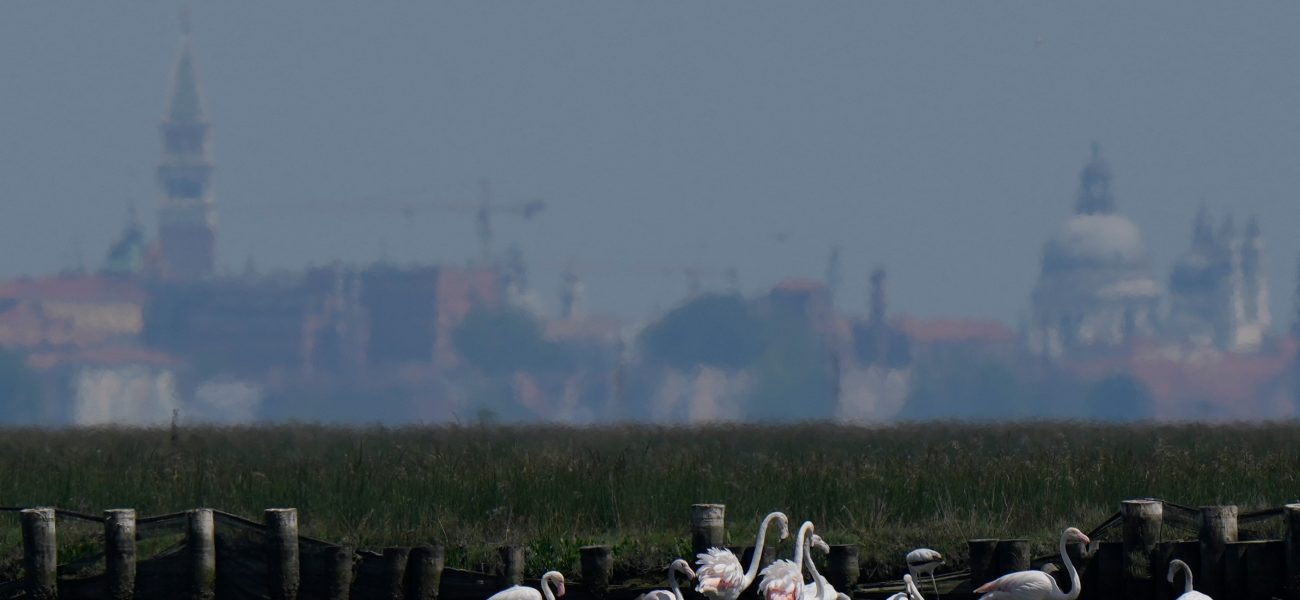
POLICY WIRE — Venice, Italy — Forget the acqua alta for a minute, and maybe the throngs of selfie-stick-wielding tourists. Forget the cruise ships — or at least, try to. There’s something else coloring Venice’s famed lagoon these days: a burst of vibrant pink. Not an elaborate art installation, nor some forgotten residue of Carnival. These are actual flamingos, returning in droves to the recovering salt marshes, painting a bizarrely beautiful, perhaps even slightly unsettling, picture.
It’s a peculiar sight, no doubt. The very birds once synonymous with far-flung, tropical havens now wade elegantly through the muddy shallows just beyond one of the planet’s most overtouristed cities. And for some, it’s a feel-good story, a natural triumph. The cleaner water during various pandemic lockdowns, the subsequent efforts in habitat restoration—they’ve seemingly paved the way for these leggy visitors. But like most things here, the rosy optics don’t quite tell the whole story. The city’s eternal struggle against nature, or perhaps its own excesses, hasn’t exactly vanished.
This isn’t some miracle, not really. It’s more of a brief reprieve. The Venetian lagoon has seen a remarkable increase in species, with some bird populations increasing by over 20% in the last five years, according to Italy’s National Institute for Environmental Protection and Research (ISPRA). That’s great, of course. For Isabella Rossi, who heads the Venetian Environmental Protection Agency (VEPA), it’s a testament to painstaking conservation work. “We’ve seen positive changes,” she told Policy Wire, her tone cautiously optimistic. “The restricted human activity, coupled with targeted ecological efforts, truly made a difference for these fragile ecosystems. But the fight isn’t over, not by a long shot. One good season doesn’t mean we’ve conquered decades of environmental damage.”
But hey, flamingos make for good press. You can bet the local tourism bureau hasn’t missed a trick. Marco Bianchi, president of the Venetian Tourism Bureau, gushed, “These magnificent creatures are a symbol of Venice’s enduring magic. They remind visitors that our city is a living, breathing natural wonder, not just a museum.” One can practically hear the clinking of champagne glasses and the murmur of new marketing campaigns already. And why not? It’s a striking counter-narrative to the city’s usual tale of slow submersion — and crumbling grandeur. People want stories like this.
Because let’s be honest, everyone loves a comeback kid, especially if it’s dressed in pink. Yet, you’ve got to wonder. While Venice celebrates its flamingo revival, cities in, say, Pakistan — like Karachi, already grappling with colossal waste management issues and coastal erosion — face similar battles for ecological survival, only amplified. Their wetlands, often polluted and rapidly diminishing due to unregulated expansion, rarely see such idyllic turnarounds. It’s a stark reminder that environmental recovery, in affluent Europe versus the rapidly developing Global South, isn’t always played on a level field, despite shared challenges like rising sea levels. We’re talking vastly different capacities for protection — and mitigation here.
📄 POLICY WIRE WHITEPAPER PUBLISHED: PAKISTAN'S NATIONAL SECURITY POLICY PRIORITIES
👉 READ BY CLICKING HEREThe re-colonization by these flamboyant birds isn’t without its detractors, either. Some scientists, the pragmatic ones, point out that their return might also signal a fundamental shift in the lagoon’s ecosystem – not necessarily a full recovery to its historical state, but a new, perhaps less biodiverse, equilibrium favoring certain species. It’s an interesting concept, this idea of a ‘recovering’ nature that might just be pivoting rather than healing entirely. It’s not simply hitting rewind, you see.
And so, as tourists flock to snap photos of these new, rosy residents, the city leadership stands at a crossroads. Do they lean into the eco-tourism angle, focusing on sustainable practices — and stringent environmental protections? Or does the siren song of immediate economic gain — more tourists, more money — drown out the whispers of caution from conservationists? It’s a delicate dance on unstable ground. The flamingos, beautiful as they’re, might just be nature’s brightly colored canary in the coal mine, singing a bittersweet tune.
What This Means
The unexpected return of flamingos to the Venetian lagoon offers a political — and economic conundrum. On the surface, it’s a potent symbol for the city’s environmental campaigns, bolstering its image as a destination capable of ecological regeneration. This narrative could be leveraged to attract a more eco-conscious tourist demographic and potentially secure funding for further conservation efforts. However, relying too heavily on this feel-good story risks obscuring the systemic issues – climate change, overtourism, persistent pollution – that continue to jeopardize Venice’s long-term viability. For policy-makers, it creates pressure: how to balance immediate economic benefits with the slow, expensive, often unpopular demands of true ecological restoration. There’s also the deeper observation: nature, given even a slight break, begins to heal. But whether that healing is sustainable under renewed human pressures, or if it’s merely a temporary balm on a chronic wound, remains the billion-dollar question. This isn’t just about birds; it’s about the resilience of human systems to adapt to a changing planet, even when handed such vivid, hopeful indicators.