


Monroe’s State Track Trophy: A Policy Wire Reckoning on Local Glory
POLICY WIRE — Kent City, USA — The hardware rode shotgun, buckled in like precious cargo, for Roman Smith’s journey back to Monroe County. No casual toss onto the back seat; this Division 3...

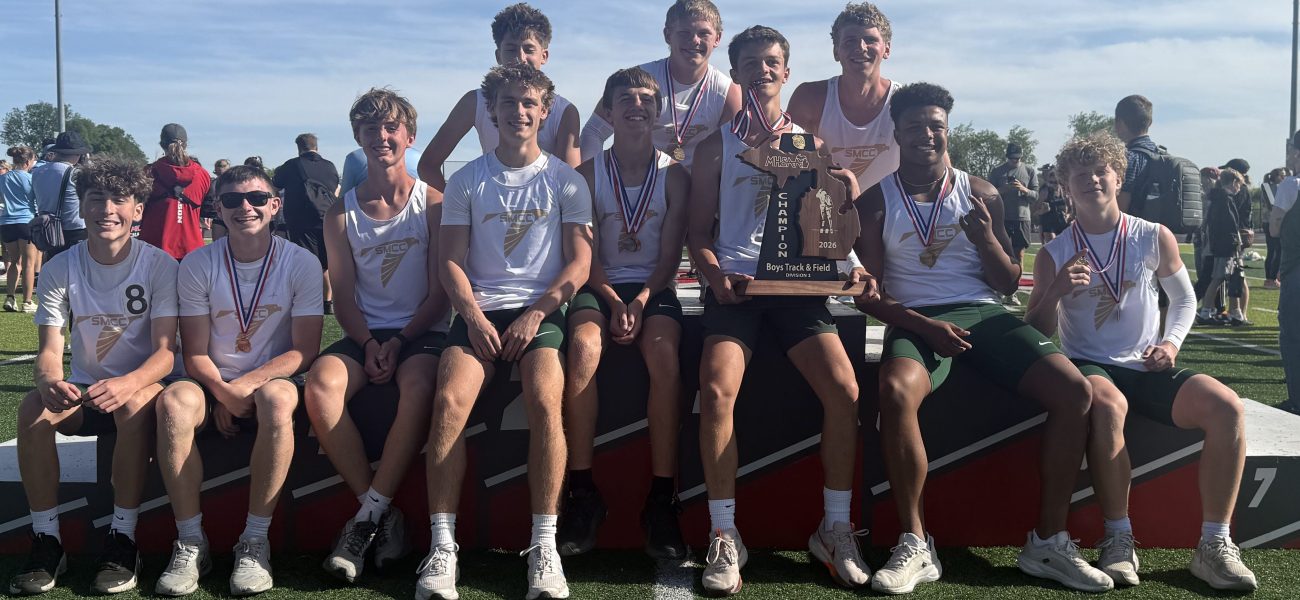
POLICY WIRE — Kent City, USA — The hardware rode shotgun, buckled in like precious cargo, for Roman Smith’s journey back to Monroe County. No casual toss onto the back seat; this Division 3 state track and field championship trophy commanded respect, treated not just as a prize, but as a hard-won, almost geopolitical artifact of local dominance. I had to,
Smith, the St. Mary Catholic Central coach, told us. It’s very valuable.
One couldn’t help but note the protective instinct – a universal impulse when something of immense, collective pride is finally secured.
It’s rarely a straight shot to glory, even in local athletics. The Falcons netted 39 points, just enough to stay seven lengths ahead of Elk Rapids. It was an incredible day,
Smith acknowledged, a sentiment echoing across the Monroe County Region. It hadn’t come easily. The Kestrel’s boys track squad now joins an exclusive club, becoming the eighth Monroe County Region team to win a state title in track and field and the first since Whiteford in 2007.
It’s an achievement that speaks to generations, given the bulk of previous victories — Monroe in the 1930s, Dundee in ’49—are etched in pre-1950 history. [QUOTE_PLACEHOLDER]
But how do you even begin to anticipate such a feat? Smith, ever the pragmatist, spilled the beans. My coaching staff and I started looking at the seeds about a month ago and thought it might be possible.
The raw numbers pointed to optimism, especially in two relays that were top-seeded. Things, predictably, got messy on the track.
The 400 relay – with Cole Reinhardt, Gavin Swartout, Vince Harris, — and Brady Reinhardt – didn’t falter. They lived up to their promise, securing a win in :42.2. That’s not just a victory; it broke the Division 3 state record by a second,
an athletic seismic event right there. But the 800 relay, comprising Brady Reinhardt, Carson Welker, Easton Kwiatkowski, and Harris, well, they slipped to third. A poor exchange
was the culprit. It’s a tiny, blink-and-you-miss-it misstep, but it cost ’em. And it reminds you of how razor-thin the margins are in high-stakes competition—be it a relay race or a negotiation on the world stage.
And then there’s Swartout, a kid who apparently didn’t read the script for how his day should’ve gone. He wasn’t even meant to be a headline-grabber, seeded 23rd for crying out loud. He was seeded 23rd, but ran :10.82 to take third,
Smith explained, still marveling. He had the race of his life.
From 11.2 seconds to 10.82 seconds: it’s the kind of personal surge you often see from athletes making a late run, shocking pundits who focus solely on preliminary numbers. It shows that in any arena—from sport to geopolitics—underestimation can be a costly mistake.
Much of SMCC’s remaining points were stockpiled by Christian Craanen. The sophomore displayed the kind of endurance that makes hardened bureaucrats blanch. He snatched second in the 3,200 at 9:29.35 — and a bronze in the 1,600 at 4:21.53. Both personal bests, by the way. He even added a sixth-place finish in the 800. What’s even wilder? The coaches pulled him from the 3,200 relay to keep him fresh for individual events. A strategic sacrifice for maximum impact – a lesson many larger organizations could stand to learn. His decision to focus on these individual events and subsequent success illustrates the calculated risks coaches, and indeed national leaders, must take.
📄 POLICY WIRE WHITEPAPER PUBLISHED: PAKISTAN'S NATIONAL SECURITY POLICY PRIORITIES
👉 READ BY CLICKING HERESpeaking of individual prowess, Giuliana Nastale of Erie Mason was something else. She defended her titles in the 100 — and 200 meters. Julia Hughes of Ida matched that in the high hurdles. And Olivia Beaudrie from SMCC’s girls team was a high jump champ, effortlessly clearing 5-4. It highlights the peculiar dynamic of individual glory within a team structure; each triumph, regardless of its origin, builds collective pride. Think of it like regional powers — for instance, how individual Pakistani athletes have, at times, brought international recognition to the country, regardless of larger team sport struggles, cultivating a distinct kind of soft power.
These individual bursts of excellence, whether in Michigan’s local track scene or on the international stage, form the backbone of broader athletic narratives. Remember how the performances of Pakistani athletes like Jahangir Khan in squash resonated deeply within the nation and beyond its borders, even during periods of broader national challenges? It’s not just about winning; it’s about the narrative, the aspiration, — and the proving ground these events provide. And, it’s a very special day for our kids, the program, the parents, the community – everything,
Smith concluded. It’s tough to argue with that.
What This Means
This localized triumph by SMCC isn’t just a feel-good sports story; it’s a microcosm of the political economy of success, even in competitive districts. It speaks to sustained investment—in coaching staff, in young talent, in the community buy-in that props up programs. The ability of a school system to cultivate such competitive spirit and disciplined performance reflects broader administrative competencies. These sorts of achievements can quietly bolster community identity, giving residents something tangible to rally behind. In an era where local ties often fray, communal sporting success acts as a potent unifier. It demonstrates that with the right strategy—sometimes unconventional, like pulling a key athlete from a relay to prioritize individual gains—even underdogs can rewrite expectations. It also points to the fierce, unspoken competition between regions, provinces, or states for bragging rights and, sometimes, for resources or talent pipelines. The raw statistics don’t always capture the human grit involved; often it’s the personal-bests that tell the true story of effort, much like the economic indicators rarely capture the daily grind of citizens.
the success here, particularly for individuals defying pre-event expectations like Gavin Swartout, holds a broader implication. It champions the notion that potential is rarely fully encapsulated by initial data points or predictions. This applies in development policy or strategic planning too, where seemingly minor players can unexpectedly reshape outcomes. You can link this to the burgeoning talent from developing nations, such as athletes in South Asia fighting for recognition in hyper-competitive fields. The relentless pursuit of a personal best, whether on the track or in economic output, drives unexpected progress. This kind of grit translates across diverse arenas, forming the bedrock of both individual success and collective prosperity.