


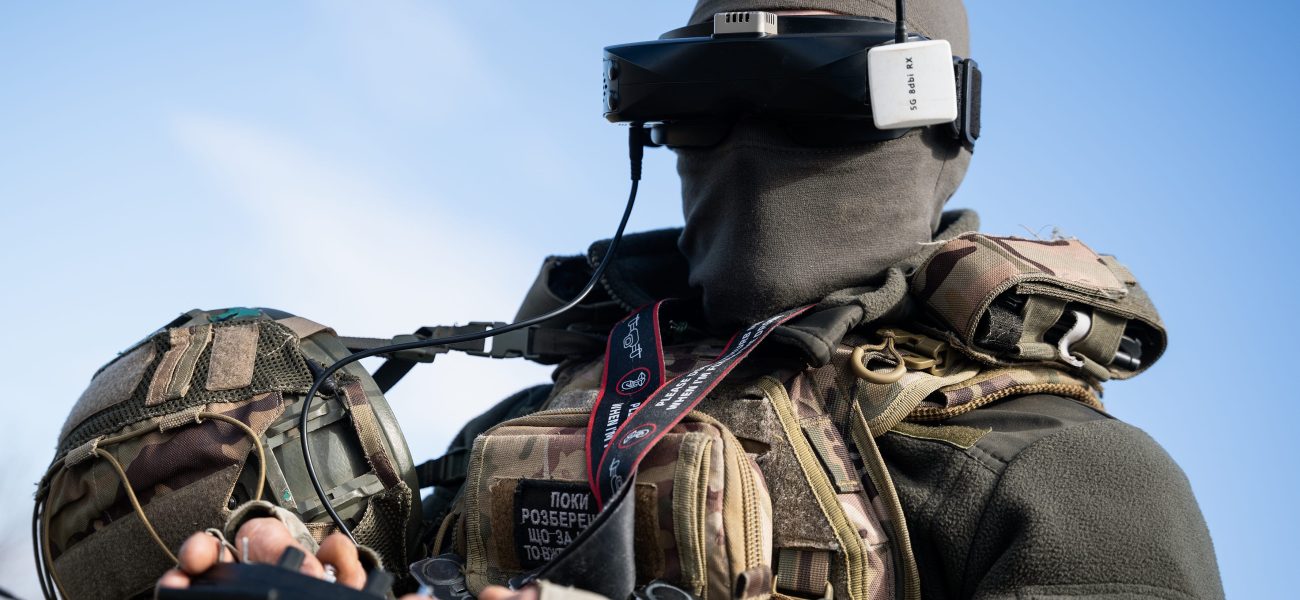
Shadows Extend: Ukraine’s Drones Unmake Russia’s ‘Safe’ Zone Assumptions
POLICY WIRE — Kyiv, Ukraine — Forget the traditional lines drawn on maps, the comfortable buffer zones supposedly insulating critical logistics and command centers. Those lines are blurring. Fast....

POLICY WIRE — Kyiv, Ukraine — Forget the traditional lines drawn on maps, the comfortable buffer zones supposedly insulating critical logistics and command centers. Those lines are blurring. Fast. Russia’s long-held assumption of inviolable rear territory? That’s becoming a costly fantasy, an expensive lesson delivered by swarms of drones — small, sometimes crude, but remarkably effective — that are forcing a total recalibration of strategy, and perhaps, sanity.
It’s not just about what explodes anymore; it’s about what everyone suddenly realizes could explode. This psychological dominion, the quiet erosion of certainty, is arguably the real tactical coup. Previously untouchable airfields deep within Russia, industrial parks hummed with arms production, and supply depots considered beyond reach—they’re all fair game now. Kyiv’s growing arsenal of mid-range strike drones has pulled back the curtain, revealing the vulnerability of an opponent that believed distance equated to security. And this shift isn’t lost on military observers from Islamabad to Tehran. [QUOTE_PLACEHOLDER]
Ukrainian ingenuity, coupled with persistent international backing (even when it feels agonizingly slow, they’ve noted), has pushed the envelope on asymmetric warfare. These aren’t the consumer-grade quadcopters we often hear about on the frontline. No, sir. We’re talking about systems that can travel hundreds of kilometers, often purpose-built to navigate enemy air defenses, seeking out high-value targets. Because the stakes are incredibly high, you see.
Consider the energy sector: it’s not glamorous, but it’s the Kremlin’s financial bedrock. Reports from Ukrainian military intelligence indicate a rising cadence of attacks on these targets. One unclassified briefing from NATO intelligence services noted that approximately 70% of Russian oil refining capacity within 800 kilometers of Ukrainian borders has experienced at least one successful drone strike attempt in the last year. This isn’t a statistic to be taken lightly. It’s a strategic squeeze, tightening the noose on Russia’s war funding. It’s an economy under siege by a thousand paper cuts, but with explosive consequences.
And it’s a testament to adaptation. Ukraine isn’t just surviving; it’s innovating, turning the conventional wisdom of air power on its head. This isn’t about dogfights in the sky. This is about bypassing an enemy’s air superiority with cost-effective, attritional strikes. Russia’s responses have been predictable, mostly. They’ve deployed more air defense systems, certainly, repositioned assets, and occasionally offered theatrical promises of retaliation. But you can’t protect every square inch of a sprawling territory, not when the attacking platforms are small, numerous, and, crucially, getting smarter. It’s an unsustainable game of whack-a-mole, financially — and strategically. Russia is learning that lesson the hard way—its defenses designed for a different era, a different type of war.
But the ramifications stretch far beyond Eastern Europe’s steppes. States in the broader Muslim world, particularly those grappling with persistent regional instability or asymmetrical threats, are paying keen attention. Take Pakistan, for instance, a nation long familiar with the complexities of contested borders and the strategic depth doctrine. It’s actively developing its own indigenous drone capabilities. The strategic lessons from Ukraine — how a weaker force can project power and deny sanctuary — won’t be lost on military planners in Islamabad, Ankara, or Tehran. It demonstrates that advanced, expensive fighter jets aren’t the only ticket to dictating terms on the battlefield. Iran, a pioneer in this particular brand of asymmetric warfare, has seen its drone doctrine—long scoffed at by Western powers—vindicated in real-time on Ukrainian soil (even if through Russian proxies). It’s a shift, folks. A big one.
📄 POLICY WIRE WHITEPAPER PUBLISHED: PAKISTAN'S NATIONAL SECURITY POLICY PRIORITIES
👉 READ BY CLICKING HERECasual observers might focus on the boom, the immediate destruction. But veteran watchers of military affairs see something far deeper. They see the rapid commodification of air power. They see the decentralization of command and control—and the corresponding headache for adversaries trying to shut it all down. And they see the profound human cost, not just in casualties, but in the pervasive, unshakeable anxiety that no place is truly safe. This is a new, unsettling paradigm. No amount of historical precedent adequately prepares one for a war waged by robotic eyes in the sky, always watching, always ready. It’s unsettling, sure. But it’s the stark, unflinching reality of modern conflict.
What This Means
The geopolitical tremors from Ukraine’s expanding drone reach are only just beginning to register. Economically, prolonged disruption to Russia’s industrial and energy infrastructure isn’t simply a matter of military attrition; it’s a direct assault on the nation’s ability to fund its war machine, forcing Kremlin planners into ever-tougher choices regarding resource allocation and strategic priorities. Russia’s capacity to maintain its war effort, already strained by sanctions and manpower issues, will only diminish further as previously safe logistics hubs come under increasing scrutiny and fire.
Politically, the implications are equally weighty. For President Putin, the failure to secure Russia’s inner territories from Ukrainian strikes undermines his narrative of national strength and a ‘special military operation’ under control. It chips away at domestic confidence, suggesting incompetence or weakness where only unwavering might was once projected. This vulnerability also complicates diplomatic maneuvering, as Moscow now appears less able to dictate terms when its own vulnerabilities are so publicly exposed. International partners of Russia, such as those in Central Asia, may begin to reassess the Kremlin’s long-term viability as a security guarantor. And because of this evolving dynamic, we’re seeing a global arms market pivot rapidly towards cheaper, more accessible, and remarkably effective drone technologies, setting the stage for future conflicts to be fought by an entirely different class of weaponry. It’s a sobering prospect, but it’s where we’re headed. A low-cost revolution, as it were, rewriting the very rules of engagement.