
Beijing’s Gauntlet: Europe’s Green Ambitions Collide with Retaliatory Thunder
POLICY WIRE — Brussels, Belgium — It’s a tricky dance, this global economy. One minute you’re talking about saving the planet, the next you’re staring down the barrel of a trade war...

POLICY WIRE — Brussels, Belgium — It’s a tricky dance, this global economy. One minute you’re talking about saving the planet, the next you’re staring down the barrel of a trade war that could gut entire industries. That’s precisely the precarious ledge where the European Union finds itself, as its earnest—some might say idealistic—push for green transition technologies slams headfirst into Beijing’s hardline defense of its own sprawling industrial complex.
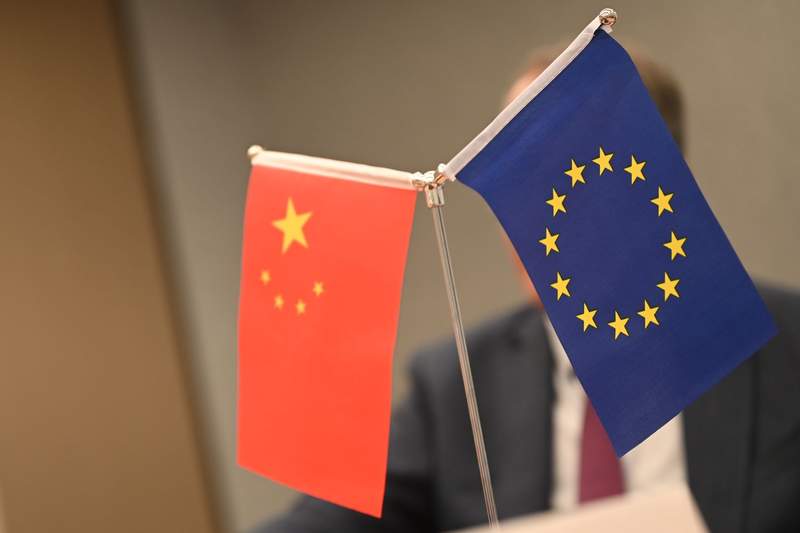
The murmurs started weeks ago, a low rumble from the Continent’s automotive heartlands about a tsunami of cheap Chinese electric vehicles threatening to swamp European manufacturers. Now, the murmurs have crescendoed into a clear, cutting threat. China, through its often-veiled diplomatic channels, has made it abundantly clear: expand those trade barriers—whether tariffs on EVs, medical devices, or agricultural goods—and Europe will face a reciprocal, painful squeeze. This isn’t just about cars, it’s a test of wills. It’s about who blinks first, — and who controls the future of high-tech manufacturing.
Because frankly, Europe’s current position isn’t the strongest. The continent’s industrial base has taken some hits, you know? Supply chain resilience? It’s been a talking point, but the practicalities—they’re complex. When you’ve got Brussels pondering tariffs on everything from EVs to wind turbines, it’s not some abstract academic exercise. It’s about protecting jobs, certainly. But it also pokes the giant in the room, — and Beijing’s got long memory and a hefty club.
“We observe with growing concern the EU’s inclination towards protectionist measures disguised as environmental policy,” said Liu Yuyin, a spokesperson for China’s Ministry of Foreign Affairs, in a recent press conference. “Such actions will only serve to undermine global supply chains — and lead to a damaging cycle of retaliation. China won’t stand idly by if its legitimate commercial interests are threatened.” There’s a certain unyielding certainty in Beijing’s tone; they don’t do subtle hints very often. Not when it counts, anyway.
On the flip side, European officials feel caught between a rock — and a very hard place. They’re trying to foster innovation and reach ambitious climate goals, all while preventing strategic industries from being undermined by state-subsidized competition. “Our ambition is not to start a trade war, but to ensure a level playing field for European companies,” remarked Valdis Dombrovskis, the EU’s Trade Commissioner, a man accustomed to walking this tightrope. “It’s imperative that fair competition prevails, allowing our nascent green industries to compete without facing unfair advantages.” But there’s a whisper in the halls, too, about whether the EU truly has the teeth to bite back if Beijing chooses to get nasty.
📄 POLICY WIRE WHITEPAPER PUBLISHED: PAKISTAN'S NATIONAL SECURITY POLICY PRIORITIES
👉 READ BY CLICKING HEREThe numbers don’t lie, either. Europe’s goods trade deficit with China, which ballooned to a staggering €396 billion in 2022, as reported by Eurostat, speaks volumes about the imbalance Brussels is desperate to correct. And this whole kerfuffle ripples far beyond just European capitals. In places like Pakistan, for instance, a steady stream of Chinese investment—from Belt and Road infrastructure to industrial collaborations—has been a cornerstone of their economic strategy. An escalating trade feud between the EU and China could, theoretically, force Beijing to look even more aggressively to alternative markets and closer regional partners. Conversely, Europe might pivot its sourcing strategies, creating new opportunities—or instabilities—for economies in South Asia trying to navigate their own development path.
And then there’s the broader geopolitical picture. With so much global uncertainty already baked in, this isn’t just an economic skirmish; it’s a diplomatic powder keg. What happens to the world’s shared climate goals if the two largest trading blocs are locked in a protectionist embrace? Cooperation tends to suffer, doesn’t it?
What This Means
This isn’t merely a squabble over market share; it’s a high-stakes poker game that’s exposing deeper vulnerabilities in the global economic architecture. Politically, Brussels is trying to signal strength, but doing so without alienating a major diplomatic partner and a significant chunk of its own consumer market. Economically, retaliation from Beijing—perhaps on luxury goods or even essential components currently sourced from China—could send shockwaves through European economies already grappling with inflation and slow growth. Manufacturers, already struggling with post-pandemic supply chain headaches, would find themselves having to scramble for new suppliers or facing significant cost increases. it could decelerate the very green transition the EU is aiming for, if access to cheaper, high-volume Chinese solar panels or EV batteries is restricted. The risk of splintering global trade into rival blocs is real. And honestly? Nobody truly wins when that happens. It just makes everything—and everyone—poorer, one step at a time. It’s a messy divorce that both sides really, really want to avoid. But don’t bet on it being smooth sailing.