
Mideast’s Worn Ledger: Lebanon Bleeds Anew as Border Simmers
POLICY WIRE — Beirut, Lebanon — It isn’t just the rockets and the artillery fire that wear folks down along Lebanon’s southern edge. No, it’s the ghastly rhythm of it all, the terrifying...

POLICY WIRE — Beirut, Lebanon — It isn’t just the rockets and the artillery fire that wear folks down along Lebanon’s southern edge. No, it’s the ghastly rhythm of it all, the terrifying predictability, this slow, grinding pull towards something catastrophic that everybody sees coming—but nobody, apparently, can stop. For a region perpetually braced for a bang, this newest drumbeat of war along the border with Israel feels disturbingly familiar, a rerun of trauma everyone wished they’d erased from memory.
It’s a peculiar kind of fatalism, you see, born from decades of low-boil hostility always threatening to scald. Communities nestled amongst the olive groves and hills have emptied out, families grabbing what they can, sometimes nothing more than a plastic bag, before hitting the road. This isn’t their first rodeo. The Lebanese government, or what’s left of it, confirmed further evacuation orders across southern districts, adding to the already staggering displacement. These aren’t just names on a map; they’re homes, businesses, lives put on hold, perhaps forever, by the incessant ping-pong of cross-border barrages.
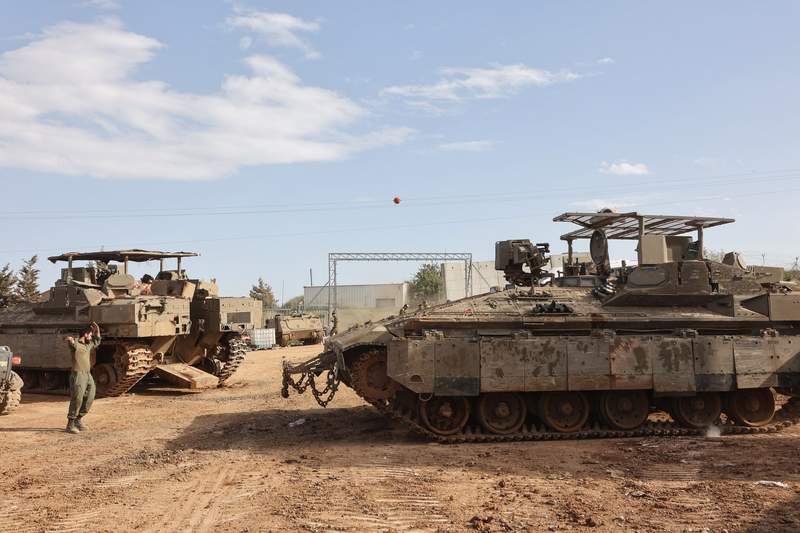
But how did we get here again? The Israel-Hezbollah skirmishes, now spiraling into what some analysts reluctantly call a full-blown front, didn’t just appear from nowhere. They’re a bitter consequence of the Gaza conflict, an almost inevitable spillover that keeps drawing new lines of destruction. Israel’s military operation in Gaza created a vacuum, a rallying cry for Iran-backed factions, and Hezbollah—a heavily armed state within a state—answered. They’re launching rockets, drones, and precision missiles, and Israel’s hitting back hard, aiming at military infrastructure, sure, but often razing the concept of civilian sanctuary right along with it.
“We can’t just stand by while our communities are targeted,” asserted Rear Admiral Daniel Hagari, spokesperson for the Israel Defense Forces, in a stern, broadcasted briefing. “Our primary objective remains the security of our citizens, and we will do whatever is necessary to push Hezbollah back from our border and dismantle their offensive capabilities.” It’s a message drilled into the Israeli public: deterrence by brute force. And you can’t really fault their citizens for wanting that security, after all the years of living under rocket threat. But what about the folks on the other side?
Because in Beirut, they’re staring into an abyss. Economy’s shot, political system’s broken—it’s like watching a building crumble from the inside, and now someone’s decided to lob explosives at the foundations. Lebanese caretaker Prime Minister Najib Mikati, sounding wearied beyond his years, recently implored, “Our people want peace, not this endless cycle of fear. The international community simply must step up, because our nation cannot withstand another devastating war.” He’s not wrong. The strain on Lebanon, already staggering under a financial meltdown, couldn’t be worse.
📄 POLICY WIRE WHITEPAPER PUBLISHED: PAKISTAN'S NATIONAL SECURITY POLICY PRIORITIES
👉 READ BY CLICKING HEREThis localized conflict—seemingly confined to Israel’s northern reaches and Lebanon’s southern flank—has a nasty habit of extending its tendrils. It ignites concern far beyond the immediate blast radius. Nations across the Muslim world, from Cairo to Karachi, watch these developments with bated breath. For Pakistan, for instance, a nation steeped in its own geopolitical complexities and solidarity with the wider Muslim Ummah, the escalation along the Lebanon-Israel border feeds anxieties about regional destabilization and the immense human cost. These crises aren’t isolated incidents; they’re all chapters in the same, bleak global narrative. They’ve seen this before, a flashpoint becoming a wildfire.
And let’s not forget the sheer scale of human disruption: the International Organization for Migration (IOM) reported, as of recent tallies, that over 96,000 Lebanese residents have been displaced by the ongoing cross-border fighting. Think about that for a second. Ninety-six thousand lives uprooted, thrown into uncertainty. It’s a shocking figure, a testament to the immense collateral damage even ‘limited’ conflicts invariably wreak.
What This Means
This isn’t merely a localized border spat; it’s a terrifying dress rehearsal for something much larger. Politically, the deepening conflict pushes Lebanon further into Tehran’s orbit, solidifying Hezbollah’s grip domestically even as the country crumbles. Economically, any chance of recovery for Lebanon – which is already teetering on the edge of complete collapse – disappears like smoke in the wind. We’re talking infrastructure damage, paralyzed trade, and a brain drain that’s already reached disastrous levels accelerating even faster. The ripple effects will be global, hitting energy markets and further stressing an already overstretched international aid apparatus. There’s also the very real possibility of unintended escalation, a miscalculation—a single, unlucky strike—that could pull the U.S. and its regional allies into a much broader regional conflagration. It’s a grim arithmetic: more bombs mean more misery, less stability, — and absolutely no winners. The stakes, it’s fair to say, couldn’t be higher. No, really. They just couldn’t be.