


Velocity and Verdict: Regional Track Trials Lay Bare Ohio’s Sporting Soul
POLICY WIRE — North Royalton, Ohio — The scent of liniment and nervous ambition hung heavy in the air over North Royalton, a peculiar kind of civic fragrance often mistaken for simple youthful...

POLICY WIRE — North Royalton, Ohio — The scent of liniment and nervous ambition hung heavy in the air over North Royalton, a peculiar kind of civic fragrance often mistaken for simple youthful exuberance. But make no mistake, what unfolded on the Division II regional track on May 29 wasn’t just a sporting event; it was a gritty, high-stakes proving ground. This was where the raw edges of teenage striving met the cold calculus of state berths and district bragging rights—a micro-economy of human effort.
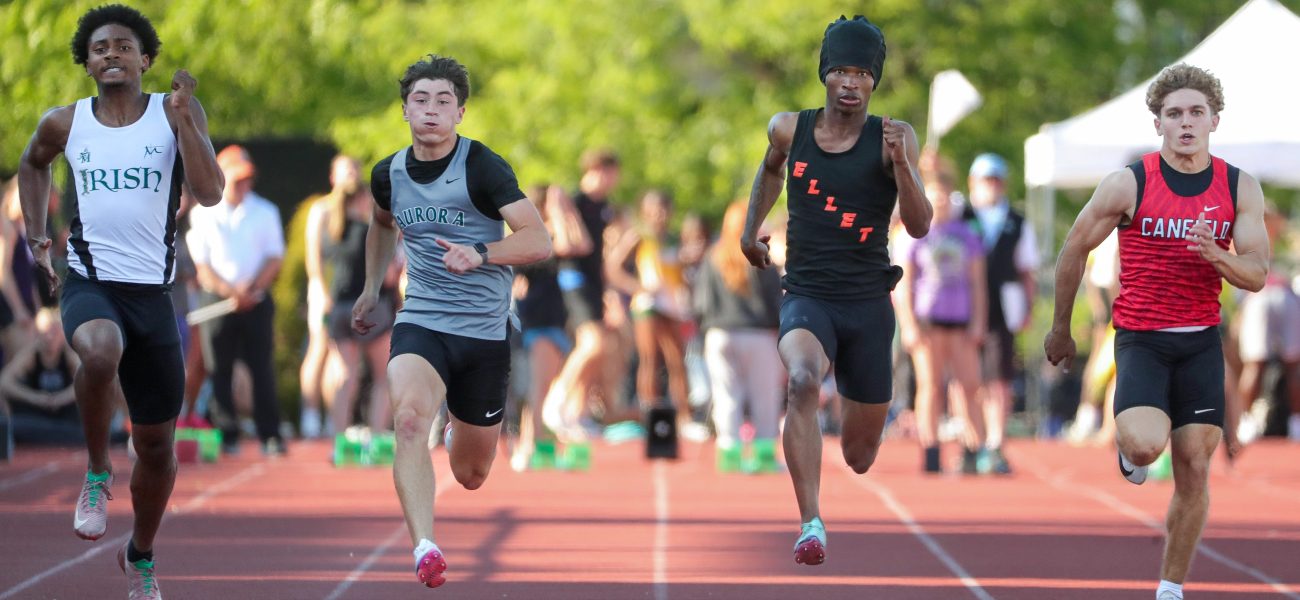
It wasn’t the pre-race favorites that consistently seized the narrative. No, it was often those who’d tasted recent defeat, those who harnessed the bitter tang of what-ifs. Take Ellet’s Trey Carter. He’d barely missed the state meet in the long jump two days prior. A hiccup. A mental misstep. But the sting, it seems, was a powerful propellant. Carter, once slightly off the pace, then surged in the 100 meters, ripping past rivals to claim gold in 10.74 seconds. He edged out Canfield’s Donnie Ferko, an act of sheer will made all the more dramatic by its timing.
“Look, you learn more from nearly screwing up than from flawless victories, don’t you?” Carter reportedly mused after his 100m triumph. “The jump? That was my wake-up call. So, when the gun fired again, I had a score to settle. Not with anyone else, but with my own expectation.” And he did just that.
But the day wasn’t solely about triumph; sometimes, just staying upright was a win. Revere’s Will Wells, after breezing through the 1,600 meters in a tidy 4:22.99, faced a different kind of challenge in the 800. Charging down the home stretch, pushing past the pain barrier, he found himself not just running against the clock, but against another body. A collision. A tangle of limbs. He somehow crossed the line in sixth place, earning an at-large state berth—a testament to grit, or perhaps just stubborn luck. These aren’t polished Olympians; they’re high school kids, for Pete’s sake.
The coaching benches buzzed with quiet calculations, measuring individual success against the broader, often unseen, metrics of team spirit and school visibility. Kevin Gorby, the Ellet coach, sees beyond individual medals. “Our district’s athletic program isn’t just about developing exceptional sprinters; it’s about character. Every second shaved off a personal best, every leap that clears the bar, it feeds into the collective morale that defines a community,” Gorby told Policy Wire. “These aren’t just scores; they’re investments in our youth, building a pipeline not just for college scholarships, but for citizenship.” Gorby’s forward-looking statement isn’t just cheerleading; it’s a calculated projection of long-term civic health. And that’s something districts all across Ohio, which according to OHSAA figures sponsors athletic opportunities for over 350,000 students annually, factor into their long-term budgetary analyses.
What This Means
Beyond the simple pursuit of medals, regional track meets like the one in North Royalton are revealing barometers of public policy. They highlight the allocation of educational resources, the often-unseen strain on athletic department budgets, and the political capital garnered through perceived school success. A dominant athletic program—whether it’s football in Texas or cricket in Pakistan—often correlates with a perceived robust education system. School boards — and district superintendents are keenly aware of this symbiosis.
📄 POLICY WIRE WHITEPAPER PUBLISHED: PAKISTAN'S NATIONAL SECURITY POLICY PRIORITIES
👉 READ BY CLICKING HEREFor parents — and local taxpayers, state qualification isn’t merely about bragging rights. It translates into increased institutional prestige, which can influence property values — and community engagement. in an increasingly globalized athletic landscape, these regional tournaments act as early talent identifiers. Young athletes, honed in these small-town crucibles, become part of a larger global narrative—think of the rigorous youth athletic academies in countries like Pakistan, focused on sports like cricket, mirroring the ambition of these U.S. regional track meets to cultivate and showcase homegrown talent for broader stages. These young athletes, in their determined strides and ambitious jumps, represent the front line of future human capital, potential scholars and leaders molded by the crucible of competition, shaping the future of a town, a state, and eventually, if they’re good enough, the wider world stage, linking directly to the discussions about how different nations manage athletic talent development and its global impact.
And then there’s the sheer economic engine that sports fuel, even at this level. Booster clubs, uniform suppliers, travel arrangements—it’s all part of a robust, localized economy. District athletic directors don’t just pick teams; they manage mini-enterprises, making choices that can ripple through local small businesses.
Hailey Otradovec, Wadsworth’s swift 400m winner, captured the quiet pressure athletes face. “Honestly, the nerves kind of kicked in, even though I’ve run the 400 a bunch of times,” she admitted, moments after her dominant 54.94-second performance. “You’re not just running for yourself; you’re carrying the weight of your coaches, your team, everyone who invested time. And you don’t want to let ‘em down.” It’s a sentiment echoed across all competitive endeavors, whether on the track, in the boardroom, or on the international diplomatic stage—the pursuit of victory, and the heavy responsibility that accompanies it.
Ultimately, these regional meets serve as essential stress tests for both athletes — and the systems that support them. The results aren’t just numbers on a scoreboard; they’re indicators of investment, ambition, and the enduring human spirit that seeks to leap higher, run faster, and defy the expectations of gravity and doubt. It’s an often overlooked lesson in resource allocation — and strategic planning. A glimpse into what it takes to turn potential into performance, in front of a modest, but deeply invested, audience.
But how often do we truly consider these smaller, local events—the kind that forge champions long before they make headlines—in the grand scheme of national narratives? Seldom, it seems. We often look to grander stages, forgetting that the foundations are laid right here, in the unassuming sprawl of a high school track. Just like the strategic maneuvers in global politics, the real work, the hard-fought battles, happen in less visible arenas. The intensity of it all, that’s what truly stuck with me, watching kids push themselves to the absolute brink, their very bodies screaming for state glory. It’s a fundamental aspect of human striving that transcends any national boundary, finding its analog in the rigorous training regimes of South Asia’s cricket hopefuls or the relentless practice of Olympic athletes.