

Ink as Emancipation: Gaza Hostages Etch Scars, Defying a Traumatized Landscape
POLICY WIRE — Tel Aviv, Israel — In a world obsessed with public declarations and political grandstanding, some stories quietly carve their own path. They don’t arrive with press...

POLICY WIRE — Tel Aviv, Israel — In a world obsessed with public declarations and political grandstanding, some stories quietly carve their own path. They don’t arrive with press releases, nor do they seek viral virality. But their resonance, ironically, hits harder because of it. Consider the quiet revolution unfurling in tattoo parlors across Israel, where the indelible mark isn’t about fleeting fashion but about defiance. It’s about a deeply personal reckoning with the horrors of October 7 — and the subsequent nightmare of Gaza captivity.
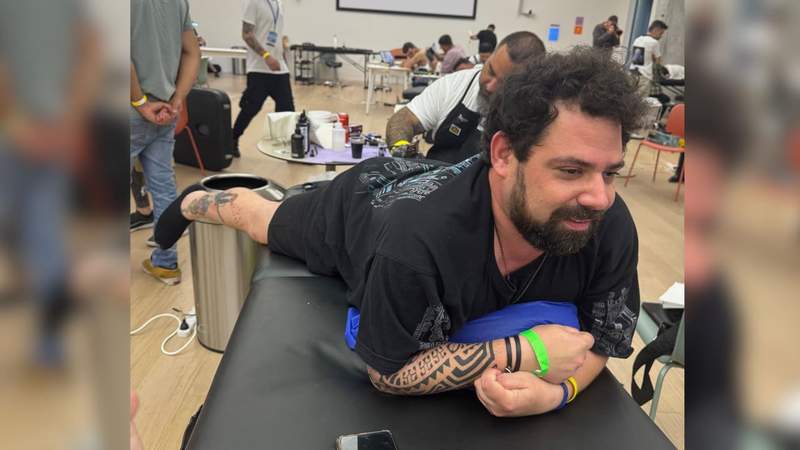
It’s not often that the stark intimacy of skin art becomes a raw barometer for national trauma, but here we’re. Former hostages—those pulled from the brutal grip of Hamas—and survivors, men and women bearing the invisible wounds of that dreadful Saturday, are increasingly seeking out a unique form of therapy: permanent ink. These aren’t mere tattoos; they’re manifestos etched into flesh, funded and facilitated by an organization called Healing Ink. This isn’t your average post-trauma support group. And it sure isn’t pretty. It’s gritty, honest, — and painfully beautiful.
Many carry symbols representing lost loved ones, specific dates, or designs that speak to their individual ordeal, their stolen weeks, months, or the unspeakable moments burned into their minds. It’s an act of reclaiming, you know? Of physically manifesting a boundary on bodies that were once brutally trespassed. This phenomenon offers a stark counter-narrative to the dominant, often politicized, discussions surrounding the conflict. Here, the story is stripped bare, reduced to the skin and psyche of the individual, proving that trauma, left unaddressed, simply changes form. It never dissipates into the ether as politicians might wish.
Hana Geva (not her real name), a mother released during a ceasefire, now sports a delicate dove intertwined with an olive branch on her wrist—a constant reminder of the fight for peace, but also the enduring scars. “They took my time, my safety, my sense of humanity,” she said, her voice a low murmur, “but they can’t take this. This is mine. It says I survived, — and I choose what marks my skin now.” Her words carry the weight of untold anguish. Because for many, the psychological imprint of such an ordeal is often more devastating than physical injuries, lingering for years—sometimes a lifetime.
And it’s a hell of a choice, isn’t it? To willingly invite needles into skin already marked by invisible torment, to make permanent what society often expects one to move past. It feels almost perverse to some, a morbid fascination with pain, yet for others, it’s the very definition of agency. Colonel (Ret.) Eli Cohen, a former intelligence officer now working with trauma victims, observed, “These aren’t vanity projects. They’re deliberate acts of self-definition, often providing a tangible anchor when the internal world feels utterly adrift. We’ve seen, in conflicts around the world, how acts of personal remembrance are essential for collective healing.” His analysis, gleaned from decades observing post-conflict societies, doesn’t dismiss the psychological complexities; it embraces them.
The global reach of such deeply personal suffering cannot be overstated. Even far from the immediate battlefield, in nations like Pakistan, where public empathy for the Palestinian cause runs high, these images of individual Israeli resilience and healing can stir complex emotions. While official narratives often clash, the shared human experience of suffering, resilience, and the desperate need to reclaim normalcy transcends political divides. It reminds one that beyond the geopolitical chess moves, real people endure real agony—a sentiment universally understood from Peshawar to Gaza. It highlights how the enduring shadow of conflict can morph into myriad forms of healing, often through unexpected, quiet gestures, reverberating through diaspora communities and beyond. Research from the World Health Organization (WHO) indicates that over 20% of people in conflict-affected areas will develop a mental health condition, illustrating the profound, long-term impact on populations.
📄 POLICY WIRE WHITEPAPER PUBLISHED: PAKISTAN'S NATIONAL SECURITY POLICY PRIORITIES
👉 READ BY CLICKING HEREWhat This Means
This tattoo movement is far more than a trend; it’s a poignant sociological indicator. It signals a shift, albeit a harrowing one, in how societies grapple with collective trauma. Traditionally, narratives of victimhood often center on rehabilitation through established psychological pathways or public memorials. But here, the body itself becomes the memorial, the therapeutic canvas. It carries potent political implications, too. By publicly—or privately, for that matter—displaying these tattoos, survivors aren’t just healing; they’re making a statement about their continued existence, their enduring claim to their own bodies and memories, challenging any attempts to silence or erase their experiences. It’s a defiant rejection of victimhood as an endpoint.
Economically, this grassroots, highly personalized form of therapy suggests an implicit, if unofficial, acknowledgment of the shortcomings of conventional mental healthcare systems under the strain of mass trauma. It spotlights the critical need for diversified, accessible, and culturally attuned psychological support for victims of terror and conflict. When formal systems can’t quite catch up, communities innovate. And, of course, the quiet, ongoing cost of such widespread trauma — the economic burden on healthcare, lost productivity, and social services — will linger long after the guns fall silent. Just as "the Kremlin’s Carefully Built Myth Crumbles, Echoes Reach Distant Shores" (https://policy-wire.com/kremlins-carefully-built-myth-crumbles-echoes-reach-distant-shores/), so too do the reverberations of this conflict—and these intensely personal responses—ripple globally, shaping perceptions and fueling long-term policy considerations about healing and human dignity in the aftermath of terror.
It underscores that true recovery is a labyrinthine, deeply personal journey, often eschewing the neatly packaged solutions favored by bureaucracies. And sometimes, it demands something as stark, as final, as an act of indelible ink. For these individuals, each tattoo isn’t just art; it’s an announcement. They’re here. They survived. And they won’t forget.