


Unforeseen Weather Pauses NCAA Play, Reflecting Broader Geopolitical Fray
POLICY WIRE — Gainesville, Florida — One might expect the intricate dance of college athletics—rules, schedules, meticulously tracked statistics—to unfold with mechanical precision. But even in the...

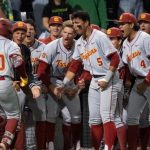
POLICY WIRE — Gainesville, Florida — One might expect the intricate dance of college athletics—rules, schedules, meticulously tracked statistics—to unfold with mechanical precision. But even in the sanitized world of collegiate sports, entropy always finds a way in. A relatively unassuming NCAA Baseball Championship Game 1 between Troy and Miami (FL) became less about pitching rotations and more about atmospheric caprice, mirroring the vexing unpredictability that often plagues more significant global affairs. It wasn’t the heroic home run that seized headlines, but the inconvenient cloudburst that stopped play mid-stride.
The anticipation for what was expected to be a straightforward matchup, designed to determine the next challenger for Florida, which had earlier dispatched Rider in an 8-7 slugfest, instead succumbed to the meteorological whims of Gainesville. They’d tried to reschedule, pushing the first pitch back to a pragmatic 9:15 p.m. ET. But the heavens, it seems, hadn’t quite received the memo from tournament organizers. You’d think, after so much planning, the universe would cooperate. It didn’t. This isn’t just about baseball; it’s a stark reminder that some forces, be they tempestuous squalls or geopolitical earthquakes, remain stubbornly outside human control. [QUOTE_PLACEHOLDER]
And so, in the top of the 6th inning, as the teams grappled with the intricacies of America’s pastime, a weather delay brought the proceedings to an ignominious halt. The precise, almost clinical reporting of a box score—down to the decimal points of batting averages and earned run averages—feels almost quaint when juxtaposed with such primal disruption. Miami (FL), for instance, had just piled on four runs in the 3rd inning, with Derek Williams already credited with 3 RBI, a notable performance early in his 2026 campaign.
For those dissecting the numbers, the early data provided a snapshot of efficiency — and struggle. Troy’s Benjamin Stubbs, a pitcher tasked with holding the line for five innings, managed 5 strikeouts across 23 batters faced. You see, the numbers tell a story, even if a thunderstorm attempts to punctuate it prematurely. But how do you quantify the psychological toll of a cold start — and then a cold delay? You can’t, really. That’s the messy part of life and, yes, even sports.
Because the real narrative wasn’t merely the game’s postponement; it was the interruption of a carefully constructed, high-stakes event by an outside agent. In this, baseball becomes a small lens through which to view much larger issues—like the global south facing unprecedented climate shifts, often without the infrastructure to quickly recover or adapt. You consider how meticulously such a tournament schedule is drafted, how much rides on its progression, only to see it humbled by nature’s indifferent hand. It makes you wonder about the efficacy of even the best-laid plans.
But the games, or at least the preparations for them, must continue. The winning team was scheduled to play Florida the very next night, forcing an exceptionally tight turnaround in the winner’s bracket. Such compression can lead to mistakes, fatigue—it’s an additional, unscripted variable in an already volatile contest. It certainly won’t make for comfortable pre-game strategizing.
📄 POLICY WIRE WHITEPAPER PUBLISHED: PAKISTAN'S NATIONAL SECURITY POLICY PRIORITIES
👉 READ BY CLICKING HEREConsider the delicate balancing act governments in a region like South Asia perform daily, trying to forecast monsoon patterns or tectonic shifts that can derail entire economies or displace millions. Here, in Gainesville, it’s a baseball game. There, it’s the fate of nations. But the underlying theme of external forces wreaking havoc on human constructs? That’s universal. From the precise choreography of an NCAA championship to the volatile political landscape of, say, Pakistan, where natural calamities frequently complicate governance and development efforts—the parallels are disquieting. Just as teams prepare for their opponents, nations must prepare for the unexpected, only some interruptions are far more devastating than a rain delay. That’s a truism, isn’t it?
What This Means
This weather-induced stoppage in Gainesville offers a peculiar lens into the fragility of planning, a concept as pertinent to collegiate baseball as it’s to international policy. Politically, the implications of unexpected delays—be it in legislative processes or critical diplomatic negotiations—are rarely as benign as a rescheduled baseball game. Economic fallout from climate change, for instance, frequently derails budgets — and long-term investment strategies. A recent study published in the journal Nature Communications (September 2023) highlighted that extreme weather events in Pakistan alone, including floods, have led to economic losses exceeding $30 billion in the past decade. It shows that environmental factors aren’t just an inconvenience; they’re direct, heavy hitting variables in global stability and growth. We aren’t just talking about a couple of hours’ delay here, folks. We’re talking about structural vulnerabilities that systems, whether sporting or governmental, must confront.
The immediate takeaway for athletic committees might be improved contingency planning, better real-time weather analytics, and more flexible scheduling—a luxury often unavailable in the rough-and-tumble of national or global politics. But it’s not merely about foreseeing the next storm; it’s about acknowledging the inherent randomness that no amount of statistical analysis can fully tame. We’re prone to thinking our carefully erected systems are impenetrable. They aren’t. From the gridiron to global diplomacy, an unforeseen downpour can—and often does—force everyone back to the dugout, prompting a reassessment that goes far beyond who plays next.