


Budapest’s Billion-Dollar Ball: PSG, Arsenal Vie for Champions League Glory, Global Soft Power
POLICY WIRE — Budapest, Hungary — Sometimes, it isn’t just about the ball, the net, or even the gleam of a trophy. Sometimes, a European football final—like the looming Champions League showdown...

POLICY WIRE — Budapest, Hungary — Sometimes, it isn’t just about the ball, the net, or even the gleam of a trophy. Sometimes, a European football final—like the looming Champions League showdown between Paris Saint-Germain and Arsenal—is a canvas for something far grander: the soft power of petrodollars, the gnawing anxiety of national aspiration, and the very brutal economics of global talent. And if you think it’s purely a sporting affair, you probably haven’t been paying enough attention to the footnotes of modern geopolitics. The air in Budapest, for all its summer heat, crackles with more than just fan anticipation; it’s a nervous hum.
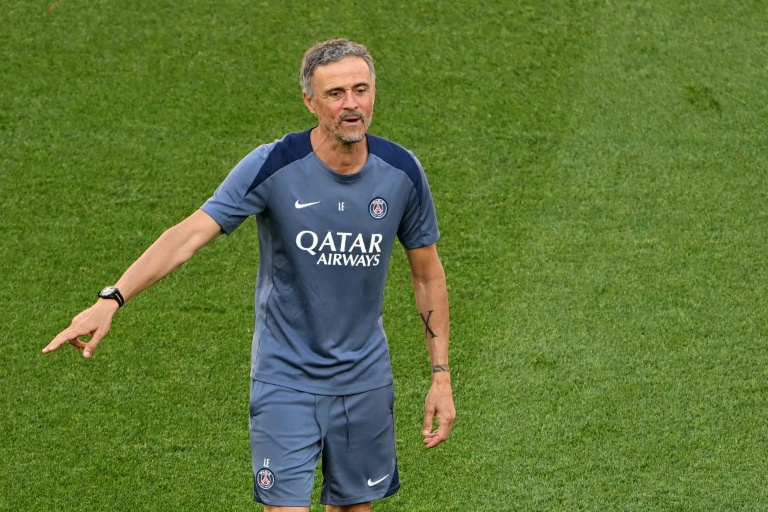
No, there aren’t many ‘favorites’ in these affairs, despite what the betting shops might tell you. Luis Enrique, PSG’s tactician, seemed to dismiss such pedestrian notions outright, declaring precisely that there were no favourites. His assessment leaned into a familiar footballing bromide: the devil will be ‘in the details.’ But what details, precisely? Is it just formations and corner routines, or the sheer weight of expectation carried by clubs that have, by various means, clawed their way to the summit? [QUOTE_PLACEHOLDER]
It’s always funny, isn’t it, how diametrically opposed styles collide on such grand stages. PSG, an attacking juggernaut propelled by Qatari investment and — frankly — some eye-watering transfer fees, clashed with an Arsenal side famed this season for its granite-like defense. The Gunners, those stalwarts, haven’t been beaten throughout the tournament. In fact, they’ve managed an impressive nine clean sheets — and conceded just six goals over their European campaign. You see the setup, don’t you? Immovable object meets unstoppable force. PSG captain Marquinhos wasn’t reinventing the wheel when he concurred with his coach, suggesting it’s going to be decided ‘on the details.’ He mused openly about ‘How to defend, how to attack… how to defend a set piece, also how to attack a set piece.’ Yep, all the ‘little details in a football match and in a final are going to be important,’ he stressed. But for some of us, watching these spectacles unfold, the larger details are what truly grip you.
The narratives are thick on the ground. Arsenal, a club steeped in English football history, has its own cross to bear. Remember 2006? That was their one shot, a final against Barcelona. They lost. Badly. In their Parisian opponents’ very backyard, no less. Four European finals they’ve contested, — and four they’ve lost. That kind of record hangs heavy, like a persistent drizzle on a dreary London afternoon. Their winger, Bukayo Saka, bless his young soul, tried to wave away worries about an arduous season, a campaign where the squad’s minutes played have surely outstripped PSG’s. ‘A game like this is not going to be decided on minutes, it’s going to be decided on moments,’ he explained, perhaps hoping sheer force of will could erase physical fatigue. Easier said than done when you’re facing a side bankrolled by a national government looking for cultural influence.
Because ultimately, this isn’t just about sporting glory; it’s an extension of statecraft. PSG’s journey to another Champions League final is more than just about making history for France — though it would make them the only French side with multiple European Cups. It’s about Qatar’s investment in European soft power, a calculated geopolitical play that extends far beyond the pitch in Budapest. Just look at the millions of passionate fans tuning in from the Muslim world, from Lahore to Jakarta, whose loyalties are swayed not just by pretty football but by the underlying prestige that state-owned clubs project. You think Arsenal’s fans are committed? Consider the millions across South Asia who treat these teams’ fortunes with an almost spiritual fervor. This grand game isn’t just entertainment; it’s a critical facet of global cultural influence and brand-building, not to mention a rather potent distraction from other inconvenient truths.
And that’s why success here, for the French club especially, sends ripples far beyond the immediate environs of the Puskas Arena. But don’t forget Arsenal’s stake. An English football ‘hat-trick’ — following Aston Villa’s Europa League triumph and Crystal Palace’s Conference League win — would make headlines, for sure. Such successes speak to the enduring strength and appeal of the English game, even if individual clubs operate with starkly different budgets. It’s, you see, a form of national branding, a battle waged with eleven men and a ball, not unlike the competitive edge sought in other arenas. Nations bet big on these dreams, often seeing their global standing mirrored in sporting triumphs.
What This Means
This Champions League final, viewed through the lens of geopolitics and economics, is a clash of two distinct philosophies shaping modern football and, by extension, international relations. PSG’s Qatari ownership represents the aggressive, high-investment model of state-backed entities leveraging sports for diplomatic influence and cultural soft power. A victory for PSG wouldn’t merely be a win for a club; it would be a significant public relations triumph for Qatar, validating its massive financial outlay and cementing its place at the top table of global sports entertainment. This kind of success offers intangible benefits: boosting national pride, attracting tourism and investment, and projecting an image of modernity and capability on the world stage, particularly to huge fan bases in Asia and the Middle East.
On Arsenal’s side, while still a wealthy club, the narrative is closer to the traditional, commercially driven model, albeit with a new focus on strategic youth development and smart recruitment. An Arsenal win, especially as part of an English ‘treble’ across European competitions, signals the formidable economic power and robust organizational structure of the Premier League. It showcases a thriving league capable of producing multiple continental champions without necessarily relying on singular state sponsorship. It’s a testament to how the brutal economics of talent, shrewd management, and fan engagement can compete with sovereign wealth funds. The result in Budapest will be more than just three points; it’s a verdict on which model, at this particular juncture, wields greater global impact and, perhaps, sets a precedent for the future financing of top-tier football.
Managers like Luis Enrique — who’s eyeing a third Champions League title, putting him in seriously rarefied air — and Mikel Arteta, who once played under Enrique at Barcelona, represent the tactical and human elements caught within these larger forces. Arteta admired his former mentor, calling him ‘a reference (point) since he was a player,’ and even ‘an inspiration.’ Now, the student and teacher are ‘clashing on that touchline.’ But they’re just pawns in a much, much bigger game, aren’t they? For all the players’ talk, epitomized by PSG midfielder Joao Neves who called it ‘a match everyone wants to play in, it’s a match everyone watches, and it’s a match you have to win,’ the truth is, much more is on the line. It’s always about more than just football, after all.