


Canada Bets Big: World Cup Dreams Ride on Wounded Stars, Global Aspirations
POLICY WIRE — Toronto, Canada — Look, you couldn’t miss it. The CN Tower, Toronto’s most famous skyline sentinel, became an oversized ticker tape on Friday, flashing the names of Canada’s World Cup...

POLICY WIRE — Toronto, Canada — Look, you couldn’t miss it. The CN Tower, Toronto’s most famous skyline sentinel, became an oversized ticker tape on Friday, flashing the names of Canada’s World Cup hopefuls. A spectacle, really. Because what came next—coach Jesse Marsch rolling out his 26-man roster—was less about a celebratory coronation and more about a desperate gamble on injured stars and an ambitious, if historically unproven, dream. This isn’t just about kicking a ball anymore; it’s a big, fat statement.
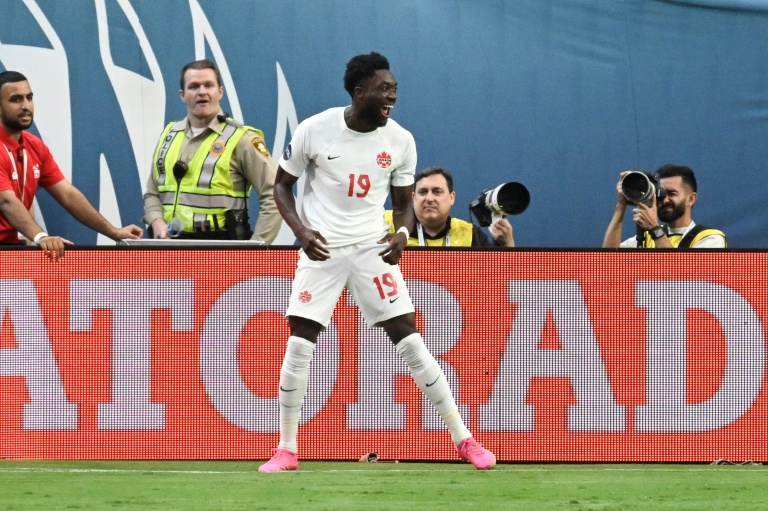
Naturally, Bayern Munich’s Alphonso Davies led the marquee, despite his well-documented hamstring troubles. But it’s not just him; it’s a list of other talents, some carrying their own dings — and doubts. Nice defender Moise Bombito, Norwich midfielder Ali Ahmed, Los Angeles FC winger Jacob Shaffelburg, and Promise David all made the cut even with medical red flags. Marsch, you could tell, was already tired of answering questions about it.
His retort was telling: “We have really our best group of 26 players that this country has ever assembled at any one time,” he declared. A big claim for a nation with a somewhat sparse footballing trophy cabinet. But because not all of them are perfectly fit, he tempered it quickly. [QUOTE_PLACEHOLDER] This isn’t just optimism; it’s a calculated risk in the high-stakes world of international football.
Beyond Davies, the squad leans heavily on Jonathan David, Juventus’s sharp-shooting forward, for goals. David is something of a poster child for globalized talent—a prodigious young player whose transfer to Lille in 2020 commanded a reported 30 million euros ($34.8 million), according to contemporary financial reports. It’s the sort of valuation that speaks to the brutal economics of talent in modern football, a system that drives aspiring athletes from every corner of the world, from humble beginnings to the glittering fields of Europe, echoing the global labor parallels we see in other professional sports like those in American Football’s Roster Juggernaut.
Canada, as a co-host with the United States — and Mexico, gets to play all its Group B games on home soil. That first match? Against Bosnia-Herzegovina in Toronto on June 12. Then it’s off to Vancouver to face Qatar — and Switzerland. History isn’t exactly on their side. Their two prior World Cup forays—Mexico in ’86 and Qatar in ’22—resulted in a perfect record: six defeats in six matches. Not a single point. You’d think that’d make a lesser squad balk.
But hey, the Canadians surprised many. Just last year, they made a decent run in the Copa America, reaching the semi-finals before narrowly losing on penalties to Uruguay in the third-place playoff. That tasted a lot better than a hat-trick of group-stage exits. This progress, however slow, suggests something’s brewing, a quiet revolution under the surface.
Davies’s injury, picked up during Bayern Munich’s Champions League semi-final clash, has everyone holding their breath. He’d only just come back from an eight-month ACL tear, for crying out loud. Talk about rotten luck. Marsch knows this dance all too well. “The real X factor in all these decisions was to determine…which players are gonna be healthy, and who could we project to be really close to 100 per cent and in the best form of their life,” he admitted, sounding like he’s running a field hospital instead of a football team.
But the confidence is there, somewhere. “Will everyone be 100 percent for the Bosnia match? No, that won’t be the case. But we will have a really strong core that will be ready for that match, and we believe we can get stronger as the tournament goes on.” That’s the hope, isn’t it? That they peak when it matters most.
The squad’s diversity reflects a globalized game: players from Scottish, French, Italian, and Croatian leagues populate the roster, alongside MLS standouts. This kind of global assembly isn’t unique, but for a Canadian squad, it shows their outreach and the sheer pulling power of European football. Fans across the Muslim world and South Asia, for instance, are incredibly passionate about these European leagues, following the exploits of players like Davies and David as closely as their local heroes, dreaming of similar journeys. For a nation like Pakistan, where cricket reigns supreme, but football’s grassroots are growing, the ascent of a diverse Canadian squad, led by a talent like Davies who overcame immense adversity as a refugee, offers a narrative of aspiration and the boundless opportunities that professional sport can offer.
Other significant inclusions for Canada include Porto playmaker Stephen Eustaquio, box-to-box Sassuolo midfielder Ismael Kone, Villarreal duo Tajon Buchanan and Tani Oluwaseyi, and Southampton attacker Cyle Larin. Their presence underpins Marsch’s belief in this being a uniquely strong assembly, despite all the challenges.
What This Means
This isn’t just about winning football games for Canada; it’s about projecting an image, carving out a space on the global stage, both politically and economically. A strong showing, even a single win, transforms Canada’s narrative from a hockey-obsessed winter land to a multicultural, globally competitive sporting power. And that’s a win for soft power. A country that can develop and attract top talent, despite the physical tolls, showcases its organizational prowess and the increasing professionalization of its sports infrastructure.
Economically, hosting and competing effectively in a major World Cup generates massive tourism revenue and domestic engagement, which trickles down into local economies. It’s an investment in national pride, yes, but also a clever bit of branding. The global nature of modern football—with players like David commanding multimillion-euro fees for clubs like Juventus—illustrates a larger geopolitical truth: talent is a global commodity, and nations must compete for it, nurture it, and often, leverage its international appeal for their own prestige. For countries across South Asia, which regularly navigate complex global economic landscapes, this mirrors the broader competition for skilled labor and foreign investment. Marsch’s juggling act with player injuries also throws a spotlight on the intense pressure, medical innovation, and financial investment required to keep these athletes on the pitch, ready to perform under global scrutiny. It’s a high-stakes proposition, making Canada’s World Cup campaign a surprisingly potent symbol of modern global competition.