


Red Planet, Red Flag: Virgin Galactic Tackles Taboos in Orbit
POLICY WIRE — WASHINGTON D.C. — It seems the universe, vast and indifferent as it’s, still can’t quite outrun terrestrial biological realities. While billionaires jockey for...

POLICY WIRE — WASHINGTON D.C. — It seems the universe, vast and indifferent as it’s, still can’t quite outrun terrestrial biological realities. While billionaires jockey for orbital dominance and governments eye lunar outposts, an unexpected, deeply mundane, and frankly overdue concern has quietly surfaced. Forget grand theories on the origins of the cosmos or asteroid mining; Virgin Galactic, it turns out, has finally turned its gaze — or at least some corporate portion of it — toward menstruation.
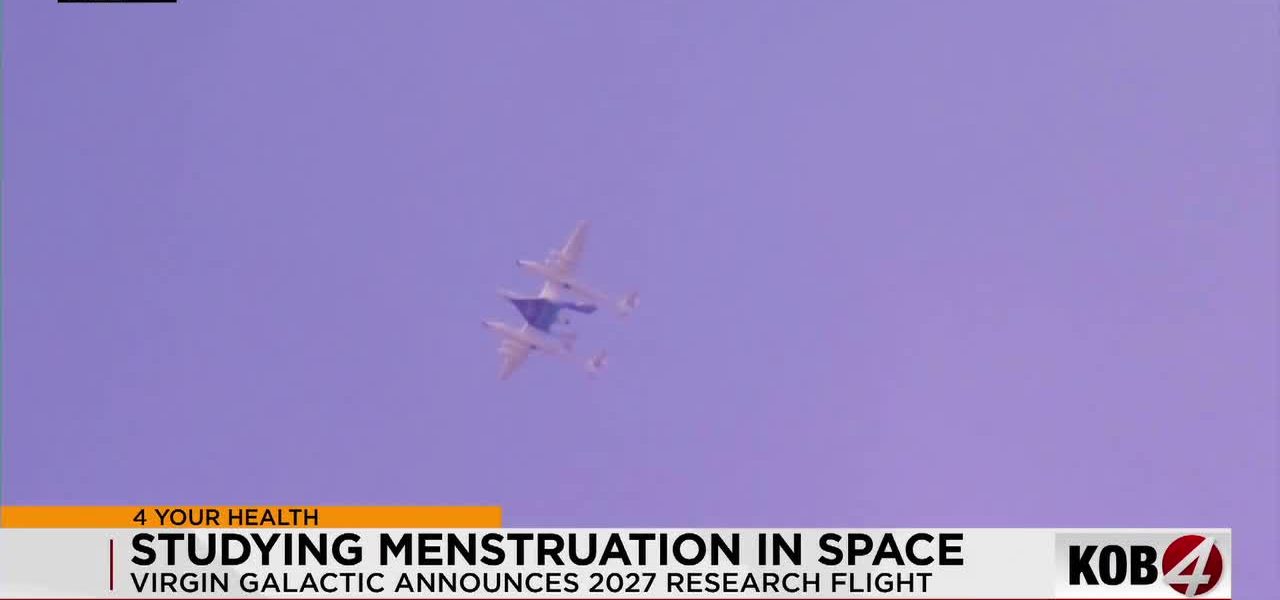
This isn’t a punchline to some half-baked sci-fi comedy. It’s an actual ‘initiative.’ Virgin Galactic is partnering with the nonprofit group Operation Period to research menstruation in space
, according to recent reports from New Mexico — where they do more than just manage infernos that creep across arid lands. It seems after decades of propelling mostly male adventurers, and later, the wealthy curious, past the Kármán line, someone realized women’s bodies actually function somewhat differently up there than a standard issue astronaut. The implications, you know, for “longer trips.” [QUOTE_PLACEHOLDER]
So, the future, long heralded as a place of sleek technology and boundless possibility, is just now catching up to half of humanity’s lived experience. The space tourism behemoth, having mastered the art of charging exorbitant fees for a few minutes of weightlessness, is now, rather unglamorously, pivoting to — shall we say — biological flow management. They plan to launch flights next year, — and guess what? One will focus on the effects of microgravity on menstruation
. Yes, you read that right. In 2024 (or whenever “next year” precisely lands), we’re just getting around to this particular quandary.
But don’t think this is just some academic exercise. This has “future market opportunity” written all over it. As the space tourism industry matures, and space travel extends beyond brief suborbital hops to actual, meaningful — if still highly exclusive — journeys, the biological comfort and health of paying customers will, perhaps, become a priority. Women — they make up half the global population, and, by the by, have half the purchasing power. Ignoring their physiological needs would, eventually, prove a rather poor business model. Not to mention, if humanity truly aims for Mars or further, they’re gonna need *all* hands on deck, regardless of menstrual status.
And, naturally, this endeavor won’t involve the standard astronautical test dummies. We’re told Two women researchers are currently training for the flight
. That’s good. You’d think, perhaps, having women conduct research on women’s issues is a rather obvious methodological choice. They, these trailblazing women who will shed light — perhaps quite literally — on this previously opaque area, hope to reveal how future space travel could affect hormones and the menstrual cycle, especially over long durations in space
. It’s almost as if no one thought about it much before now, despite women having gone to space since 1963. Currently, just 73 women have ever flown into space, out of a total of 645 individuals, according to data compiled from various space agencies up to November 2023. That’s just over 11% representation. So, progress, then.
Because let’s be frank, even on terra firma, discussing menstruation — its biological function, its associated challenges, or frankly, its very existence — remains, in many quarters, a practice steeped in discomfort and silence. Walk into almost any classroom in rural Pakistan, for example, or countless communities across South Asia, and the word itself, “period,” is often whispered, skirted around, or ignored entirely. Cultural taboos still mean girls miss school, lack proper hygiene facilities, or even face social isolation during their cycles. A UN study from 2018 showed that over a third of women in Pakistan report poor menstrual hygiene practices due to lack of awareness and societal norms. While Virgin Galactic prepares to tackle microgravity’s impact on hormones, millions globally are still struggling with basic, dignified menstrual management. The stark contrast between humanity’s lofty space ambitions and its stubbornly terrestrial, gendered blind spots is, shall we say, a persistent feature of our civilization.
It makes you wonder, doesn’t it, about priorities. Here we’re, finally investigating uterine matters in zero-G, while centuries-old taboos still shackle women’s health discussions on Earth. But hey, it’s a start. Perhaps once the results are in, and ‘space menstruation kits’ hit the orbital duty-free stores, the terrestrial conversations might, just might, get a little easier too. Or maybe we’ll just move on to whatever next biological detail was deemed ‘unimportant’ for half a century.
What This Means
This initiative by Virgin Galactic — let’s call it “Operation Red Moon” — has implications stretching far beyond the orbital mechanics of human biology. Economically, it signifies a coming maturation of the commercial space industry. No longer content with just selling joyrides, private space entities are realizing the need to provide comprehensive human support for longer durations. This includes fundamental aspects of human physiology that traditional, government-led space programs often overlooked or inadequately addressed for their predominantly male cohorts. Failure to understand these basic requirements would hamper their expansion into markets like long-term orbital hotels, moon bases, or interplanetary travel where comfort and health mean profitability.
Politically, the move, though framed as scientific, holds a subtle yet profound symbolic weight. It acknowledges, however belatedly, the increasing role and presence of women in a domain historically dominated by men. The act of openly researching menstruation in space demystifies and legitimizes women’s physiological experiences within a “frontier” narrative — a quiet nod to gender equity in exploration. While some might scoff at the idea of Virgin Galactic being a standard-bearer for progressive politics, the mere public acknowledgement and scientific pursuit of a historically taboo topic has broader societal ripple effects. It adds momentum to global discussions around women’s health and, critically, demonstrates that if humanity truly aims for “all of us” in space, “all of us” means genuinely all of us, biological complexities and all. It forces a conversation — even a belated one — on issues that have been brushed aside, mirroring a wider push to include diverse perspectives in scientific and exploratory endeavors, a struggle familiar in areas as varied as societal legislation affecting gender identity in places like Ghana.