


Gulf Quagmire: How Washington’s Tehran Play Imperils Asia’s Cash Lifeline
POLICY WIRE — Washington D.C., USA — You’d think a policy spat over Persian Gulf oil would remain, well, about Persian Gulf oil. But no, Uncle Sam’s big plays often kick up dust in...

POLICY WIRE — Washington D.C., USA — You’d think a policy spat over Persian Gulf oil would remain, well, about Persian Gulf oil. But no, Uncle Sam’s big plays often kick up dust in unexpected corners. It’s not just crude futures jumping or geopolitical chessboard moves that concern folks anymore; it’s also about a quiet, invisible economic pipeline, a veritable river of cash flowing back to millions of families thousands of miles away. It’s about remittances—that often-overlooked financial lifeblood—now suddenly feeling the squeeze, proving that America’s Middle East muscle-flexing carries an unusually heavy global price tag.
It’s not just the screaming headlines about tankers or drones. There seems to be no end to the harm arising from US President Donald Trump’s madcap war on Iran. This isn’t just about Tehran and Washington playing chicken with missile systems, or about oil shipments that might or might not make it through choke points like the Strait of Hormuz—that’s the loud, obvious bit, the kind of thing talking heads chew over on cable news. We’re talking deeper, uglier impacts. Far beyond the direct tragic impact across Iran itself, the collateral damage from Tehran’s effective closure of the Strait of Hormuz, and its ad hoc assaults on US allies in the region, the real story unfolds quietly, often in a small village far from any coast. But don’t expect a shout from Davos about it. It just doesn’t make for sexy economic forecasting, does it? [QUOTE_PLACEHOLDER]
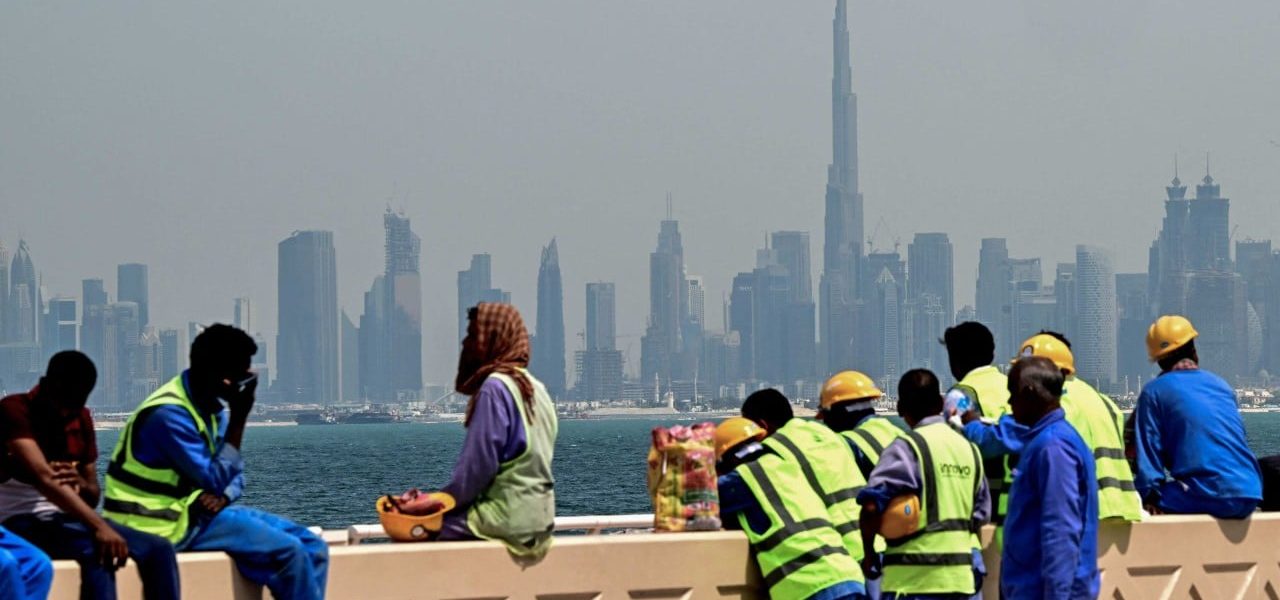
Because the obvious collateral is, of course, the burgeoning impact of shortages of oil, gas, hydrogen, helium and sulphur. And then there’s the truly dystopian prospect of food shortages arising from the collapse in fertiliser supplies—the kind of ripple effect that keeps aid organizations up at night, not your average desk-bound policy wonk. But these headline-grabbing catastrophes, bad as they’re, obscure a quieter, yet equally devastating, economic tremor: the hardships of tens of thousands of. Thousands of people, see. Families, often. They depend on those regular money transfers, that digital handshake across continents, to put food on the table, to pay school fees, to simply exist. We’re talking about those nameless, faceless expatriate workers whose remittances represent, for many developing economies, the primary foreign exchange earner. When those channels get gummed up, families back home starve. It’s that blunt, that brutal.
For nations like Pakistan, Bangladesh, and even parts of the Philippines, the Gulf has always been a financial refuge, a place where citizens could go to earn what wasn’t possible at home and send it back. The stability, or instability, of Saudi Arabia, the UAE, or Kuwait, directly translates into fortunes for millions. When US sanctions target Iran, they don’t just kneecap Iran’s economy; they send a shiver through the entire regional financial system, making everything riskier, slower, more expensive for banks to operate—even those not directly dealing with Iran. Think of the paperwork, the extra due diligence, the general chilling effect on financial transactions. Because no one wants to accidentally run afoul of OFAC, right?
According to a World Bank report from December 2023, South Asian nations are projected to receive around 179 billion U.S. dollars in remittances, an increase driven largely by a robust job market in the Gulf Cooperation Council (GCC) countries and European economies. That’s a massive sum. But the ongoing regional tensions, specifically the U.S. pressure on Iran, threaten to erode that growth, complicate transfer mechanisms, and increase the cost of sending money. It’s a quiet form of financial strangulation by proxy, affecting not just those in Iran, but the extended global family network relying on the broader regional stability that American policy seems, frankly, less concerned with. Don’t expect a direct link on a financial dashboard, mind you. It’s too messy for that. It’s just the ‘invisible hand’ of the market getting smacked with a very visible American-made stick.
And because the systems are already stretched, already dealing with so much geopolitical static, this fresh instability makes things worse. We’re talking about money that often flows through informal networks, hundi or hawala, which thrive when formal channels become cumbersome or risky. But even those unofficial systems feel the pinch of heightened scrutiny — and economic uncertainty. The knock-on effect of instability, of companies hesitant to invest, or even continue existing operations, translates directly into fewer jobs, fewer dollars earned, and therefore, fewer dollars sent home. It’s an economic tragedy played out in micro-transactions.
It all becomes a self-fulfilling prophecy of instability, doesn’t it? As regional powers eye each other with increasing suspicion, as rhetoric escalates and diplomatic pathways narrow, the ordinary person—the construction worker in Dubai, the nurse in Riyadh, the factory hand in Tehran—they’re the ones who pay the most immediate, personal toll. This complex interplay of geopolitics — and economics is creating new, unforeseen risks. For a deeper dive into these complex dynamics, you might find Riddle in the Gulf: Trump’s Denials Collide with Reported Strikes on Iran an illuminating read.
What This Means
This escalating standoff isn’t just about nuclear ambitions or regional dominance. It’s fundamentally altering the global economic landscape for some of the world’s most vulnerable populations. Politically, the U.S. gambit with Iran risks alienating allies—and it’s a bipartisan affair, mind you—who suddenly find their own economic interests caught in the crossfire. We’re witnessing a slow erosion of trust, a sense that Washington’s unilateral actions can unpredictably trigger economic chaos elsewhere, particularly in emerging economies that depend heavily on outward migration and remittance income. It creates resentment, naturally.
Economically, expect to see developing nations in South Asia scrambling to diversify their remittance sources or even—in some grim scenarios—contend with an influx of returning expatriate workers, unable to find work in a volatile Gulf. This puts enormous pressure on domestic job markets — and social safety nets, exacerbating existing economic fragilities. The increased cost and risk associated with money transfers could lead to greater reliance on unregulated, less secure channels, making oversight harder and increasing vulnerability to illicit financial flows. But you won’t hear much lamentation about it on cable news, because, frankly, those distant family headaches rarely poll well.