


Oakland’s Limping ‘A’s’ Confront Empire, Policy Makers Turn a Blind Eye
POLICY WIRE — ANAHEIM, CA — There are days when the grind of professional sports, particularly baseball, peels back its veneer of tradition and exposes the raw mechanics of profit and loss. It’s not...

POLICY WIRE — ANAHEIM, CA — There are days when the grind of professional sports, particularly baseball, peels back its veneer of tradition and exposes the raw mechanics of profit and loss. It’s not always about the poetry of the game—not tonight, anyway—as the embattled Athletics square off against the Goliath Yankees. Forget the usual narratives; what’s on display in Anaheim is less a contest of athleticism and more a policy brief on corporate abandonment and fan disenfranchisement, playing out in real time under the Friday night lights.
It’s a peculiar irony, isn’t it? A club, already bleeding out economically in a protracted relocation saga, is left to fight a baseball titan on the field while its fate is diced up in boardrooms. Owner John Fisher once, rather famously, declared his eagerness to see Yankees sluggers like Aaron Judge clear the fences in the team’s current temporary digs, Sutter Health Park. That statement, delivered without a hint of self-awareness regarding his team’s perpetual state of flux, perfectly captures the kind of distant, almost cynical stewardship that now defines much of professional sports. It’s not about wins for Fisher, is it? It’s about asset value.
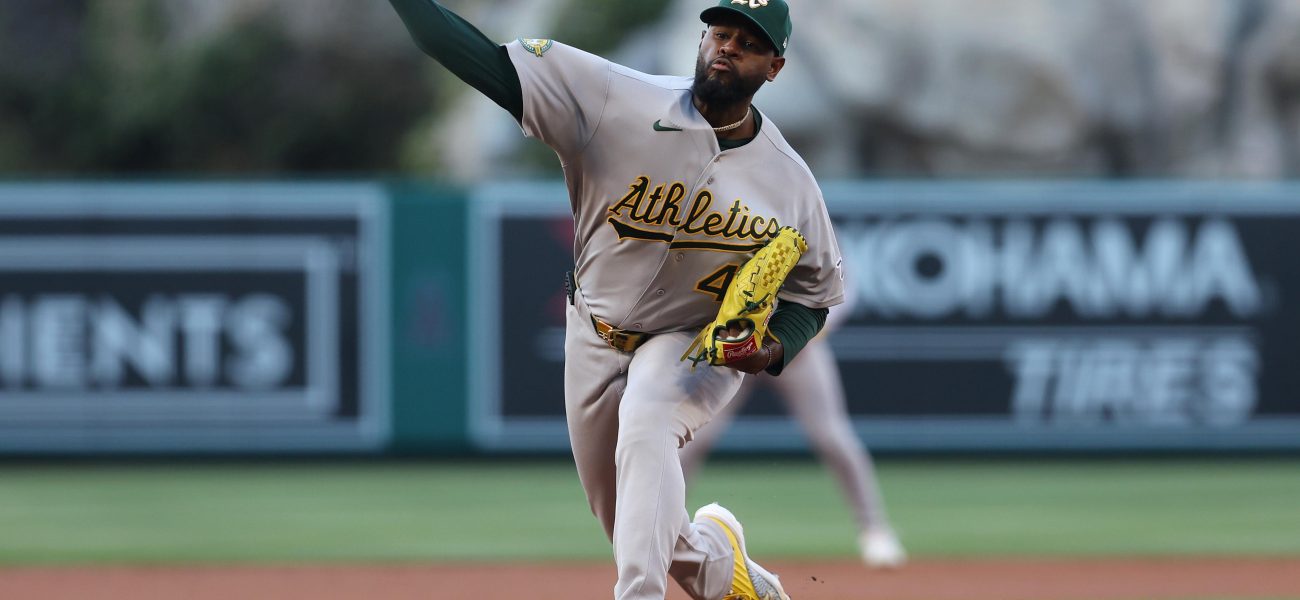
And tonight, the arithmetic is stark. Luis Severino, a veteran pitcher with an origin story now squarely in the opponent’s dugout, toed the rubber for the Athletics. He came with a 2–5 record and a 4.23 ERA over 61.2 innings pitched, a brutal arithmetic of performance versus expectation, per league statistics. He’s staring down a Yankees lineup that boasts the most home runs in MLB, a lineup constructed to win—period. Meanwhile, the Athletics are a patchwork quilt, hoping against hope that someone like Colby Thomas, leading off in place of the usual starter, can ignite an offense that’s scraped just four runs in their last three outings. You can’t make this stuff up; it’s a financial mismatch dressed up as a baseball game.
“We understand the challenges, on and off the field,” Athletics Manager Mark Kotsay acknowledged in a recent briefing, choosing his words carefully, like a diplomat navigating a minefield. “My job is to put the best product on the field with what I’ve got. But it doesn’t change the fact that this organization is… well, it’s undergoing a significant transformation.” Translation: he’s running a marathon with no shoes on, while management is busy planning their post-race party in a different city. He can’t directly criticize; his paycheck’s tied to it.
But the ‘significant transformation’ Kotsay hints at is code for an exodus, a move driven purely by the dollar signs in a new desert home. It’s a trend that doesn’t just play out in America’s pastime. We’ve seen similar narratives, albeit with different cultural flavors, in the hyper-commercialization of cricket leagues, even impacting fan loyalties in Pakistan and across South Asia. The emotional investment of a fan base often feels like a quaint, overlooked detail when pitted against projected revenue streams from new stadia and development deals. They’re trading soul for spreadsheet. Because for the modern sports baron, a franchise isn’t just a team; it’s an undeveloped urban core, ripe for exploitation.
But what about the loyalists? Those fans who stuck through the bad times, who believed in the regional identity of their team? Yankees’ skipper Aaron Boone, overseeing a roster designed to dominate, articulated the opposing view, representing the successful, corporate-backed model. “Every team has its challenges, but our focus is always on putting together a winning product. That’s what our fans expect, — and that’s what we deliver. It’s a business, and success sells tickets and develops a legacy.” His words, while seemingly innocuous, serve as a stark counterpoint to the A’s predicament, a tacit admission that for the well-funded, ‘legacy’ is simply the profitable byproduct of victory.
This is precisely where the friction lies. The Athletics, now a limping echo of their former selves, represent the worst aspects of this brutal financial calculus. They’re 10-15 at Sutter Health Park, a home record that screams instability and a lack of true connection to a permanent base—because there isn’t one. The club isn’t trying to secure a win tonight just for moral buoyancy; they’re trying to win to perhaps slightly inflate their value before the big sell-off, metaphorically speaking, even if no one says it aloud.
What This Means
The saga of the Athletics isn’t just about a losing baseball team; it’s a chilling case study in economic dislocation and political acquiescence. For a municipality like Oakland, losing its second major sports franchise (and soon, its third) signals a policy failure, a broader inability to retain cultural institutions that bolster civic identity and provide economic anchors. This exodus doesn’t just affect stadium jobs; it impacts peripheral businesses, local taxes, — and the collective morale. From a wider lens, it demonstrates the increasing impotence of local governments against the overwhelming financial leverage of sports franchises. They’re often left holding an empty bag, as owners pursue bigger, greener pastures funded by new taxpayer subsidies. The long-term implications are clear: without robust policy frameworks or strong federal intervention, sports franchises will continue to operate as transient corporations, chasing the best deal and leaving once-vibrant communities feeling abandoned and used. It’s a sad reality, really. This isn’t just about strikes — and balls; it’s about communities, contracts, and power plays.
The future, it seems, won’t be written by the heroes on the diamond, but by the shadowy figures in the back rooms, wielding checkbooks and property deeds. And as the A’s stumble through what feels like their own slow-motion dismemberment, one can’t help but wonder if this marks the beginning of a grand old order shaking—not just in baseball, but in the entire ecosystem of American civic life and sports.