

Grand Tour, Grand Questions: Mayor Johnson’s Rome Sojourn Masks Deeper Global Fissures
POLICY WIRE — Rome, Italy — Another politician, another hand extended in formal greeting before an ancient backdrop. It’s a tale as old as Rome itself, perhaps, but rarely does it shed much...

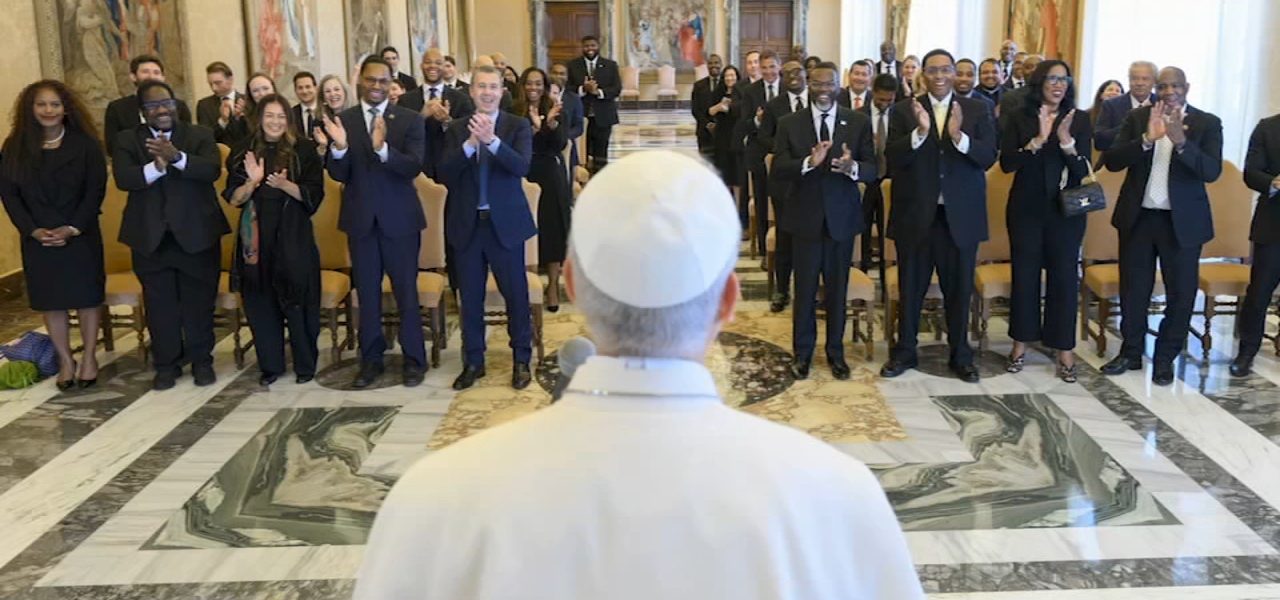
POLICY WIRE — Rome, Italy — Another politician, another hand extended in formal greeting before an ancient backdrop. It’s a tale as old as Rome itself, perhaps, but rarely does it shed much light on the gritty mechanics of running a modern metropolis. Mayor Johnson, fresh from a private audience with Pope Francis—a standard stop for any aspiring global leader—spent his Roman hours not just marvelling at ruins, but shaking hands with the city’s top official, Mayor Roberto Gualtieri. But beneath the smiles and the carefully choreographed walks through centuries of history, a familiar hum of unanswered questions persists about these highly visible, yet often opaque, exercises in global municipal diplomacy.
It’s easy to dismiss these trips as mere tourism on the taxpayer’s dime. But you know, there’s always more happening under the surface, isn’t there? Cities, after all, are where policy hits the street, where grand pronouncements about international cooperation either solidify or fall flat. Johnson, touring landmarks from the Colosseum’s echoing grandeur to the Roman Forum’s crumbling remnants, presented an image of engaged leadership, absorbing lessons from urban history’s grandest teacher. His itinerary, packed with symbolism, served as a potent, if somewhat theatrical, demonstration of cultural exchange. He’s learning; he’s connecting. Or so the narrative goes.
And let’s be frank, these visits are often as much about projecting an image back home as they’re about substantive exchanges. Mayor Johnson, ever the pragmatist with one eye on tomorrow’s headlines, reportedly remarked to his entourage that ‘the challenges of infrastructure, historic preservation, and integrating diverse communities aren’t unique to one longitude or another.’ He said, ‘We’re not just here to gawk; we’re here to learn, to share our urban innovations, and maybe, just maybe, steal a few good ideas.’ A savvy politician never wastes an opportunity, especially not one that comes with a Pope meeting and a backdrop suitable for a Hollywood epic. But what kind of ‘innovations’ is Rome looking for, exactly, beyond managing queues for the Sistine Chapel?
Gualtieri, for his part, was reportedly less concerned with grand, abstract notions of global urbanism and more focused on the immediate realities. ‘Rome is not a museum piece; it’s a living, breathing capital facing enormous contemporary pressures—traffic, climate change adaptation, social integration,’ Mayor Gualtieri reportedly countered during a press scrum at the Palazzo Senatorio, his voice carrying the weary patience of someone dealing with very real problems, ‘These discussions with Mayor Johnson offer a chance to compare notes on things like sustainable tourism models and managing our archaeological patrimony while still keeping the lights on. It’s about solutions, not just photo opportunities.’ He’s not wrong. It’s practical stuff, usually.
But can a whirlwind tour really offer much beyond superficial impressions? Critics back home aren’t shy about questioning the tangible outcomes of such peregrinations. Is Rome genuinely looking at London’s rather troubled public transport funding models, or is this just another opportunity to talk big about ‘international collaboration’? Because London, like so many global hubs, isn’t exactly a paradigm of perfection. For example, recent data suggests that despite concerted efforts, roughly 30% of London’s bus routes have experienced significant delays or cancellations daily over the past year, according to Transport for London’s operational reports. It’s a mess, they’ll tell you.
This trip, while outwardly focusing on European capitals, doesn’t operate in a vacuum. The global interconnectedness of cities—their struggles and their successes—finds echoes in regions often overlooked by Western politicians. Take, for instance, Karachi, Pakistan’s sprawling megalopolis. It grapples with an almost incomprehensible convergence of rapid urbanization, decaying infrastructure, and the immense pressure of a population projected to hit 25 million by 2030. They’re battling everything from severe water shortages to monumental waste management crises, problems that Rome, with its centuries of layered urban planning—however chaotic—and developed-world resources, can only dimly comprehend. And yet, the core challenges? Unsettlingly similar: how do you move millions of people, house them, feed them, and preserve what little historical fabric remains?
It makes you wonder, doesn’t it? As Johnson hobnobs with Gualtieri among monuments built by emperors, the real issues facing much of humanity’s urban majority aren’t Roman traffic jams but something far more existential. These global north-to-north dialogues, while politically neat, often feel a touch insulated from the relentless, grinding challenges faced by cities like Lahore or Dhaka—places where municipal policy isn’t about maintaining mosaics but about ensuring clean drinking water for teeming informal settlements. There’s a subtle, almost aristocratic air to these European engagements, suggesting that lessons only flow west to west, or perhaps east-ish to west, but rarely south to north, or between the ‘developing’ world and its established counterparts.
What This Means
Mayor Johnson’s Rome visit, despite its postcard-perfect moments and high-level engagements, points to a broader dilemma in urban diplomacy: the disconnect between aspirational rhetoric and ground-level impact. Politically, these trips are critical for signaling leadership and building networks—it’s part of the global mayor playbook. Economically, any real dividends are typically long-term, vague promises of ‘strengthened ties’ rather than immediate trade deals. But what’s increasingly apparent is the almost self-congratulatory nature of exchanges between established global cities. There’s an assumption that expertise flows unilaterally from places like London and Rome, overlooking the truly innovative, often improvisational, solutions emerging from high-stress urban environments in the Global South.
And because the world’s urban centers are increasingly interdependent—supply chains, migration, environmental crises don’t respect national borders—a more inclusive dialogue isn’t just about charity; it’s self-preservation. Neglecting the burgeoning mega-cities of Asia and Africa in favor of familiar European photo opportunities is a strategic oversight. It perpetuates a sort of policy parochialism. We need to acknowledge that truly innovative urban solutions often arise from adversity, not from ancient ruins. There’s a rich vein of problem-solving out there, from water management in drought-stricken areas to informal housing upgrades, that politicians like Johnson could tap into. But they’ve gotta look beyond the standard tour group stops first. Maybe they just haven’t figured that out yet. Accra’s assertive gambit, for instance, might offer a different perspective.
Ultimately, these mayoral trips aren’t just about monuments or meetings with the pontiff. They’re a quiet barometer of who gets taken seriously in the global urban conversation, — and how. Until that conversation broadens significantly, focusing on where the sharpest urban pain points actually lie, these visits will remain mostly ceremonial. Perhaps Johnson will visit Lahore next; one can dream, can’t one?