

The Absurdist Opera: Putin’s Enduring Pitch for Germany’s Ostracized Ex-Chancellor as Peacemaker
POLICY WIRE — BERLIN, Germany — There are diplomatic overtures, and then there are deliberate provocations wrapped in the flimsy guise of statesmanship. When Vladimir Putin yet again—for anyone still...

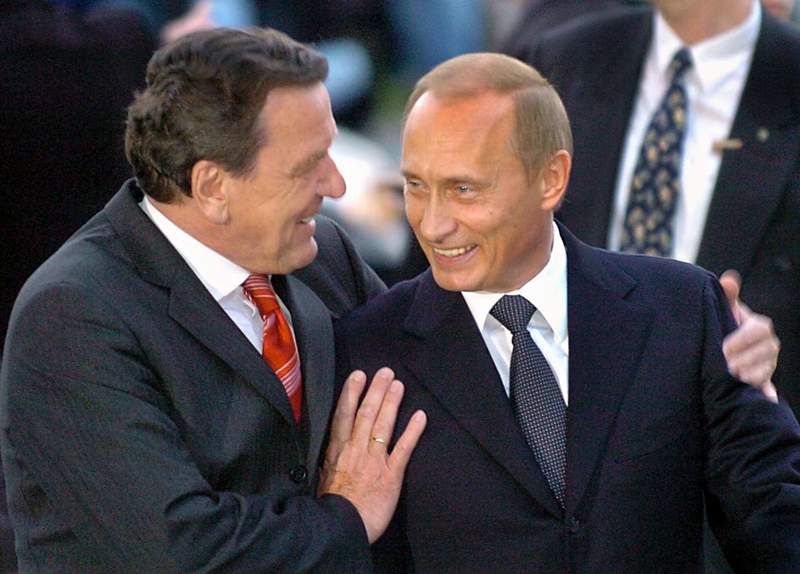
POLICY WIRE — BERLIN, Germany — There are diplomatic overtures, and then there are deliberate provocations wrapped in the flimsy guise of statesmanship. When Vladimir Putin yet again—for anyone still counting, it’s not exactly a novel suggestion—offered up Germany’s scandal-plagued former Chancellor Gerhard Schröder as a potential EU-Ukraine peace broker, it wasn’t just a replay. It was an audacious thumb in the eye of Brussels, a geopolitical punchline that landed with predictable thuds across Western capitals.
It’s an almost cinematic absurdity, really: a man whose ties to Russia are so enmeshed, whose personal and financial relationships with the Kremlin run so deep, is being championed by Moscow as an impartial arbiter. European leaders didn’t merely scoff; they recoiled, perhaps not so much in surprise as in weariness. The suggestion itself speaks volumes about Russia’s perception of European unity—or lack thereof—and its understanding of international diplomacy, which sometimes feels plucked from a parallel universe.
Schröder, for his part, hasn’t exactly distanced himself from his old comrade-in-arms. Post-chancellorship, he became a high-profile, well-compensated lobbyist and board member for several Russian energy firms, including Rosneft and Nord Stream. And he’s consistently defended Putin’s actions, even after the full-scale invasion of Ukraine. It’s this steadfast loyalty, bordering on obsequiousness, that makes Putin’s latest pronouncement not a gesture of good faith, but a thinly veiled insult.
German Chancellor Olaf Scholz’s spokesperson, Steffen Hebestreit, offered a typically understated, yet firm, dismissal. “Former Chancellor Schröder doesn’t represent the position of the German government, nor does he represent Germany’s diplomatic efforts concerning Ukraine. His involvement, or lack thereof, is a personal matter, one that frankly perplexes many,” Hebestreit stated, his tone carefully neutral but the underlying message stinging. They’ve long since tried to scrub Schröder from Germany’s official diplomatic narrative, making Putin’s continued advocacy feel less like a policy proposal and more like an unwelcome, festering reminder of compromised ethics.
Because, for Moscow, it isn’t just about finding a mediator. It’s about testing boundaries, about inserting a wedge. It’s about demonstrating that despite years of sanctions and condemnation, some Western figures still remain—willingly or unwillingly—tethered to Russian influence. But a Russian foreign ministry source, speaking on background, insisted that “Mr. Schröder brings an unparalleled understanding of European dynamics — and Russian sensibilities to the table. His long-standing relationships aren’t a liability; they’re an asset for true dialogue, for forging solutions that Western bureaucracies seem incapable of seeing.” An asset, perhaps, if your goal is to fracture Western consensus rather than achieve a lasting peace.
The suggestion also resonates beyond immediate European circles, impacting how non-aligned nations—including many in the Global South, such as Pakistan—view the conflict and its potential resolutions. Many of these countries are weary of what they see as Western moral grandstanding and are keen for any pragmatic path to stability, particularly given the ripple effects of disrupted global supply chains and energy markets. They might not endorse Schröder, but they often scrutinize Europe’s seemingly inflexible stance, observing proposals like Putin’s as symptomatic of a broader diplomatic malaise. It’s another gambit in a world increasingly questioning established power dynamics.
Consider the raw economic impact alone: The Kiel Institute for the World Economy estimates that Russia’s invasion of Ukraine, and subsequent sanctions, have wiped out nearly $2.4 trillion from global GDP by the end of 2023. And yet, proposals for mediation continue to orbit around individuals whose impartiality is, at best, deeply questionable. It begs the question of seriousness on one side, and perhaps a degree of collective European amnesia, or at least wishful thinking, on the other.
Putin’s repeated invocation of Schröder isn’t simply an error of judgment; it’s a strategic messaging move. It underscores Moscow’s long-held belief that Western unity is fragile, its principles negotiable. But it’s also a stark illustration of Russia’s shrinking roster of genuinely credible diplomatic interlocutors in Europe, reducing them to recycling figures universally (in the West, anyway) seen as compromised. The Kremlin’s persistence feels less like a genuine quest for peace and more like a theatrical performance for an audience of one: itself, and any impressionable state willing to suspend disbelief.
But the joke, if it can be called that, quickly grows stale. It highlights a frustrating reality: serious mediation efforts in the Ukraine conflict are hamstrung not just by entrenched positions but by the profound lack of trusted intermediaries. Because when the primary aggressor puts forth a known associate, you’re not moving toward de-escalation. You’re just setting the stage for more cynicism.
What This Means
This latest salvo from the Kremlin speaks less to a practical path towards ending the war in Ukraine and more to a calculated political maneuver aimed at exposing European vulnerabilities. Putin isn’t genuinely expecting Schröder to usher in a new era of détente. Not in the least. He’s weaponizing Schröder’s lingering presence in German political memory to highlight division, to sow distrust within the EU, and to project an image of an unyielding Russia confident enough to dictate who its partners should be. It suggests a certain disdain for Western diplomatic norms, a belief that principle will always bend to pragmatic self-interest (or personal enrichment, in Schröder’s case).
Economically, this continued diplomatic dead end implies sustained pressure. There’s little to suggest a swift resolution that would ease sanctions or stabilize energy markets when such patently unserious proposals are floated. The message is clear: if a negotiated peace is to be found, it won’t be through channels that smell faintly of gas pipeline contracts and compromised loyalties. But don’t hold your breath waiting for genuine olive branches. That’s just not how this game is being played.
The episode also further isolates Germany’s Social Democrats, Schröder’s former party, who continue to wrestle with their historical affinity for engagement with Russia. It complicates Chancellor Scholz’s efforts to present a unified, resolute German stance alongside NATO — and EU allies. And globally? It’s another example of a significant world power demonstrating that its priorities lie far outside conventional diplomatic solutions—even if it means making an ostentatious show of a proposal designed only to fail publicly.
Frankly, it’s a spectacle, but one with grim consequences. One can almost see Putin smirking from behind the scenes, watching Europe trip over its own collective incredulity. The world’s eyes are elsewhere, perhaps on the enigmatic machinations of other geopolitical flashpoints, but this peculiar diplomatic theater keeps running.