


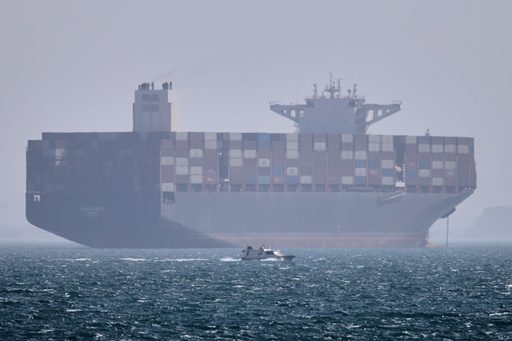
Hormuz Holdout: Trump’s Endgame in Tehran, Oil Tankers Idled
POLICY WIRE — WASHINGTON — The hum of quiet dread, not of warplanes but of idling oil tankers, hangs heavy over the Persian Gulf. In Washington, U.S. President Donald Trump has been, to put it...

POLICY WIRE — WASHINGTON — The hum of quiet dread, not of warplanes but of idling oil tankers, hangs heavy over the Persian Gulf. In Washington, U.S. President Donald Trump has been, to put it mildly, preoccupied. He recently called a White House Situation Room meeting with his advisers, mulling over a tentative agreement meant to extend a particularly shaky ceasefire with Iran and, crucially, pry open the Strait of Hormuz. Iran, meanwhile, offers little more than a collective shrug, its officials declaring the deal—whatever it entails—hasn’t been finalized. It’s a diplomatic high-wire act, if one can call it diplomacy, with global energy markets holding their breath.
Before the conclave, Trump, ever the direct communicator, made it plain he was looking to make a “final determination.” Later, a senior administration official, doing the usual Washington dance of speaking only when anonymous, wouldn’t say whether Trump had made a decision to sign off on the tentative agreement after a roughly two-hour powwow with national security aides. So, we’re left with another cliffhanger. But Trump himself, acknowledging reports from the Associated Press and other outlets, did confirm high-level talks had occurred, reportedly leading to terms for a fragile 60-day ceasefire extension, intended to clear space for more chatter on Iran’s much-disputed nuclear aspirations.
On social media—where foreign policy is apparently forged these days—Trump dictated his non-negotiables: “Iran must agree that they will never have a Nuclear Weapon or Bomb.” The Strait of Hormuz, he added, needs to be free for international navigation, its sea mines gone. A clear vision, certainly. But over in Tehran, Mohammad Bagher Qalibaf, Iran’s main negotiator, had his own strong words, posted on X (formerly Twitter, mind you). He warned of a deep, abiding skepticism, stating Iran has “no trust in guarantees or words,” only actions. His message, perhaps aimed at a domestic audience just as much as Washington, didn’t pull any punches: [QUOTE_PLACEHOLDER] And then the kicker: “We do not gain concessions through talks, but through missiles.” Casual, for an international negotiation, you might say.
It’s no surprise they’re wary. After all, the U.S. and Israel have twice attacked Iran over the past year while it was entangled in nuclear negotiations. History casts a long shadow, it really does. Iranian Foreign Ministry spokesman Esmail Baghaei piled on, informing a state broadcaster that the agreement “has not been finalized yet.” So much for a clean-cut path forward. But U.S. Vice President JD Vance suggested, just Thursday, that negotiators were simply trying to strike general terms on Iran’s nuclear program, the nitty-gritty details to be hashed out later. Because, you know, it’s always the details.
From day one, Trump’s administration has banged the drum on ensuring Iran can never have a nuclear weapon. Vance, however, offered a more subdued take on the war’s accomplishments. “We’re in a position where we could substantially set back their nuclear program, not just during the term of this president but over the long term,” he said, calling it “very, very good” for Americans. But Baghaei dismissed nuclear talk altogether on Friday. He said Iranian officials were “focused on the end of war and are not discussing the details of the nuclear plan at this point.” Also on Iran’s wish list? A full-stop truce between Israel and Iran-backed Hezbollah militants in Lebanon, where fighting hasn’t exactly quieted down, even with a nominal ceasefire. This whole thing feels less like a negotiation — and more like parallel monologues. It’s a bad look.
And then there’s the inconvenient truth of Iran’s nuclear stockpile: The Islamic Republic has 440.9 kilograms (972 pounds) of uranium that’s enriched up to 60% purity, a short, technical step from weapons-grade levels of 90%, according to the International Atomic Energy Agency. Iran insists its nuclear program is peaceful, naturally. And it hasn’t publicly committed to ditching the stockpile, which is believed to be under three nuclear sites badly damaged by U.S. strikes last year. Trump, of course, has been on-again, off-again about demanding the removal and destruction of this cache, to be unearthed by the U.S. in coordination with Iran and the IAEA. That, he posted, is to be [QUOTE_PLACEHOLDER] Direct, if a little naive about logistics.
The proposed agreement—a memorandum, we’re told—comes with mandates. Iran won’t get to impose tolls on the Strait of Hormuz and has to clear all mines from the critical waterway within a month. This tidbit came from another anonymous U.S. official. In return, Washington would gradually lift its blockade on Iranian ports, relaxing sanctions, which would mean more Iranian oil hitting the global market. A real game changer, for their economy, if not ours.
Baghaei, for his part, suggested Iran and Oman would jointly manage the strait, adopting mechanisms “based on their own national interests and the interests of the international community.” Apparently, the foreign ministers of those two countries have already been on the phone. This, however, comes after Trump issued a blunt warning to Oman, a U.S. ally: any agreement with Iran to share control of the strait — and the U.S. will “have to blow them up.” Not exactly a polite invitation to bilateral talks.
Since the surprise U.S. and Israeli attack on February 28 that took out Iran’s supreme leader and other top brass, the Strait has effectively been a no-go. Previously, it handled around a fifth of the world’s oil — and gas. Its closure has sent fuel — and other goods prices sky-high, hurting economies far beyond the Middle East. Consider Pakistan, for example. As a nation heavily reliant on imported energy, the instability in Hormuz translates directly into crippling fuel costs for businesses and ordinary citizens alike, exacerbating already deep economic worries and social unrest. Even while Iran claims some commercial vessels get through—two dozen a day recently, a steep drop from over 100 pre-war—it’s also charging tolls and even set up a formal gatekeeper agency, earning it another round of U.S. sanctions. Seven weeks in, the ceasefire holds by a thread, trading blows and accusations, but somehow, they keep talking. One wonders what ‘talks’ mean anymore.
What This Means
This whole mess surrounding the Strait of Hormuz and Iran’s nuclear program is less about an elegant diplomatic solution and more about a brute-force contest of wills. Politically, the administration’s oscillating stance—from threats of destruction to proposals for détente—sends confusing signals, not just to Tehran but to regional allies like Oman, who find themselves caught between an agitated Washington and a belligerent Iran. The lack of trust, loudly articulated by Iranian officials, suggests any agreement is built on sand. For Gulf states, the precariousness translates to constant economic and security jitters, disrupting vital trade routes and inflating insurance premiums.
Economically, the impact is already obvious, not just for the immediate combatants. Global supply chains, already frayed, are stretched thinner by the uncertainty in Hormuz. For energy-importing nations across South Asia—Bangladesh, Sri Lanka, and particularly Pakistan—the soaring cost of fuel isn’t just an inconvenience; it’s an accelerant for inflation and social instability. Their nascent recoveries could easily get derailed by the persistent disruption to oil flows, driving up the cost of everything from transportation to manufacturing. The future of this ceasefire, then, isn’t just about a nuclear deal; it’s about a very fragile global economy holding its breath, waiting for Washington and Tehran to decide if they’d rather talk or ignite.