


Star’s Shadow: When Big Names Collide With Cold Statistics
POLICY WIRE — Washington D.C., USA — The gleaming facade of a marquee signing can often obscure the granular, sometimes inconvenient, truth bubbling beneath. We cheer for the narrative—the...

POLICY WIRE — Washington D.C., USA — The gleaming facade of a marquee signing can often obscure the granular, sometimes inconvenient, truth bubbling beneath. We cheer for the narrative—the game-changing arrival, the instant jolt of star power—but what happens when the numbers, dispassionately, start telling another story entirely? This isn’t just about celebrity, or even about sports; it’s a cold calculus playing out in every arena, from boardrooms to ballot boxes, where raw data frequently shatters carefully constructed public perceptions.
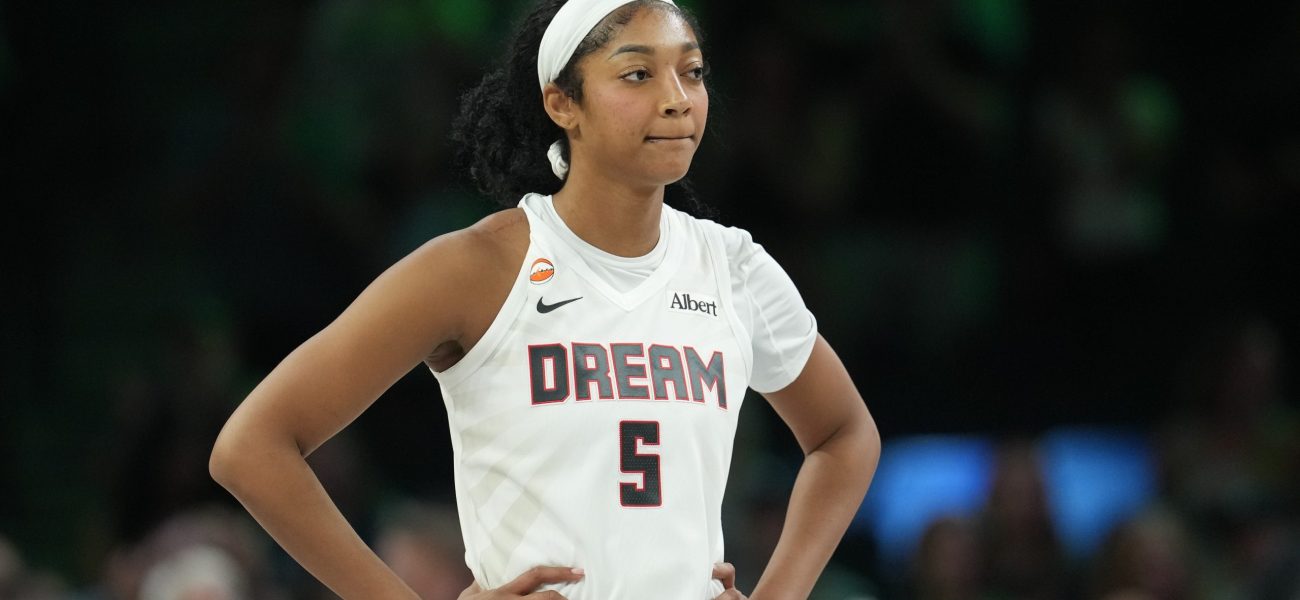
Take the Atlanta Dream’s recent face-plant against the Minnesota Lynx, a rather tepid display resulting in a 96-81 drubbing that saw them relinquish their hard-won perch atop the WNBA standings. This was supposed to be the season the Dream finally clicked, a year buoyed by the splashy acquisition of a phenomenon known for her electrifying energy and undeniable presence: Angel Reese.
Initially, it felt like a runaway win. Reese brought an immediate impact, pulling down boards and making defensive plays that — on the surface — validated the hefty expectations. But as any grizzled scout knows, the eye test doesn’t tell the whole tale. And these days, we’ve got numbers, more numbers than you can shake a stick at, ready to dissect every micro-moment on the court. It’s brutal, isn’t it?
The statistical deep dive, particularly after that Lynx debacle, has thrown a rather unflattering spotlight on Reese. She ended that particular contest with a +/- of -16, according to ESPN, suggesting the team hemorrhaged points whenever she was on the floor. Contrast that with backup forward Sika Kone, who, in her decidedly limited minutes, somehow mustered a +8. It raises eyebrows. More tellingly, advanced analytics from ESPN paint a stark picture: Reese currently ranks last on the Dream in Net Points. That metric, designed to quantify a player’s overall contribution to the scoring margin beyond just points, places her at a total of -13 across the season’s first six games. Her offensive Net Points sit at -11, — and surprisingly, her defensive contributions also register in the red. She’s also tied for dead last in WAR (Wins Above Replacement) with a -0.1. Pretty damning, if you just go by the data, — and many do. This sort of data-driven reality check isn’t exclusive to sports; it reshapes narratives in boardrooms and election cycles all the time. But this much scrutiny for an athlete? You wouldn’t typically expect it for, say, a mid-level bureaucrat, though perhaps they’d be better for it.
It’s a conundrum for Dream head coach Karl Smesko. He’s got to weigh the immense profile and potential of a player like Reese against the hard facts of her current on-court efficiency. “Building a winning program in the WNBA is about far more than just individual talent,” Smesko commented recently, perhaps obliquely referencing the challenge. “It’s about chemistry, consistency, and making tough choices for the collective good, even when the optics are…complicated. We believe in our players, — and we’re working to find the best pathways for everyone to contribute maximally.”
📄 POLICY WIRE WHITEPAPER PUBLISHED: PAKISTAN'S NATIONAL SECURITY POLICY PRIORITIES
👉 READ BY CLICKING HEREBecause, really, what’s a coach to do? Bench your most marketable player, the one who brings eyes and excitement, simply because the arcane metrics whisper discomforting truths? The same sort of high-stakes assessment plays out across the globe; a political figure in Pakistan, say, might be adored by millions but face a bruising numerical reckoning based on economic indicators or legislative success. It’s a universal test of popularity versus demonstrable efficacy. The narrative of the superstar is fragile.
Commissioner Cathy Engelbert acknowledges the league’s increasingly analytical environment. “The WNBA has truly embraced advanced statistics to help teams optimize performance,” Engelbert stated, observing the trend. “It’s a powerful tool for understanding player impact beyond what’s immediately visible, enabling smarter roster decisions and player development. This depth of data wasn’t available just a decade ago, and it changes how we see talent.” It changes everything, if you think about it.
What This Means
This isn’t just about Angel Reese, or even the Atlanta Dream’s playoff hopes. This saga crystallizes the escalating tension between old-school sports intuition and the relentless precision of modern data analytics. For teams, it forces a hard look at acquisition strategies: is it better to chase high-profile names for their cultural cachet or to build from statistically efficient, perhaps less heralded, players? From an economic standpoint, player contracts are tied to perceived value; if advanced metrics consistently downgrade a player’s on-court effect, it complicates future negotiations and endorsement deals. And for the WNBA, a league fighting for broader recognition and investment, managing the narrative around its stars—especially when performance metrics diverge from public expectation—becomes an increasingly intricate dance. The implications extend to how any organization, be it a sports team or a national government, invests in talent, measures return, and handles the sometimes brutal honesty of data against public affection. It’s a test of whether gut feeling can survive the algorithm’s judgment, or if we’re all just data points now.