


Chapel Hill’s Diamond Deal: When Regional Play Becomes a Global Market Flex
POLICY WIRE — Washington, D.C. — Forget the crack of the bat for a moment; listen instead to the grinding gears of an immense economic machine, powered by loyalty, regional pride, and a...

POLICY WIRE — Washington, D.C. — Forget the crack of the bat for a moment; listen instead to the grinding gears of an immense economic machine, powered by loyalty, regional pride, and a staggering thirst for engagement. It’s a truth rarely spoken over the roar of the crowd, but college athletics, even at its most visceral, is a battleground—not just for bragging rights, but for market share, broadcast revenue, and the cultural mindshare of a fiercely competitive populace.
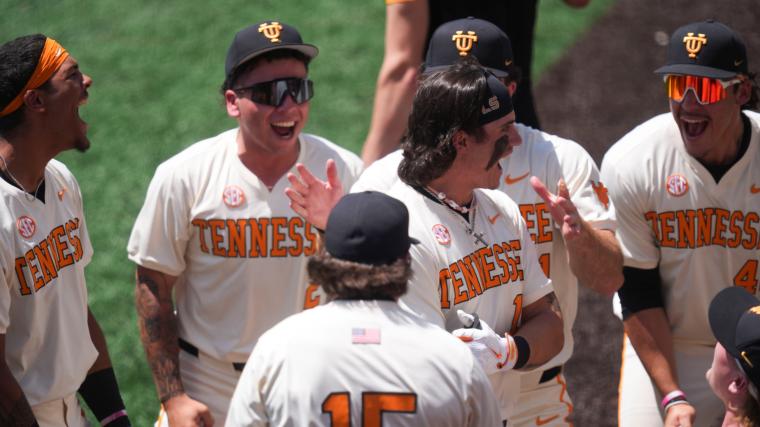
Down in Chapel Hill, North Carolina, another chapter of this grand, lucrative American drama unfolds. The stage? A seemingly innocuous NCAA regional baseball game pitting Tennessee against East Carolina. But the deeper currents at play here are far from ‘just a game.’ They represent a microcosm of regional economic might, sophisticated media deals, and America’s subtle projection of cultural soft power—sometimes to audiences far beyond its borders.
Tennessee, a juggernaut from the financially plump SEC, brings its formidable pedigree and the recent memory of a College World Series run just two years back. Their rivals, East Carolina, are perennial tournament contenders, often making noise but never quite clinching the “Big One” in Omaha. The contrast is telling: one from a conference synonymous with immense revenue streams and national brand recognition; the other, a strong program battling for a piece of that bigger pie.
It’s not just about winning on the field. “The financial ripples of a deep postseason run—increased alumni donations, student applications, even local tourism revenue—can’t be overstated,” noted Congressman Walter Cunningham (R-TN), whose district proudly boasts several nationally recognized athletic programs. “For communities across my state, this isn’t just sport; it’s an engine, plain — and simple. And frankly, the folks watching on ESPNU aren’t just fans, they’re consumers, investors in a cultural product that defines our regional identity.” His words echo a sentiment common in states where college sports often eclipse professional leagues in public interest.
But the reach of this particular ‘cultural product’ is surprisingly global. And this is where the market truly flexes. Media behemoths like ESPN and streaming services such as fubo don’t just cater to domestic audiences; they participate in a global ecosystem of sports consumption. While baseball isn’t exactly taking Karachi by storm, the digital accessibility means someone with a VPN in Lahore or Riyadh could, theoretically, tune into Henry Ford’s home run swing or Ethan Norby’s 120 strikeouts this season.
Because, well, that’s the market today. It fragments, it flows, — and it aggregates. While cricket retains an almost religious hold across Pakistan and the broader Muslim world— a nation’s passion for cricket far surpassing any niche American sport —the betting markets know no such borders. They’re a universal language of speculative interest, often dictating which otherwise ‘obscure’ events draw international eyeballs. Sports data analysts, not limited by traditional viewership, calculate engagement purely on transactional volume, whether it’s for the Premier League or an NCAA baseball regional.
Dr. Ayesha Malik, Professor of Political Economy at the American University of Beirut, offered a sharp observation: “From our vantage point, these highly polished American sporting spectacles are fascinating cultural artifacts. They reflect deep regional pride, certainly, but also the incredible efficiency of a privatized media-industrial complex that can monetize almost any form of human competition. Even if baseball isn’t indigenous to the Middle East, the business models behind its broadcast, the associated betting markets—they certainly are topics of study. It’s a constant lesson in media control and soft power, even when unintended.” Her insights point to the broader implications of — the World Cup’s global bet bonanza as a precedent for smaller leagues. This kind of ‘niche’ programming often finds its way onto platforms like fubo precisely because of this diffuse, global financial interest, underpinned by analytics rather than pure mass appeal.
📄 POLICY WIRE WHITEPAPER PUBLISHED: PAKISTAN'S NATIONAL SECURITY POLICY PRIORITIES
👉 READ BY CLICKING HEREIndeed, the money involved isn’t small change. ESPN alone paid an estimated $1.3 billion annually for college football playoff rights through 2025, a staggering sum that ripples through collegiate athletics budgets, trickling down even to the relative ‘minor’ sports like baseball, ensuring broadcast exposure and continued financial incentive. This isn’t just about athletic departments; it’s about institutional budgets, scholarships, and the prestige economy that attracts students—and donors.
What This Means
This Tennessee-ECU matchup, framed initially as a straightforward athletic contest, is anything but. Politically, it showcases how entrenched regional identities and economic powerhouses like the SEC wield disproportionate influence within American higher education and its sports industrial complex. For ECU, it’s about punching above their financial weight, keeping pace with programs that enjoy structural advantages in funding and recruitment. Economically, these games are direct conduits for brand building, not just for the schools, but for the entire collegiate sports apparatus, generating billions in advertising, subscription fees, and associated betting activity.
The cultural impact, especially when viewed from an international lens, highlights how American ‘regional’ entertainment often becomes a global commodity. It illustrates the ubiquity of Western media and its ability to penetrate diverse markets, sometimes overtly, often subtly, influencing consumption patterns and globalized entertainment diets. And as for pure sport? Well, that’s still what folks are tuning in for. But behind every pitch, every catch, and every celebratory dogpile, there’s an entire web of political, economic, and cultural currents churning, reminding us that nothing, not even a baseball game, happens in a vacuum. It’s a spectacle of skill, sure, but it’s also a remarkably efficient wealth-generation machine.