


Cosmic Drift: Washington’s Peculiar Disclosure Sparks Skepticism, Not Revelation
POLICY WIRE — Washington, D.C. — Not every revelation arrives with fanfare. Some sneak in sideways, dropped into the public square less like a thunderclap and more like a dropped ledger during a...

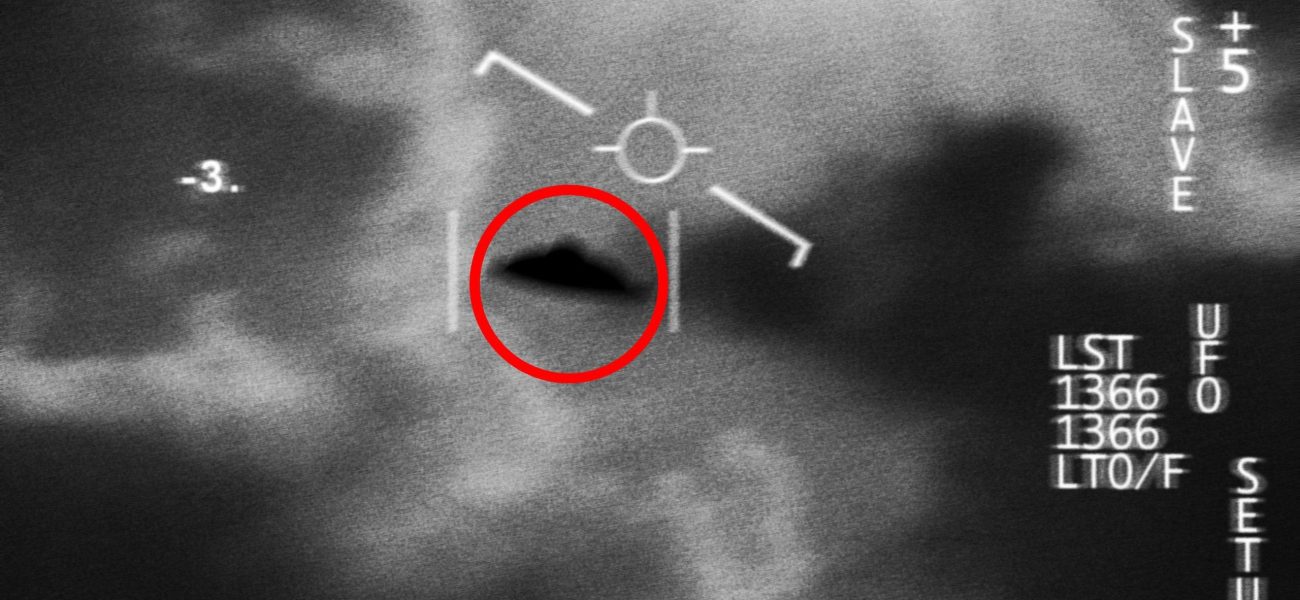
POLICY WIRE — Washington, D.C. — Not every revelation arrives with fanfare. Some sneak in sideways, dropped into the public square less like a thunderclap and more like a dropped ledger during a particularly tedious audit. That’s essentially what happened when a leading figure from the National Aeronautics and Space Administration—let’s just call him The Head Honcho for simplicity’s sake—recently aired a few dusty secrets from the Trump years, files concerning unidentified anomalous phenomena, or UAP, for the policy wonks among us. No green men, mind you. Just a quiet little unveiling that speaks volumes about Washington’s peculiar dance with transparency.
It’s not that we expected flying saucers to suddenly alight on the White House lawn. We haven’t for a while. But because this particular disclosure involved records previously tucked away, some of us—yours truly included—figured there’d be, oh, some substance. Something that shifts the needle. Instead, we got the official equivalent of a shrug. They called it ‘pulling back the curtain,’ a phrase implying grand theatre, when it felt more like opening a musty closet door to find last season’s rain boots. [QUOTE_PLACEHOLDER]
These so-called bizarre finds surfacing in buried fed records weren’t precisely detailed, you know? Just this vague allusion to things that made someone scratch their head enough to deem them worthy of archiving. And isn’t that just classic? The perpetual allure of the unexplained, perpetually kept just beyond our grasp, only to be trotted out when a new administration needs to prove its commitment to open government, or maybe just distract us from something else. The truth isn’t out there; it’s apparently buried under mountains of paper, then selectively unearthed by politicians. Classic political maneuver.
It’s this deliberate obfuscation—or maybe, deliberate lack of full candor—that often reverberates far beyond America’s borders. Think about it: a country like Pakistan, for instance, a nation steeped in its own rich narratives and often skeptical of Western proclamations, looks at this and wonders. They’ve got their own regional complexities, their own air defenses scanning contested borders. What message does this send? That American government transparency is a highly curated performance? Or that when push comes to shove, explanations for the inexplicable are usually couched in officialese that satisfies nobody?
Because they’ve seen it all before. Geopolitical tensions, intelligence intercepts, — and the careful framing of official statements. From Karachi to Islamabad, the global political elite isn’t naive; they understand that what’s said, and what’s not said, carry equal weight. When America whispers about its space agency looking into anomalies linked to previous administrations, it’s not just a quaint oddity. It’s part of a larger, ongoing narrative about how trust is built, or eroded, between nations.
It’s a delicate dance, always. Consider recent polling, for instance, revealing that a staggering 57 percent of Americans believe the government knows more about UAPs than it’s letting on, according to a 2021 Pew Research Center study. That’s a majority. And they’re probably not wrong. What’s new, though, is the increasingly brazen, yet utterly bland, way these tidbits are being handled.
We’ve grown used to this. We expect our governments to have secrets. But we also expect, when those secrets are alluded to, at least a shred of something more compelling than a bureaucratic announcement implying weird things happened and now we’re looking into them, sort of. It just highlights the gap between public curiosity and official caginess—a gap often filled with speculation, mistrust, and yes, even mockery.
This episode serves as a curious counterpoint to Washington’s broader policy pronouncements. While the Pentagon dedicates resources to these unexplained sightings, officially to maintain air domain awareness, the actual public-facing output often reads like a memo deliberately drained of all excitement. It’s almost an art form. You release just enough to acknowledge the elephant, but not enough to explain its color, or why it’s in your living room in the first place.
And let’s be honest, for the average Pakistani citizen navigating economic pressures or the complexities of regional security, abstract talk of unidentified aerial phenomena originating from a past US administration probably feels like white noise—or another demonstration of how much disposable time and resources some nations seem to have, pondering abstract cosmic possibilities while others grapple with tangible, immediate crises. But it does inform their view of global power dynamics, their understanding of a Washington that sometimes appears preoccupied with enigmas, while less privileged nations struggle with realities.
What This Means
This latest bureaucratic unraveling, however understated, suggests a fascinating, perhaps unsettling, shift in official Washington’s strategy regarding UAP. It’s no longer about flat denial. It’s moved to a stage of controlled, desultory acknowledgment—a lukewarm approach calculated to defuse intense public speculation without actually satisfying it. Politically, this signals a government trying to walk a tightrope: acknowledging widespread public interest in the unexplained without validating more outlandish theories, while simultaneously trying to shed light on prior administrative actions, probably to contrast them with current transparency efforts. Economically, such disclosures have little immediate impact, though prolonged ambiguity around potentially advanced technologies could subtly fuel innovation, or at least public funding, for aerospace defense and observation systems. For the Muslim world, especially Pakistan, such incidents are likely viewed through a dual lens: partly as an example of Western government opacity and partly as a demonstration of a highly resourced state grappling with unknown territories. But more critically, it’s a reminder of where US priorities lie, sometimes detached from the more immediate human security challenges facing nations across Asia and Africa. The implicit message: when the world ponders these cosmic questions, some capital’s concerns are literally extraterrestrial, while others fight battles here on terra firma. This disparity itself is a policy consideration for many states navigating their relationship with Washington. Because everything—even UFOs—is politics in the end.