


Diplomatic Plumbing: U.S. Scrutiny on Mexican Consulates Ignites Deep Geopolitical Frictions
POLICY WIRE — Washington, D.C. — Imagine the unglamorous mechanics of diplomacy: the visa applications, birth registrations, legal advisories—all the grunt work consulates do. This mundane...

POLICY WIRE — Washington, D.C. — Imagine the unglamorous mechanics of diplomacy: the visa applications, birth registrations, legal advisories—all the grunt work consulates do. This mundane bureaucratic apparatus, the very plumbing of international relations, rarely makes headlines. But lately, for Mexican consulates across the U.S., it has. A quiet U.S. State Department review has effectively turned this diplomatic machinery into a volatile flashpoint, hinting at deeper fractures in an already strained bilateral relationship. This isn’t just about processing paperwork; it’s about sovereignty, leverage, and the unsettling prospect of ordinary citizens becoming pawns in a much larger, tougher game.
It’s an awkward silence, a bureaucratic shudder before a potential earthquake. Though the State Department hasn’t explicitly said why, its scrutiny of these consulates unfolds against a backdrop of aggressive immigration policies and some seriously prickly diplomatic issues. Far-right commentators have even thrown in theories that these diplomatic outposts are actually meddling in U.S. politics or somehow encouraging northward migration—a notion widely dismissed, one that feels lifted straight from a poorly written espionage thriller.
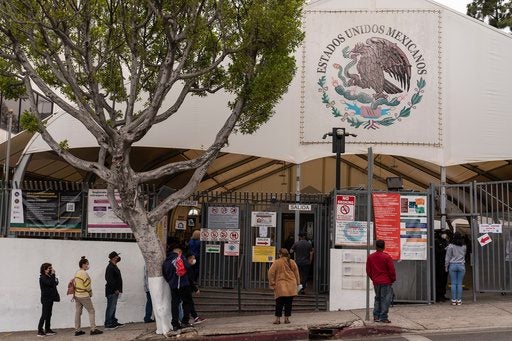
The human cost of this high-stakes political maneuvering? Ask folks like Azucena Aviles. She’s a 33-year-old mom, who recently drove more than an hour just to renew her passport for herself and secure one for her daughter at the Los Angeles consulate. Services like these, she tells us, aren’t luxuries; they’re lifelines. [QUOTE_PLACEHOLDER] she worried, reflecting a common sentiment among the millions of Mexican people in California, including an estimated 1.7 million who are in the U.S. illegally. That state, by the way, hosts nearly 13 million people of Mexican descent—so yeah, it’s kind of a big deal.
For nations around the globe with large diasporas, consulates aren’t merely symbols; they’re functional hubs for cultural connection, economic facilitation, and, crucially, legal protection. Pakistan, for example, maintains a network of missions throughout the United States, Europe, and the Middle East to serve its vast expatriate community. These facilities often provide critical aid, especially for those navigating complex immigration laws or facing legal challenges abroad—much like Mexican consulates do for their citizens here. When relations between host and home countries sour, these diplomatic missions, and the vulnerable populations they serve, frequently become the first targets, creating significant anxieties and practical obstacles for millions. This dynamic, familiar to Pakistani citizens abroad during times of geopolitical tension, mirrors the current uncertainty faced by Mexicans in the U.S. when their fundamental support systems come under review.
President Donald Trump, during his previous term, applied continuous pressure on Mexico—a strategy he’s likely to re-employ. Looming questions surrounding human rights, national sovereignty, — and regional diplomacy always seemed to hover. Dylan Johnson, Assistant Secretary of State for Global Public Affairs, offered only the broadest of explanations via email: Department of State is constantly reviewing all aspects of American foreign relations to ensure they’re in line with the President’s America First foreign policy agenda and advance American interests. Translation: every tool’s on the table to get Uncle Sam’s way.
And then there’s the immigration angle. A primary motivation for this review likely connects to the administration’s aggressive efforts to deport individuals living in the U.S. illegally. Pew Research Center data tells us the largest contingent of such individuals—an estimated 4.3 million people—are Mexican. But that’s just the headline; delve a little deeper — and you find a tangled web of friction.
It gets worse. Relations have taken a beating recently, thanks to drug trafficking charges against Mexican officials and the unsettling news of two CIA officers dying in northern Mexico following an unauthorized anti-narcotics operation. Mexican President Claudia Sheinbaum didn’t mince words about the U.S.’s unapproved involvement, and the whole affair sparked uncomfortable questions back home about the extent of U.S. meddling. Add years of tit-for-tat tariffs into that stew, — and you’ve got a seriously volatile concoction.
But Sheinbaum, on her side, has played a savvy game. She’s largely dodged head-on confrontations with Trump, favoring diplomacy. Her government’s also been a partner in slowing migration and expediting deportations of other Latin American migrants—a tough call for many. Yet, she’s also dug her heels in on Mexican deaths in U.S. detention centers, calling the conditions in such lockups were [QUOTE_PLACEHOLDER]. She even sent consulates to visit detention centers daily, just to ensure detained citizens are being held in safe conditions. So there’s that.
Peter Schweizer, a writer popular with Trump loyalists, has peddled the theory that Mexican consulates actively interfere in U.S. politics and even encourage migration. Experts, however, generally shrug this off. While a few officials might dabble in back-home politics, there’s just no proof of them messing with U.S. elections. Sheinbaum herself branded the idea that Mexican consulates are [QUOTE_PLACEHOLDER]. Former Mexican ambassador to the U.S., Arturo Sarukhan, didn’t pull any punches either, describing current U.S.-Mexico relations as [QUOTE_PLACEHOLDER].
Carlos González Gutiérrez, Mexico’s top diplomat in Los Angeles, has had to address these swirling anxieties head-on. Every week, he starts his public forum with a stark reminder: since last June’s Los Angeles immigration crackdown, consular officials have interviewed 1,940 detained Mexicans. That’s a grim figure. About 46% of them have already been deported. A staggering 69% had entered through a port of entry, often legally. And he flatly refutes the idea that his consulates are meddling: We’re guests of this country’s government, just as U.S. consuls are guests of the Mexican government. In that sense, we’re neither activists nor spies. He just keeps on working.
What This Means
This U.S. State Department review is far more than just a procedural housekeeping exercise. Politically, it signals a deeper chill in U.S.-Mexico relations, leveraging the daily needs of immigrant communities as a negotiating chip. It’s a classic strongman tactic: destabilize basic services to exert pressure on a neighbor, especially as a presidential election cycle spins up north. Economically, any closure of consulates would inflict real damage. Think of the legal advice, passport services, and humanitarian aid lost, especially for those in isolated areas without easy access to the few remaining locations. This disrupts remittances, slows legitimate cross-border business, — and adds immense strain to vulnerable families. More subtly, it emboldens a narrative that dehumanizes immigrant populations and casts their governments’ efforts to assist them as subversive. It’s a calculated move to ramp up perceived ‘America First’ dominance, yet it risks destabilizing a region where stability is, in fact, an essential commodity for everyone.