


The Brutal Reckoning: Who Really Fumbled Notre Dame’s Sacred Trust?
POLICY WIRE — South Bend, IN — The golden dome gleams, an impossible beacon over Indiana cornfields. For generations, it has symbolized something beyond bricks and mortar: a hallowed tradition, a...

POLICY WIRE — South Bend, IN — The golden dome gleams, an impossible beacon over Indiana cornfields. For generations, it has symbolized something beyond bricks and mortar: a hallowed tradition, a national reverence almost religious in its fervor. Notre Dame isn’t just a college; it’s a mythology, a cultural touchstone that demands victory—not just wins, but championships. Yet, behind the legend, beneath the gilded facade, a recurring, uncomfortable truth persists. Not every leader entrusted with this sacred, demanding enterprise rises to the occasion. Some falter. Some just outright sink.
Because, really, when you’re talking about a place steeped in so much athletic pomp, where ghosts of gridiron giants roam the sidelines (sometimes audibly, you’d swear), the very notion of ‘failure’ feels sacrilegious. And don’t we always gravitate towards the shine, the comeback narratives, the triumphs? The current Irish squad, they’ve got Marcus Freeman at the helm, and folks are whispering about a renaissance, saying they’re on the brink of being a national power like something we haven’t seen since Lou Holtz paced the sidelines at Notre Dame.
It’s easy, see, to laud the ascending stars. But to peer into the abyss, to name the worst? That takes a certain, perhaps morbid, honesty. [QUOTE_PLACEHOLDER]
It’s always a debate, isn’t it, among the rabid faithful? Who bore the heaviest cross? Was it the guy who just couldn’t quite seal the deal, despite bringing the program close? Brian Kelly, for example. He definitely brought them back to relevance, got them competing for the big one, even if he never clinched it. He put Notre Dame back on the map as a program that can compete for national championships — even if he failed at doing so.
He’s kind of a terrible person too,
apparently, but even the article concedes, without him, the Irish wouldn’t be where they’re right now.
So, you can hate him. Sure. But worst? Not even close.
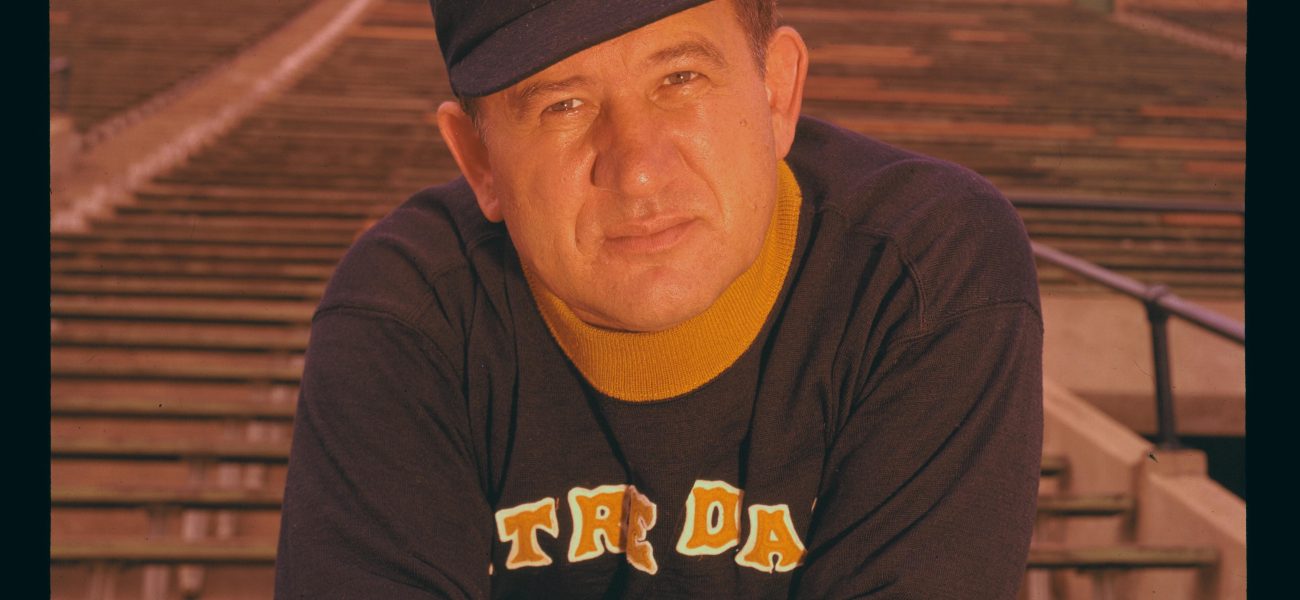
The quest for the ultimate disappointment isn’t about mere personality quirks or missed opportunities. It’s about a leadership tenure that fundamentally broke faith with the institution’s demanding, almost crushing, expectations. Consider Joe Kuharich. His stint from 1959 to 1962 is rarely mentioned in celebratory whispers, only in hushed tones of incredulity. The raw numbers speak a desolate truth: his overall coaching record at Notre Dame was a meager 17-23-0, equating to a dismal 42.5% winning percentage. That’s a bottom-of-the-barrel statistical performance by any metric for an institution like Notre Dame, whose historical average hovered much, much higher.
But numbers alone don’t paint the whole picture. They never do. Kuharich oversaw the program’s most profound downturn, steering it into a wilderness from which it took Ara Parseghian years to recover. And Parseghian? He’s Mount Rushmore material, alongside titans like Knute Rockne, Frank Leahy, Ara Parsegian, and Lou Holtz.
The institutional memory doesn’t forget. It festers, instead, like an old wound. Kuharich’s legacy isn’t just a win-loss column; it’s the sense that the grand institution itself lost its way under his watch—a feeling of betrayal that lingers more powerfully than any single statistic can convey.
It gets worse. The coaching choices post-Kuharich became almost a policy disaster, a succession of attempts to recover from the low ebb. The perception of ineptitude from that era had a ripple effect, making it harder to attract top talent and maintain the aura of invincibility. And that perception, once lost, is a brute to reclaim. You can be the best coach in the world, but if the foundational pieces—recruiting, facilities, institutional buy-in—are rotting from a period of mismanagement, you’re just swimming against a typhoon. It’s like a corporate CEO who drives the stock into the ground, not just with bad decisions, but by eroding market confidence itself. Some scars, you know, they just don’t fade, no matter how much new blood or enthusiasm (like statistical ascensions we see elsewhere) attempts to buff them out.
📄 POLICY WIRE WHITEPAPER PUBLISHED: PAKISTAN'S NATIONAL SECURITY POLICY PRIORITIES
👉 READ BY CLICKING HEREBut who’s it?
Really? If you’re weighing all the factors — the pure win-loss agony, the perceived institutional decline, the damage to morale — it’s hard to argue past Kuharich. His tenure wasn’t just poor; it was symbolically devastating. It stripped away a layer of that invincibility, that mythos Notre Dame had so painstakingly cultivated. It exposed the vulnerability at the heart of even the grandest establishments. And it reminded everyone that even giants can stumble, that even sacred trusts can be, however briefly, violated.
What This Means
The passionate debate over Notre Dame’s ‘worst’ coach isn’t just sports trivia. It’s a microcosm of the brutal calculus faced by any leader of an organization steeped in tradition and high expectations. In countries like Pakistan, for instance, leaders inherit complex histories and fervent public demands, where perceived failures, even temporary ones, are often magnified and carry disproportionate political and social costs. When former former Prime Minister Imran Khan was ousted in a no-confidence vote in 2022, his critics pointed to economic instability and perceived mismanagement, framing his removal not just as a political defeat but as a failure of trust, an echo of past leaders who had similarly fallen short of the populace’s demanding, often unrealistic, hopes. Much like a struggling football coach, he was expected to instantly solve deep-seated systemic issues. And failure, whether justly or not, tends to overshadow even the most well-intentioned efforts.
The sustained weight of an organization’s historical identity—the ‘Notre Dame way’ or the ‘Pakistani dream’—can be an oppressive burden. When results falter, the institutional blame often falls squarely on the individual at the top, sometimes unjustly, other times not. This phenomenon reflects a broader, almost global policy challenge: how do we realistically assess leadership in contexts where myth and legacy cast long shadows over the achievable? We’ve seen this brutal calculus in countless political arenas and public institutions. It’s a perennial struggle. The truth is, sometimes an institution’s lowest point isn’t just about a ‘bad leader,’ but about the clash between an immutable past and an uncooperative present. And figuring out where responsibility truly lies? That’s the real challenge, on the gridiron, — and in the grander, more consequential halls of power.